Shared Purpose
On 4 September 2026, a joint DKU field trip to Tencent’s Shanghai office and the Shanghai Science and Technology Museum connected questions about technological innovation with the public purposes it can serve. Across five courses, the visit linked classroom inquiry to a common question: how can technology become useful, understandable, and accessible to the people whose lives it affects?
The journey from university inquiry to industry and a public museum gave students a chance to connect what they study with how innovations are built, explained, and questioned.
The faculty leads were Fan Liang for MEDIA 207, Culture of New Media; Charles Chang for INFOSCI 102, Computation & Problem Solving; Ken Rogerson for PUBPOL 222, Technology Policy; and Luyao Zhang for COMSCI/ECON 206, Computational Microeconomics, and INFOSCI 301, Data Visualization and Information Aesthetics. Their complementary perspectives connected culture, computation, policy, economic incentives, and evidence communication.
All four professors are affiliated with the Digital Technology and Society Cluster at the Center for the Study of Contemporary China and the SocioTech Future Lab in DKU’s Social Science Division. Among them, Ken Rogerson is Professor of the Practice at Duke University’s Sanford School of Public Policy and is visiting DKU to teach PUBPOL 222: Technology Policy. The cluster lists him among its Duke faculty members. Together, the four professors used field-based teaching to bring Duke and DKU perspectives into a shared learning experience across five courses.
Tencent and Technology for Public Benefit
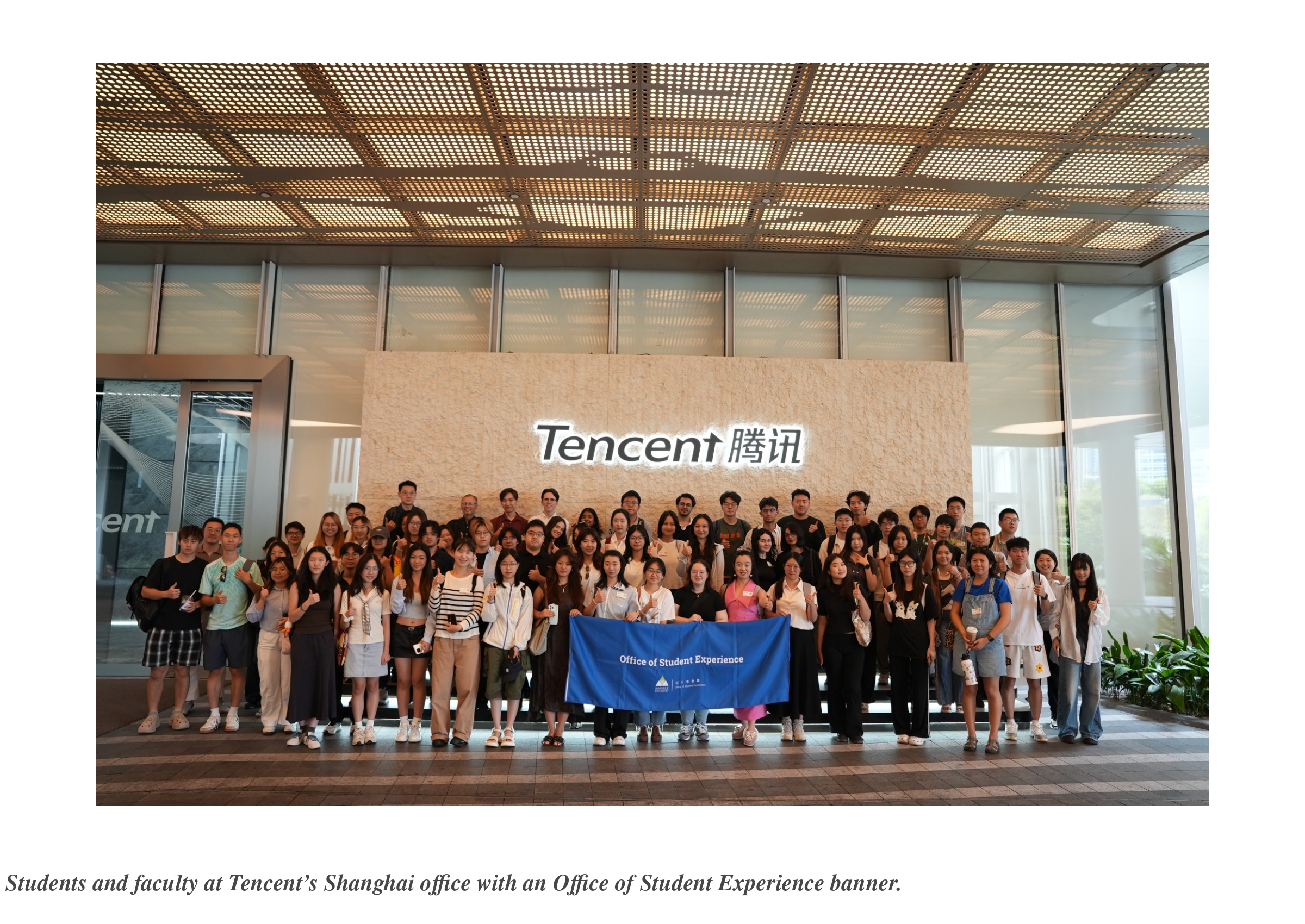
The field trip group first stopped at Tencent’s Shanghai Office. The DKU delegation was welcomed by company staff and walked through an exhibition of Tencent’s technologies and initiatives. One example of an ingenious technology is the “Zero-energy radiant cooling technology” exhibit. Developed in collaboration with Nanjing University, the technology aims to protect glaciers with nano-thin radiative cooling film made from eco-friendly cellulose acetate. If this technology were to be successfully deployed, it would safeguard the planet’s glaciers and protect humanity from rising sea levels.
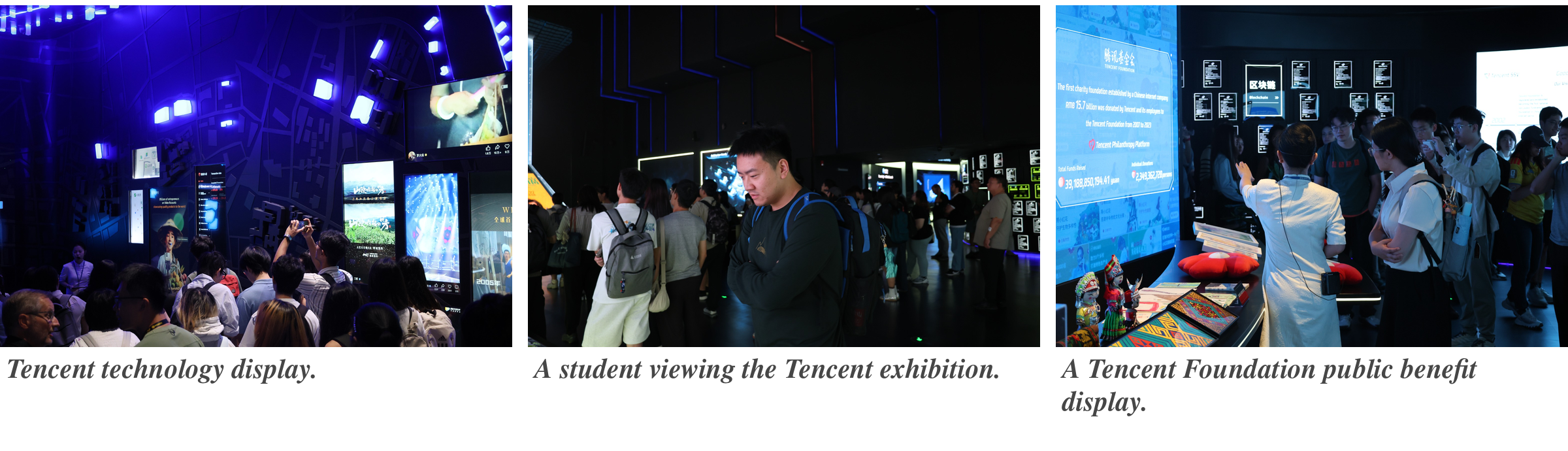
Tencent’s stated mission, “Value for Users, Tech for Good,” offers a starting point for examining how companies define public benefit. Its published initiatives in rural entrepreneurship, digital philanthropy, accessibility, and climate innovation provide context for questions about participation, responsibility, and who benefits. Tencent develops its products starting from consumer needs, providing a direct solution to their needs and problems. The company’s social-responsibility materials describe accessibility, community investment, privacy, and responsible AI.
Furthermore, Tencent’s account of its 2024 Sustainable Social Value Innovation Summit describes the Rural CEO initiative as support for local entrepreneurial capacity. It places the initiative in a wider discussion involving businesses, NGOs, academia, and social entrepreneurs. These endeavors draw a clear picture of who Tencent is: a future-oriented company that is anchored in moral values and societal needs.
After familiarizing themselves with Tencent’s activities, students and professors attended a private presentation of Tencent’s new AI chatbot. They had the opportunity to try it during a hackathon. Students were encouraged to identify everyday life problems and find solutions using Tencent’s new technology. The Tencent tour ended with a well-deserved meal in Tencent’s capacious cafeteria and cross-course reflection.
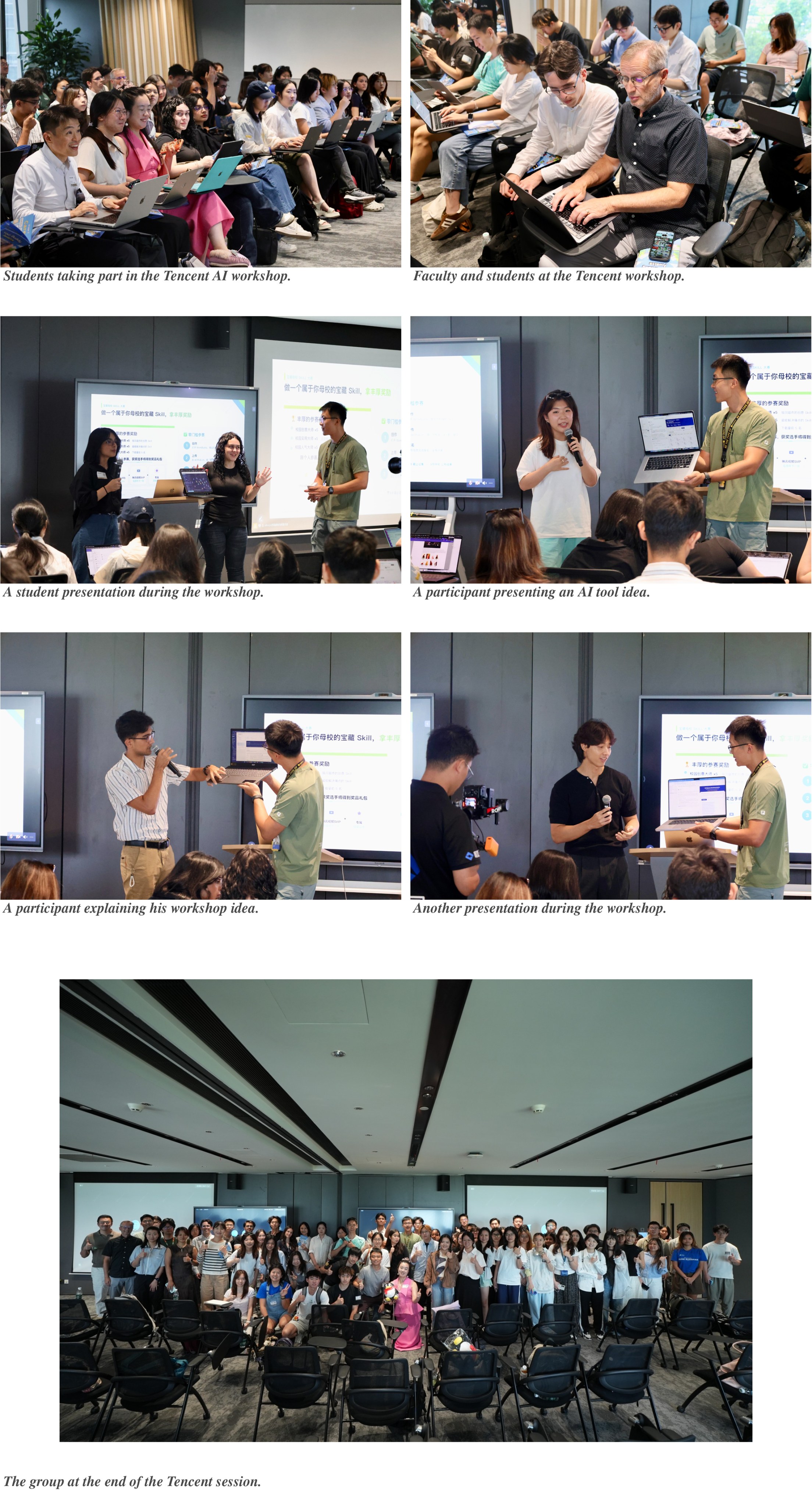
“It was fascinating to get a glimpse into the inner workings of Tencent and see how a major technology company operates, particularly its approach to green computing. Our class has been exploring how new forms of intelligent media are shaping our everyday lives, as well as how AI hype contributes to the way we understand and imagine these technologies. Visiting Tencent allowed me to see these ideas beyond the classroom. It was interesting to see how the concepts we discuss in class are reflected in our field trip visit to Tencent” — Fahmidah, Class of 2030
The Museum and Science in Public Life
The next stop on the itinerary was the Shanghai Science and Technology Museum. The choice of the two locations helped DKU students understand the role of each stakeholder in the technology world. Technology companies such as Tencent identify a problem and create a technological product to solve it. Concomitantly, museums and other establishments such as the Shanghai Science and Technology Museum explain that technology to the public and provide ways in which it will help their everyday lives. Museums are also a place for providing an objective assessment of a technology’s impact on communities.
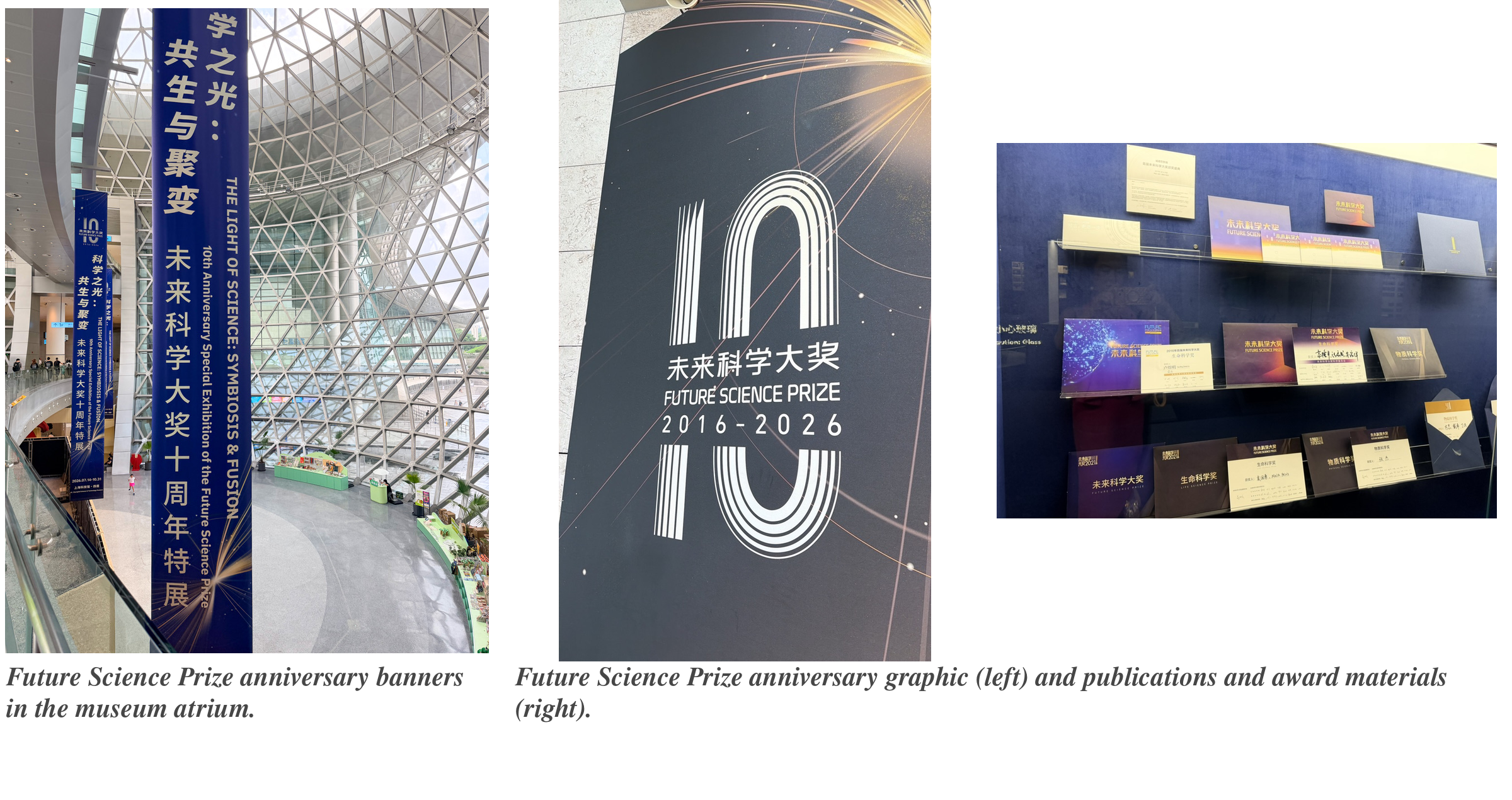
At the museum, the Future Science Prize’s tenth-anniversary exhibition brought scientific recognition into a public learning space. The prize’s origins in a privately funded initiative involving scientists and entrepreneurs create a useful link between discovery, enterprise, and philanthropy. The permanent exhibitions, such as Rainforest Realm, Powering the Future, Future’s Innovation Camp, Aviation Adventures, Incredible Me, and AI Pioneers, cover a large range of subjects.
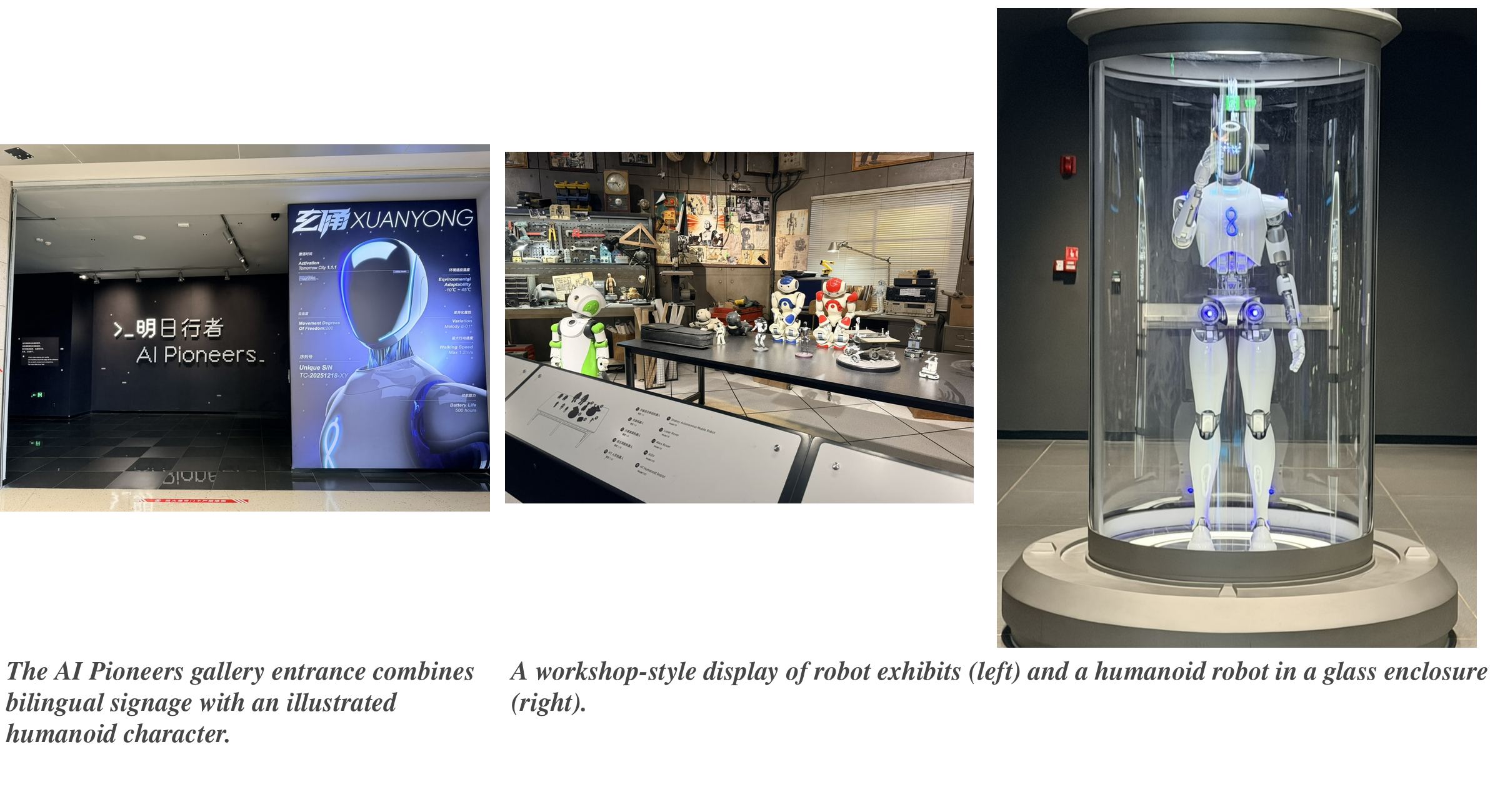
The AI exhibition was particularly enjoyed by students and professors alike. Artificial Intelligence is a term that can be used to refer to a lot of technologies, from chatbots and robotic arms that aid manufacturing to humanoid robots. Therefore, the exhibition showed various forms of Artificial Intelligence and how it could be integrated into society by using aesthetic and engaging animations and comics. The highlight of the exhibition was a cutting-edge humanoid robot encased in glass. One comic showed how that kind of robot could help rescue animals and make household chores easier.
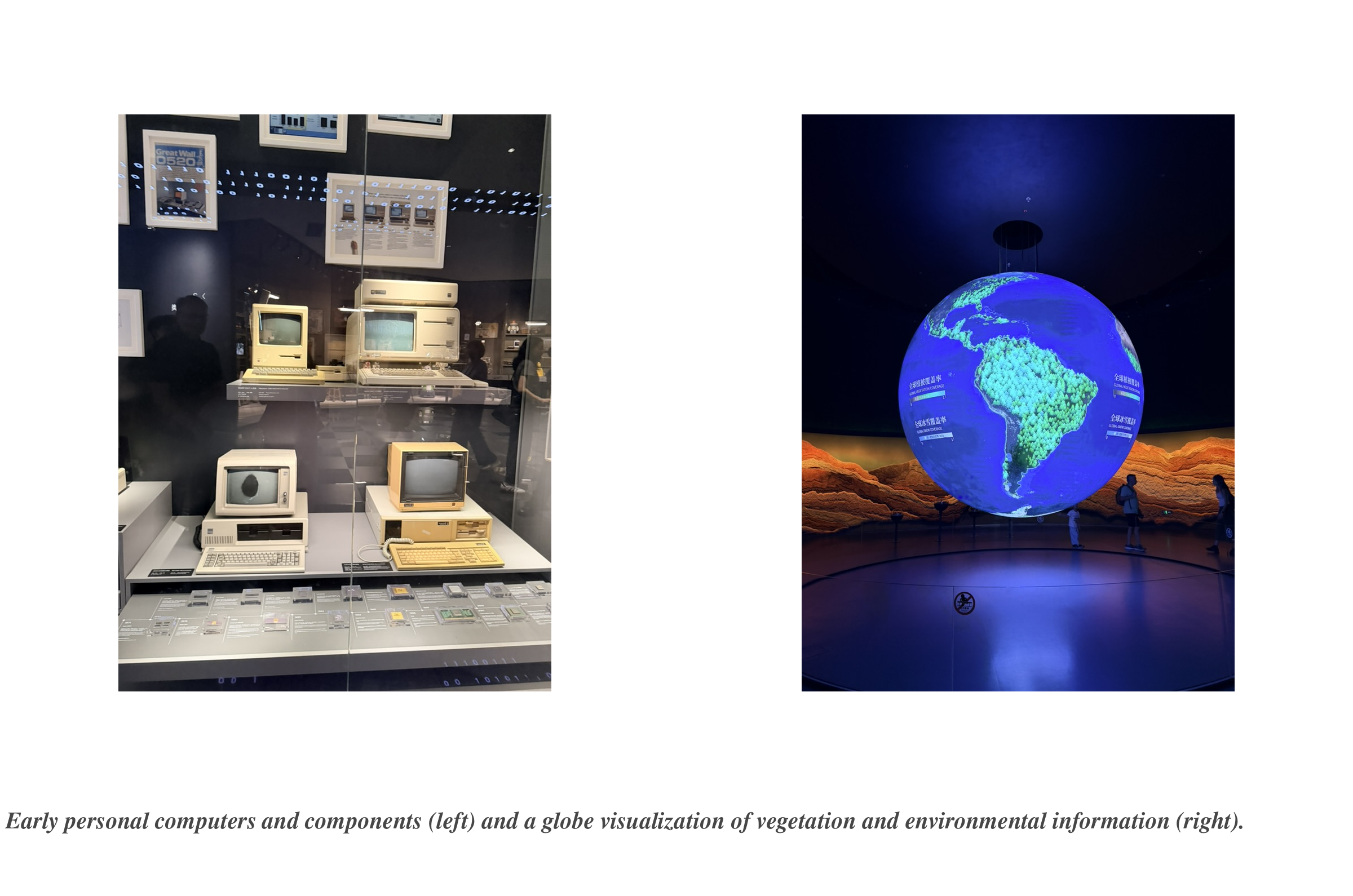
Other displays brought early computing and environmental visualization into the same public conversation about science and technology.
Global Leadership and the Next Question
The visit also offers a lens on Duke–DKU collaboration and education across China and the United States. Their shared commitment to interdisciplinary learning and cross-cultural understanding gave the five courses a common purpose.
Technology Policy, led by Duke Professor Ken Rogerson, adds a public-interest perspective to this shared inquiry. The class was very happy to link the field trip experience to the intellectually stimulating discussions they have during class.
“While much technology is used for entertainment purposes, it is extremely important for students to learn to ask questions about how technology can be used to benefit society, especially on behalf of those who might have greater challenges in accessing and using it. The museum especially provided some important moments to reflect on this and ask questions about technological innovation and progress designed for public improvement.” — Kenneth Rogerson, Duke Sanford School of Public Policy Professor
“I was very impressed by how Tencent’s innovation strategy has been positioned with their focus on new AIs and LLMs. I was also surprised to see how much Tencent played a role in not only media technology but other aspects such as engineering and simulations, robotics. However, as a public policy student, I think the section about scientists and awards in the museum was the most impressive. It showed how great of an impact a policy can have on technological advancement when development and welfare is placed at the heart of policymaking.” — Tuong Tran, Class of 2028
Before the field trip, Prof. Luyao Zhang visited Ken Rogerson’s PUBPOL 222: Technology Policy class. Rogerson returned the visit afterward, joining her COMSCI/ECON 206: Computational Microeconomics class to give students feedback on research proposals grounded in their field observations. He asked them to consider practical effects for industry and public science beyond academic inquiry. His policy perspective showed why questions of access, accountability, and public benefit matter alongside students’ economic and computational analysis.
In Zhang’s COMSCI/ECON 206: Computational Microeconomics and INFOSCI 301: Data Visualization and Information Aesthetics, students’ reflections connected questions about economic incentives and social benefit with questions about how to communicate evidence to the public. Their field observations are informing the further development of capstone projects. Zhang reflected on that process and the purpose of the visit in her own words:
“In my two courses, I see students bringing what they observed at Tencent and the museum back to their research and project work. Their reflections are beginning to shape capstone projects that examine technology’s practical impact in industry and its value to public science. Confucius asks, ‘Is it not pleasant to learn with a constant perseverance and application?’ (学而时习之,不亦说乎?学而时习之,不亦说乎?; The Analects, 1.1, translated by James Legge). Aristotle writes, ‘For the things we have to learn before we can do them, we learn by doing them’ (Nicomachean Ethics, II.1, translated by W. D. Ross). I see these ideas meeting in field-based education: students bring questions into the world, put their learning to work, and return with deeper questions. I envisioned this field trip as a shared effort among educators, industry partners, and public institutions to inspire students to examine what technology promises and whom it serves. I am confident that, as our students work across disciplines and cultures, they will become scientists, entrepreneurs, and philanthropists who join discovery with responsibility and global leadership with service.” — Prof. Luyao Zhang
Philosophical sources: Confucius, The Analects 1.1 (James Legge translation); Aristotle, Nicomachean Ethics II.1 (W. D. Ross translation). Analects text · Aristotle text
The experience can help incubate the judgment future scientists, entrepreneurs, and philanthropists need: testing evidence, developing useful solutions, and directing resources toward public benefit. The values and teachings of the field trip align with the United Nations Sustainable Development Goals: SDG 4 – Quality Education, SDG 9 – Industry, Innovation and Infrastructure, SDG 11 – Sustainable Cities and Communities, SDG 16 – Peace, Justice and Strong Institutions, and SDG 17 – Partnerships for the Goals.
Conclusion and Thoughts for the Future
The field trip broadened students’ perspectives on how computational technologies are embedded in organizations, platforms, markets, interfaces, and public institutions. Regardless of the career pathways students pursue, one teaching from this field trip remains of utmost importance: every decision should be made with its negative and positive externalities in mind.
Acknowledgment The field trip was supported by DKU’s Office of Student Experience, including Isaac Zhu, Senior Undergraduate Academic Activities Coordinator.
Authored by Eric Duma
Advised by Prof. Fan Liang and Prof. Luyao Zhang
Supported by Isaac Zhu, Chi Zhang, and Shuqian Xu
Photo credits Yiwen Chen
Related stories from the Digital Technology and Society Cluster
• Digital Technology for Sustainability Symposium and Finance Forum 2025
• Digital Humanities Zhouzhuang Mystery of Life Museum Field Trip
• SocioTech Futures: Cultivating Student Leadership
• Bridging Philosophy and Practice: Redefining AI Education at SIGGRAPH Asia 2025
• Our Journey from DKU Classroom to National Service-Learning Forum
• Global Commons in Motion: Cities, Sci-Fi, and Community Futures
• A “0 to 1” Milestone: Digital Innovation Challenge Finance Track
• HackDKU ’26: Ethical AI Innovation Bridging China and the World
• Insights from the Interdisciplinary Forum on Computational Social Science
• Designing AI Policies in Higher Education
• Rooted in Kunshan, Connected to the World: From a Student Capstone to Culturally Aware AI