
By Gloria Gu, Class of 2027
“Whose face doesn’t have a color?”
This was the question Tao Zhang asked her professor the first time she encountered the term “people of color” in a doctoral course. She had just arrived in the United States from China. The concept of race was entirely new to her. “I didn’t even know what race meant,” she recalls.
But that moment has inspired her to explore marginalized identity experiences implied in one’s constructed “race” in transnational contexts. She is now Assistant Professor of Intercultural Communication and Language at Duke Kunshan University. Recently, she published her article “Seeking the ‘us’ in our othernesses: Decolonizing the understanding of Chinese-ness(es) through lenses of transnationalism and thick(er) intersectionalities” in the Journal of International and Intercultural Communication. The article reflects this focus by challenging the dominant U.S. White/non-White racial binary.
Zhang argues that this framework fails to capture the complex, layered, and often contradictory identity experiences of people navigating between cultures, philosophies, and histories in the context of globalization, especially of those from the Global South, including many transnational Chinese. Therefore, she adopts Yep’s theory of Thick(er) Intersectionalities and Kraidy’s notion of Transnationalism to explore the “Multi-Colored Otherness” of transnational Chinese, the nuanced and complex ways Chinese bodies are racialized in the U.S.
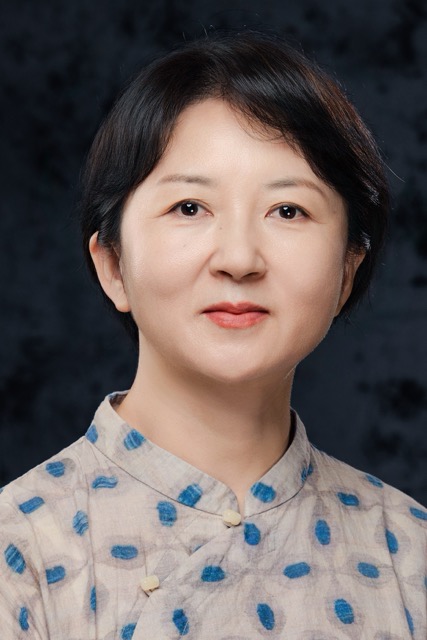
For this work, she received the 2025-2026 CSCC Outstanding Faculty Scholar Award. In a recent interview with CSCC student journalist, Zhang reflected on her decade-long journey, from international student to faculty member in the U.S., her return to China, and why she believes that understanding identity requires moving beyond black-and-white thinking, toward what she calls “seeking the ‘us’ in our othernesses.”
From the U.S. to China — A Transnational Scholar’s Journey
When Zhang received this award, she was in the fieldwork. “I was very thrilled,” she recalls. “It gave me continuous courage to go forward and pursue my current scholarship along this direction.”
From 2013 to 2023, she spent a decade studying and teaching across private and public universities in the U.S. She earned her Ph.D. in Communication Studies from Southern Illinois University – Carbondale. This overseas academic background laid a solid foundation for her research in intercultural communication. After holding two short-term teaching positions in the U.S, she decided to seek a long-term platform, one that could balance her overseas academic training with her cultural roots back home.
“My dream is to work in some institution where I can build bridges between the East and West, blending my academic training from the United States and my cultural knowledge from my Chinese background, upbringing, and philosophy.” With this vision in mind, she joined DKU in 2023.
During her journey teaching abroad, her linguistic and cultural background offered her a unique outsider-looking-in perspective. Her systematic academic training also provided her with distinctive research dimensions. Yet she is reluctant to define her overseas experience simply as either “advantage” or “struggle.” She describes herself as “someone swimming in between countries, or maybe borders.”
Growing up in Yunnan, a province known for its rich ethnic and cultural diversity in China, gave her yet another layer of unique identity. As a Han Chinese, she belongs to the dominant ethnic group in China. But as someone from Yunnan, she stands at the margin of that dominant narrative. “I’m on the margin of the center, as someone from Yunnan; but at the same time, I’m also in the center of the margin, as an ethnic Han in Yunnan.”
This dual in-between position has become her unique research strength. She attempts to bridge the Western academic focus on marginalized lived experiences with the often-overlooked grassroots narratives within China. To her, beyond the grand national discourses, the diverse cultural expressions and identity experiences of individuals in the margins deserve equal attention.
Academic Contributions — “Multi-Colored Otherness” Grounded in the Global South Perspective
What exactly does this bridge look like in academic terms at the beginning? For Zhang, the answer lies in dismantling the framework that first made her question the color binary.
The White/non-White binary, Zhang argues, is the dominant framework in U.S. racial discourse. It sorts everyone into two boxes: White, and everyone else. But this framework, she insists, fails to capture the complexities of transnational Chinese experiences. “Some of my interviewees told me they had to look into the dictionary to check what race meant,” she recalls. For people coming from contexts where race is not the central organizing principle of social life, this binary feels foreign and inadequate.
Even within the “non-White” category, the differences are immense. A Korean scholar, a Taiwanese student, and a mainland Chinese professor may all be labeled “Asian” in the U.S., but their historical memories, political orientations, and identity understandings are vastly different. Some carry colonial memories. Some don’t. Some are U.S. citizens but are never seen as American. “I’m either international faculty, although I have a U.S. passport, or I’m Taiwanese American or Chinese American, but never just American,” Zhang says, summarizing what her interviewees told her. The binary, she concludes, erases these nuances rather than illuminating them.
To address this gap, inspired by notions of Yep’s Thick(er) Intersectionalities and Kraidy’s Transnationalism, Zhang coins a term: “Multi-Colored Otherness.” She intentionally uses multiple colors: Yellow, Red, and Grey, to describe the different ways Chinese bodies are racialized in the United States. It is a strategic move, as in Spivak’s “strategic essentialism”: she uses the very label imposed on Chinese as a tool to reveal how reductive and absurd that single color binary actually is.
Yellow represents the historical racial fear of Asian invasion. “Yellow Peril” has haunted Western imagination for centuries, rooted in anxieties about Mongol invasions and Asian expansion. This is the oldest layer of racialization, one that persists in subtle and not-so-subtle forms today.
Red represents political and ideological marginalization. In the U.S., the “Red Scare” was once directed at the Soviet Union. After its collapse, China has inherited this ideological fear in the Western imagination. Today, any Chinese individual can be subjected to suspicion simply because of their national origin. “The red scare can be very easily directed to any Chinese individual in the United States,” Zhang explains. Even Koreans and Japanese, she notes, can be mistaken for Chinese and suffer the same discrimination, for instance, during the COVID-19 pandemic, thus leading to internal tensions among Asian communities. It is a telling example of how imprecise and harmful these labels can be.
Grey captures the more ambiguous, double-edged stereotypes. The “model minority” myth portrays Asian Americans as law-abiding, hardworking, quiet, and successful. It is a seemingly positive image, but sometimes flattens individual experiences, which is often used to pit minority groups against each other. On the other end of the spectrum, the “model minority” image can switch into outright hostility, as seen during the pandemic, when Chinese and Asian-looking individuals were blamed for the virus.
“By using multiple colors, I want to show that Chinese experiences are not just ‘non-White,'” Zhang says. “They carry contradictory historical, personal, and political baggages: dense, complex, and often contradictory.”
Zhang’s focus on a thick, intersectional, and non-binary understanding of identity grows directly out of her own life, as someone who has moved between China and the U.S., a scholar from the Global South trained in the Global North. This double position gives her a unique vantage point: she can see not only how the U.S. racial binary fails to capture transnational Chinese experiences, but also why it fails. The binary, she argues, is a product of a specific historical and geopolitical context, which centers Western experiences and treats the rest of the world as peripheral.
Challenging this framework, for Zhang, is therefore not just about pointing out the reasons for the limitations of the binary framework. It is also about initiating possible solutions, to build bridges across margins, by re-centering the voices and perspectives that have been historically marginalized. “Global South here is tied not only to geography, but coloniality and realities that link to it. In knowledge production, it can mean that your voices are less heard, less important, and less meaningful,” she says.
To Zhang, the Global North and Global South are not merely geographical labels. They are markers of power, voice, and history. The Global North is where global narratives are framed, academic knowledge is produced, and borders are tightly guarded. The Global South is where voices are less valued and harder to amplify. This postcolonial understanding shapes her research: she insists on centering the perspectives of those historically marginalized globally and locally. It is an attempt to make visible what mainstream frameworks have rendered invisible.
Methodological Turn — Walking Toward “the Other”
Zhang returned to China in 2023, but she quickly realized that her theoretical tools did not travel seamlessly in the Chinese context. In the United States, critical scholarship on identity almost always begins with race. “If you do not talk about racial identity, you do not have the right to talk about identity at all,” she explains. But in China, race carries a very different meaning. “I had the willingness to study race. I had the skills, the mastery of racial theories. But race as a concept has got a very different meaning in China. I was very disorientated.”
Rather than forcing a U.S.-centered framework onto a Chinese context, she turned to fieldwork, wanting to reconnect to her culture and find out ways to conduct identity research differently. In the fieldwork during the past three summers, she discovered that the most productive way to understand identity was not through theoretical diagnosis, but through learning how people actually live, perform, and construct it in their own ways, from which new theory development are also likely possible. For instance, her first ethnographic project examines the renaming of a Yunnan Tibetan city Zhongdian to Shangri-La, through exploring how local Tibetans perform and construct their identity through a government-endorsed tourist brand. “Every day in the field, I was shocked by my taken-for-granted negligence and ignorance,” she admits.
This experience of walking outward into the fields also led her to reflect more inward. Methodologically, Zhang is also interested in autoethnography. She describes it creates “a perfect space to do critical research in a gentle and more acceptable way in the Chinese context, telling personal stories while critiquing culture at the same time.” Autoethnography values evocative storytelling, creativity, and emotional appeal. It brings micro, silenced stories back into the conversation, as windows into larger structural issues. “The charm of autoethnography lies in the in-between of the micro and the macro,” she explains. “You tell a personal story, but your purpose is not just to vent. It helps readers to connect, empathize, find themselves in the story, and look out into the big picture.”
For Zhang, research is rooted in lived experience, where culture, identity, and power intersect. This spirit guides her teaching as well: she asks students to approach cultural difference with curiosity instead of judgment. “We should not prioritize cultural understanding in judging who is right or wrong, instead, we should try to make sense of this complex world through investigating the whys and hows,” she says. To her, scholarship means walking toward and together with “the other,” rigorous yet deeply humanistic.
Current Research — Citizens on the Borders
Today, Zhang is continuing in the fieldwork. Her current research project, “Citizens on the Borders – Intercultural Communication as Everyday Life,” takes her to China’s southern frontiers, the borders with Vietnam, Laos, and Myanmar. Here, state-drawn boundaries cut through communities that have shared languages, cultures, ethnic backgrounds, and even family ties for generations. “The borders are artificially constructed and rigid, but populations along and across the borders and constantly moving and flowing in each other’s communities through work, education, beliefs, marriage, etc.” she explains, “The identity belongings on the borders are so complex, diverse, and layered.”
For Zhang, whose research has always centered on marginalized voices, this project is a natural continuation. She wants to know how these “border citizens” navigate their daily lives, crossing national borders for work or family, speaking multiple languages, and negotiating identities that do not fit neatly into a flat belonging within the national discourse. For instance, linguistically, most border citizens are multilingual. They are fluent in Mandarin, Yunnan dialects, ethnic minority languages, and the languages of neighboring countries. They move between identities as easily as they move between national borders.
It reflects the core belief that has guided Zhang’s research all along: that the most honest and urgent voices are often the ones closest to us, in lived experiences, in the people right in front of us. And it is this conviction, she hopes, that can continue to be pursued in her future research.
For students or scholars interested in intercultural communication, Zhang suggests starting with observing small things around us. “Doing meaningful projects does not need to be big and huge,” she says. “Always keep an eye on your surroundings, and focus on small aspects of life to find something meaningful.”
Her own journey: from a classroom in the U.S. where she first asked “Whose face doesn’t have a color?”, to the citizens on the borders of China where she now listens to others tell their stories, is the best testament that personal curiosity can lead to the most profound scholarship. She is still asking, one border at a time…