By Violet Nguyen, Class of 2028
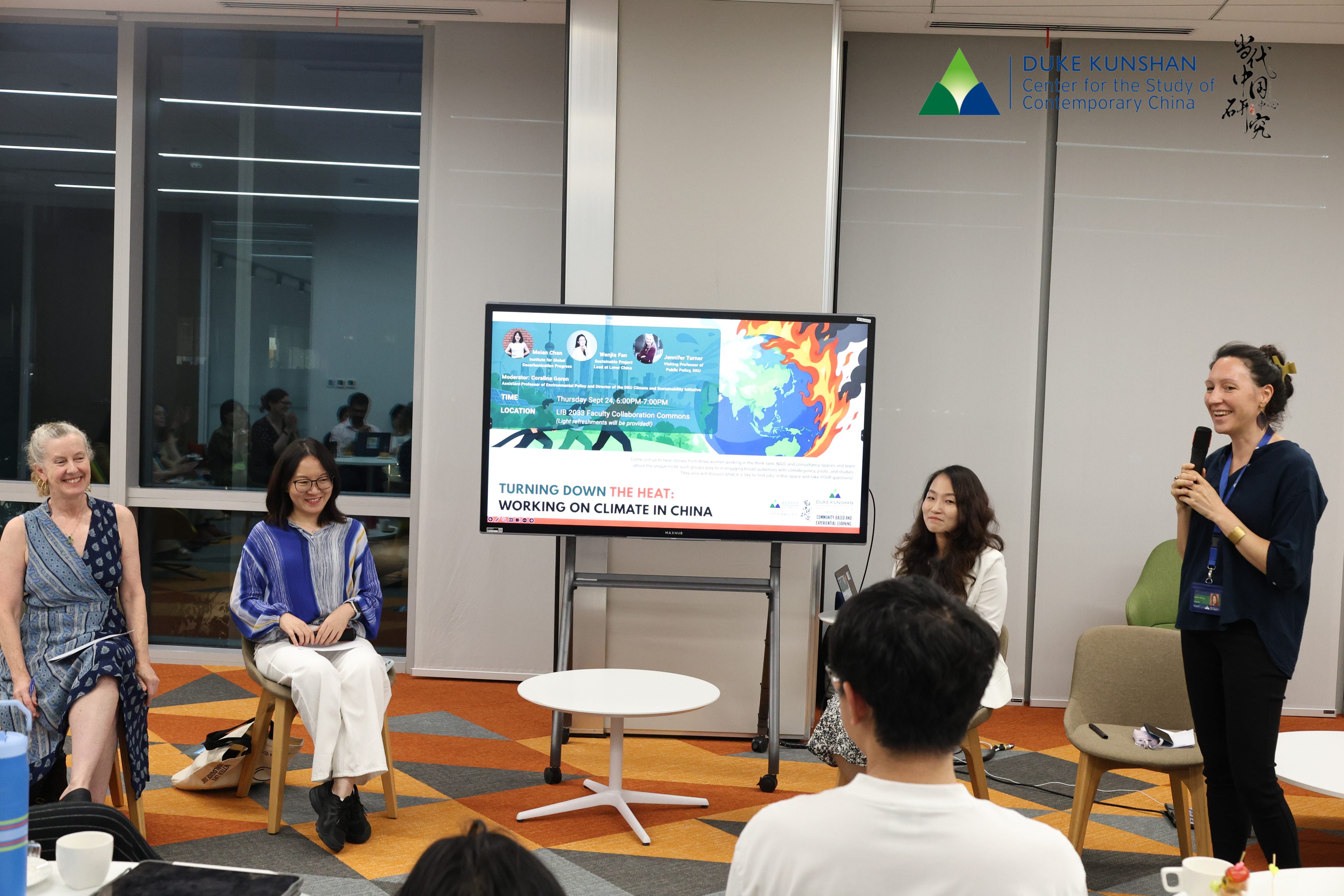
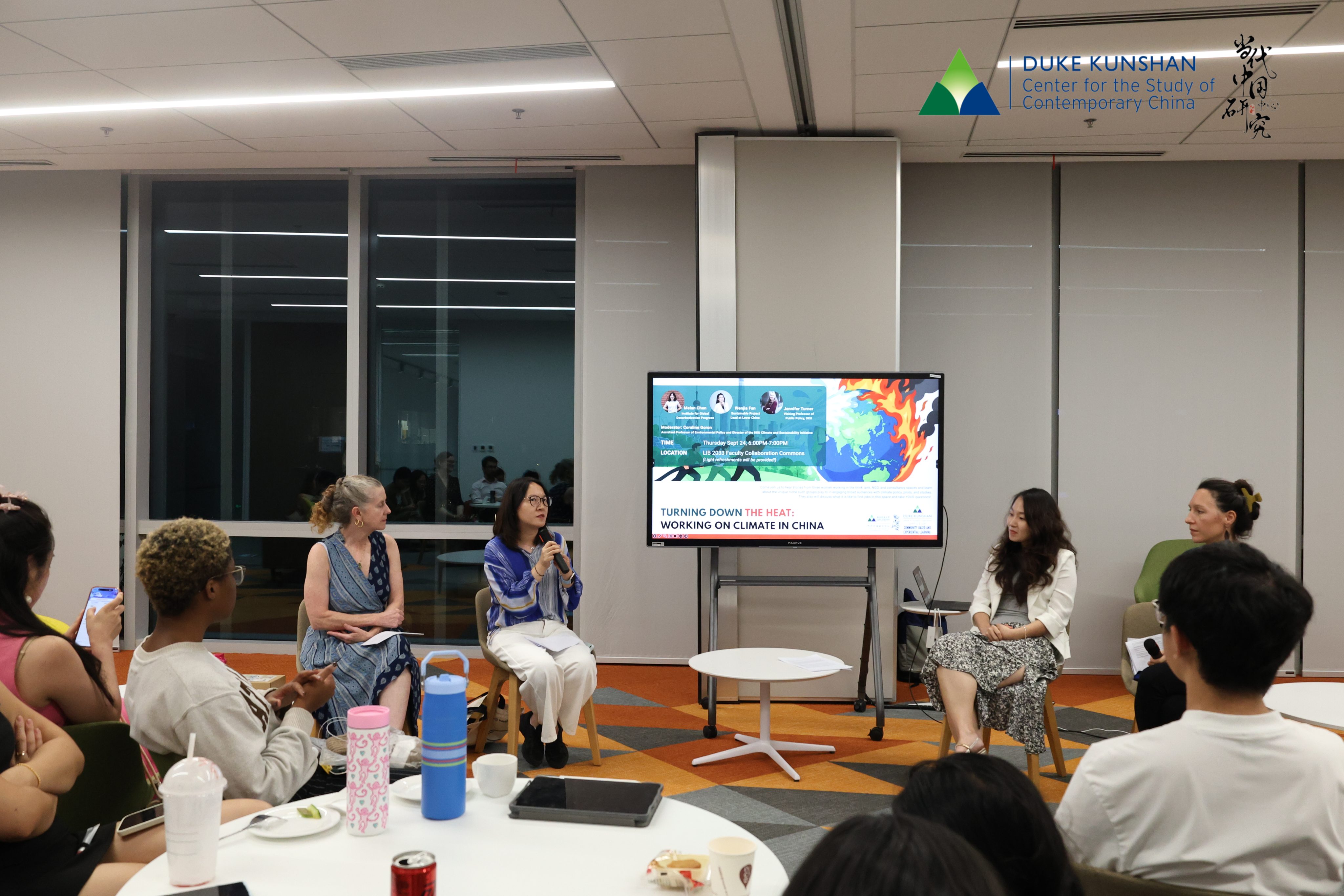
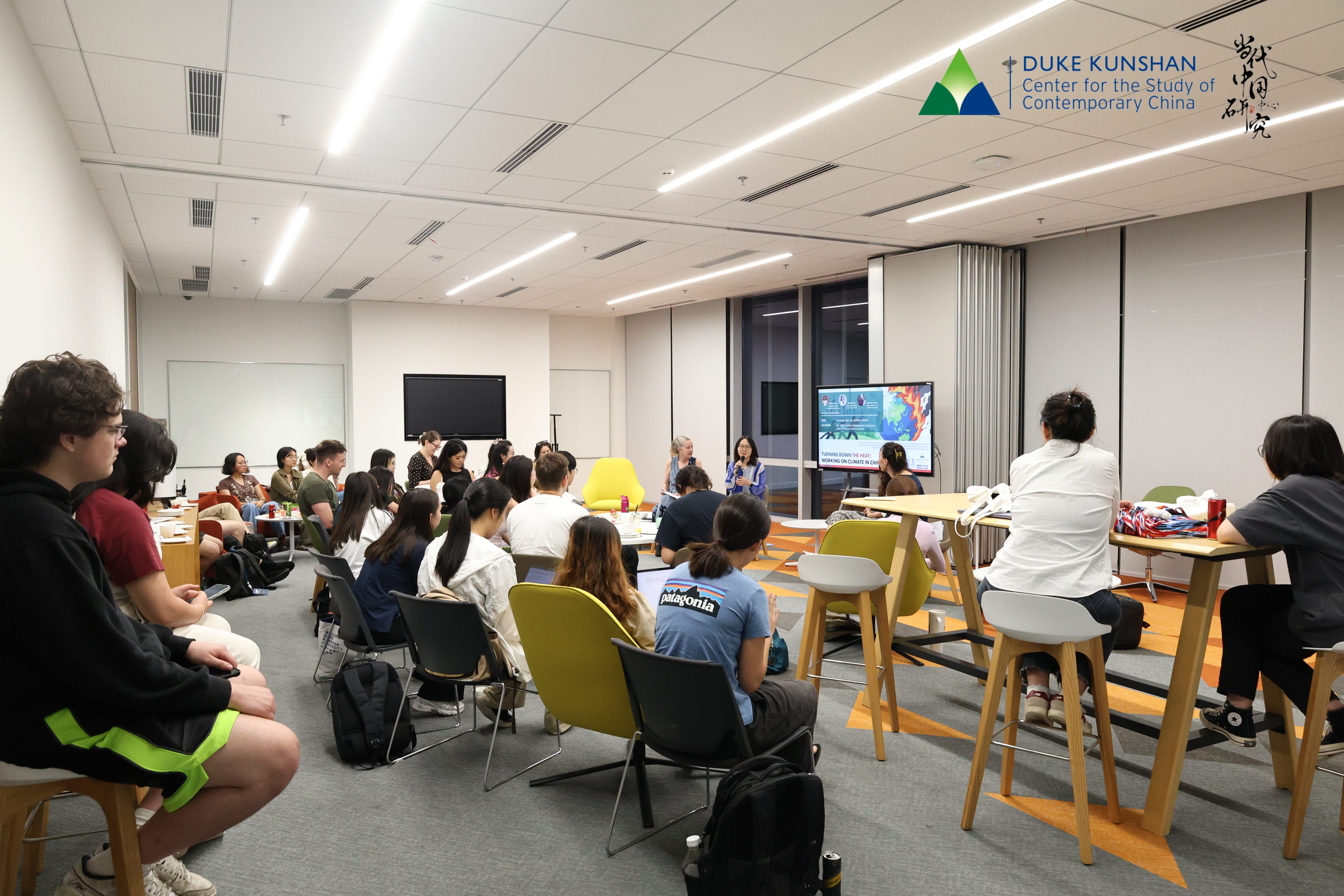
On September 24, the CSCC Global China Cluster hosted “Turning Down the Heat: Working on Climate in China”, bringing together three professionals working across climate policy, corporate sustainability, and environmental advocacy. Moderated by Coraline Goron, Assistant Professor of Environmental Policy and Director of the DKU Climate and Sustainability Initiative, the event featured Chen Meian, Senior Program Director and Senior Analyst at the Institute for Global Decarbonization Progress (iGDP); Wenjia Fan, Sustainable Project Lead at Lever China; and Jennifer L. Turner, DKU visiting faculty member and non-resident fellow at the Stimson Center. Rather than presenting climate action as a single field or career path, the discussion highlighted the many ways organizations outside government can contribute to environmental change in China. The speakers described work ranging from agricultural research and corporate sustainability to community engagement and international cooperation.
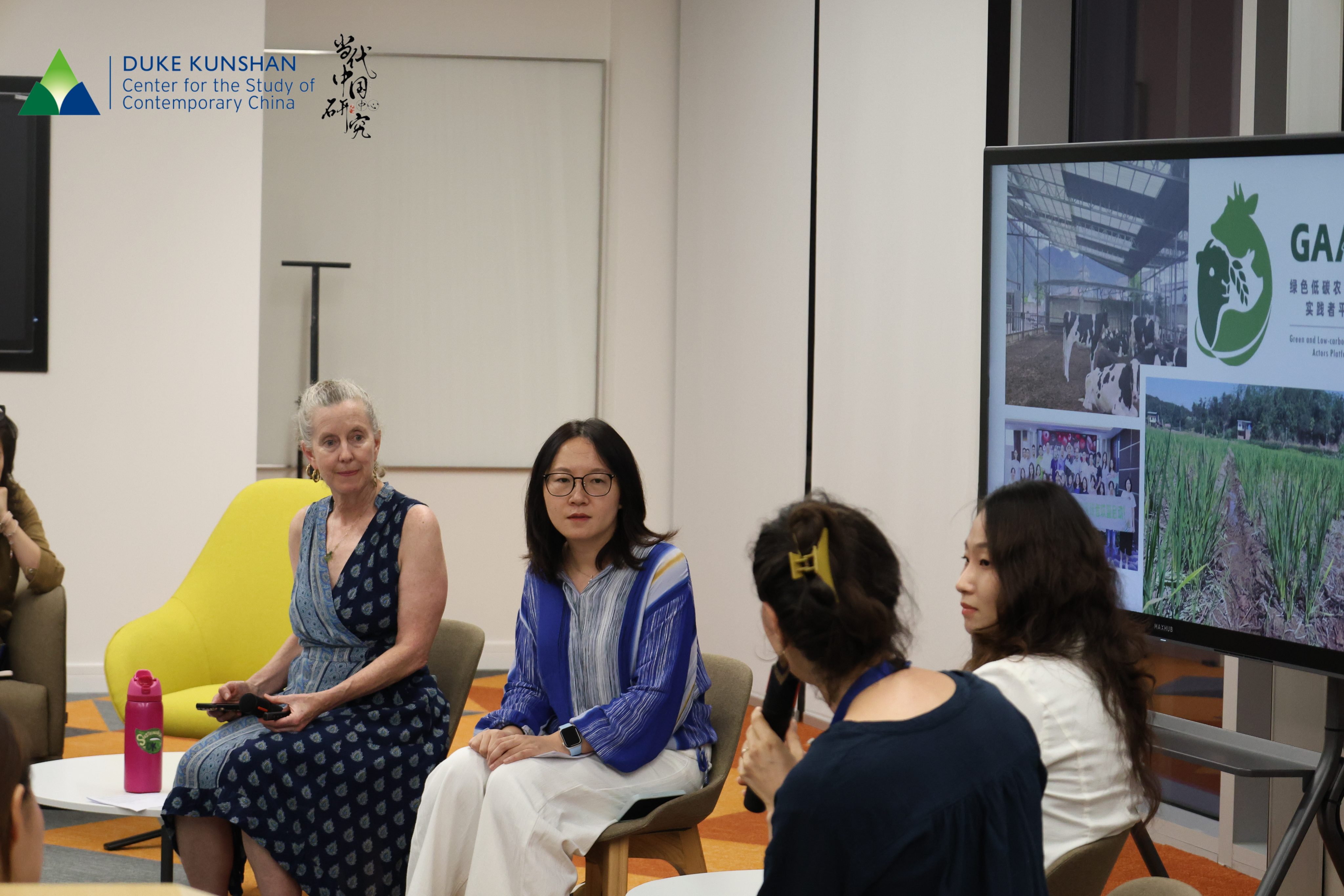
Meian Chen described her work at iGDP, where she leads an agri-food transition program that connects research with local action. The program brings together diverse actors from policymakers, researchers, agricultural cooperatives, to smallholder farmers, to discuss challenges in developing low-carbon agricultural practices. One initiative she highlighted was the “Low Carbon and Green Actors Platform,” which creates space for actors working at the local and grassroots level to share their experiences with the policy and research communities. Chen emphasized that climate change can often feel like a distant and abstract issue. Bringing together people working directly with agriculture allows them to see how climate change affects their everyday lives while also recognizing that their work can contribute to climate solutions. For Chen, meaningful climate action therefore requires more than producing research; it also requires creating space through which local knowledge can shape wider conversations and policies.
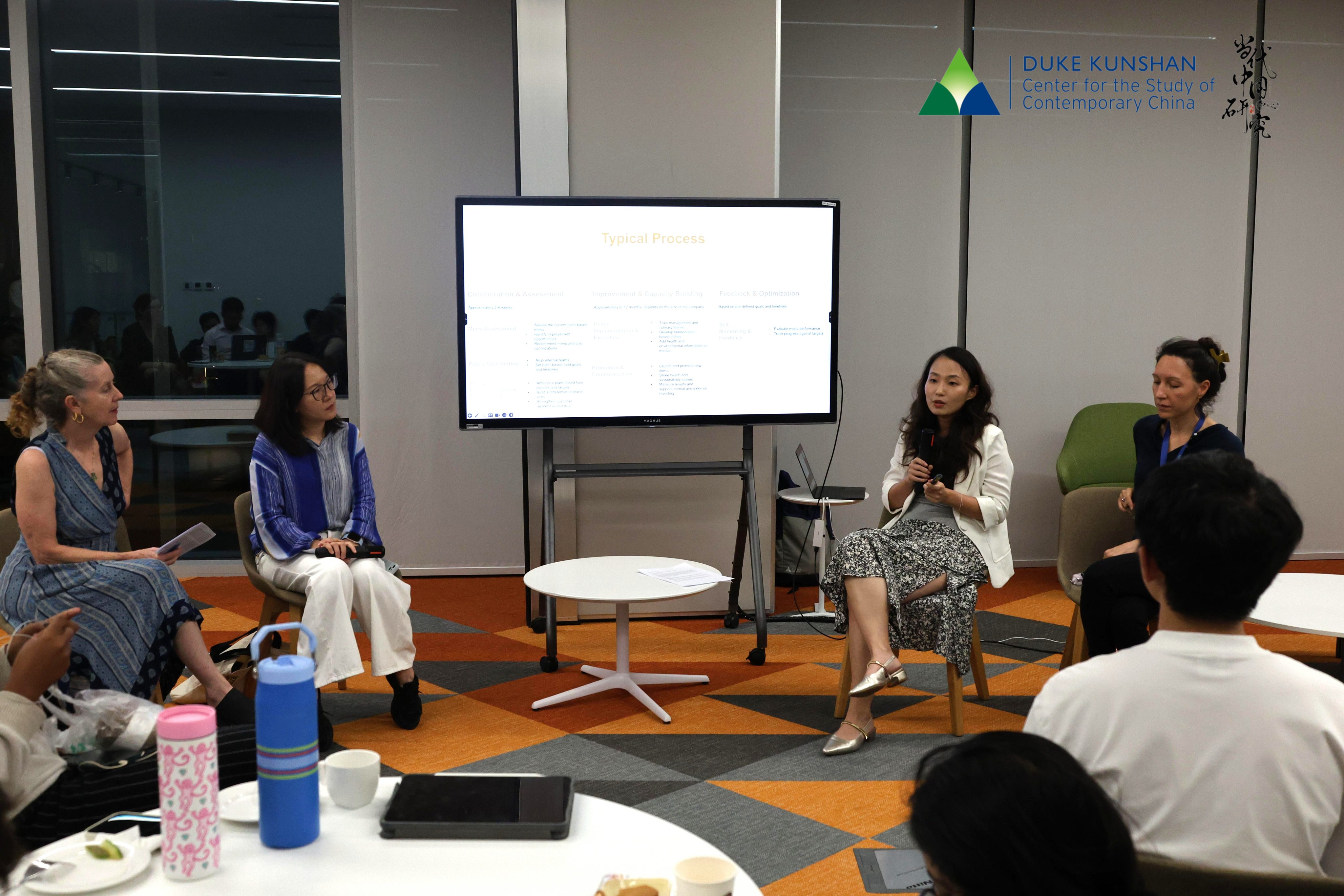
Wenjia Fan offered a perspective from the corporate side of sustainability. At Lever China, she works with hotels, restaurants, and other food-sector organizations to increase plant-based food offerings and improve animal-protein sourcing. Fan explained that companies do not always respond to climate or sustainability arguments directly. One of the central skills of her work is therefore to understand what motivates a company and finding a point that connects sustainability with its priorities. She described one particularly persistent case involving a large Chinese restaurant group. After repeatedly reaching out without receiving a response, Fan eventually found a different way into the conversation by identifying the company’s interest in local ingredients and Vietnamese cuisine. Rather than approaching plant-based food solely as a climate issue, she connected it to interests the company already valued. After roughly a year of continued engagement, the restaurant group committed to making 30 percent of its offerings plant-based across roughly 1,000 stores by 2028 and began working toward launching new dishes.
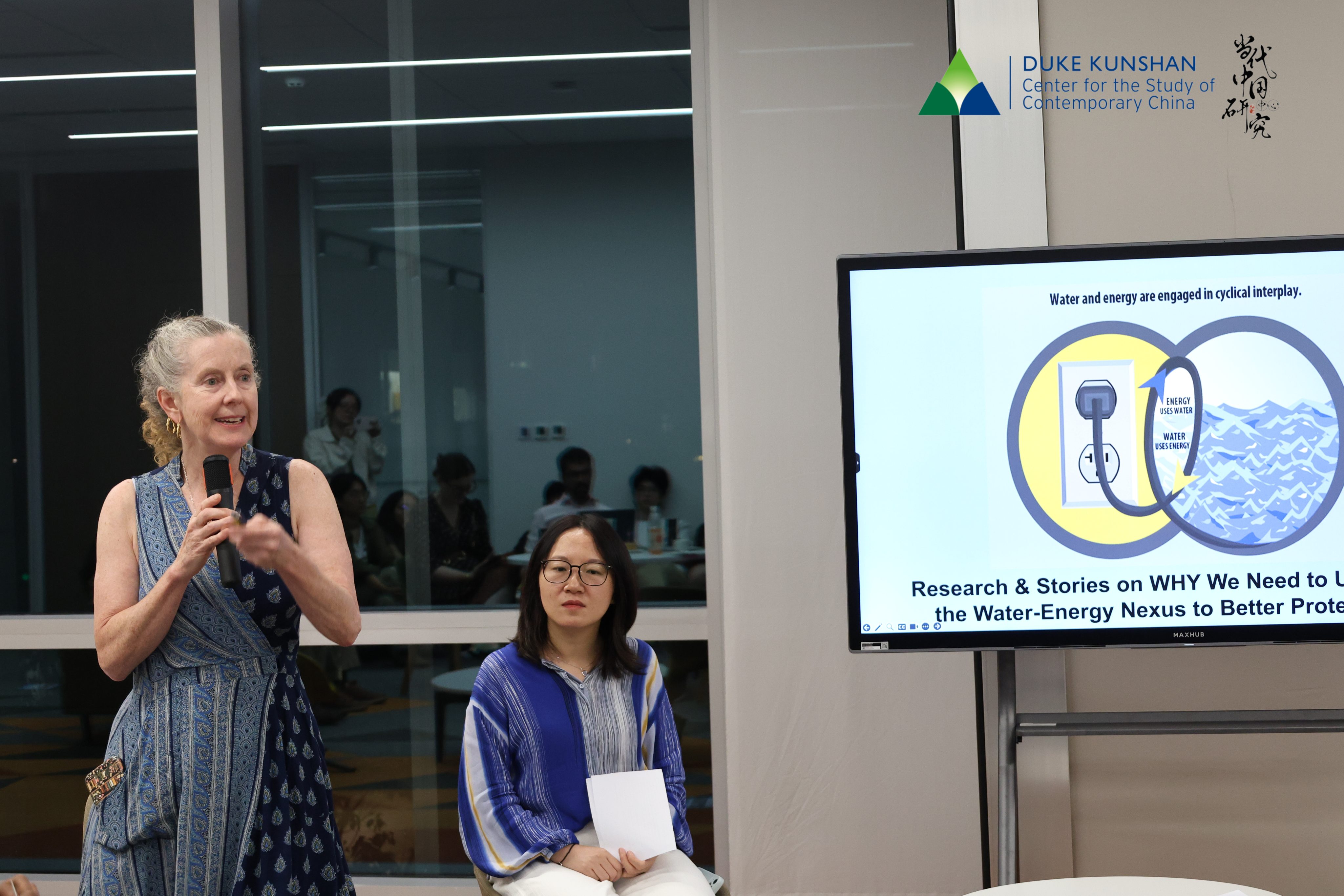
Professor Turner brought a longer perspective on environmental cooperation between China and the United States. Drawing on 27 years of work on China’s environmental issues, she discussed how environmental and climate cooperation has changed alongside China’s domestic priorities and US-China relations. She discussed projects that connect energy, water, and climate policy, including “Chokepoint China,” which examined the relationship between energy development and water use. “Chokepoint China” grew from a simple yet consequential observation: different forms of energy production require significant amounts of water, while water systems themselves depend on energy. What began as research into this energy-water relationship eventually became part of broader US-China climate cooperation, bringing together scientists, NGOs, businesses, and other actors to work on research, policy, and technological solutions. She emphasized the importance of building trust over time, particularly when working across different institutions and national contexts. Despite changing US-China relations and regulatory challenges for foreign NGOs, Prof. Turner argued that environmental and energy issues can remain an important channel for continued communication and cooperation.
The speakers also reflected on how the climate field itself has evolved. Chen noted that China’s climate work has increasingly shifted from designing policies toward implementing them, while the scope of attention has expanded beyond carbon dioxide and energy to include other greenhouse gases and broader climate concerns.
For the speakers themselves, their climate work began with moments when environmental problems became personal. Fan traced her interest in climate issues to severe flooding in her hometown in Henan in 2021. Before then, climate change had felt distant to her; after experiencing the consequences of extreme weather, the issue became immediate. Chen explained that her interest in non-CO₂ greenhouse gases partly comes from their lack of public and policy attention despite their connections to climate and public health. Prof. Turner similarly recalled encounters with water scarcity and pollution during her years working in China, including severe water shortages and pollution-related cases that shaped her commitment to environmental research.
Ultimately, “Turning Down the Heat” presented climate action in China as a process of connecting different fields. Researchers need to engage with local communities, organizations need to understand businesses, practitioners need to translate broad goals into workable solutions, and international cooperation requires long-term trust. From agricultural transitions and plant-based food to water security and US-China environmental cooperation, the discussion showed that climate work happens not only through major policies and technological breakthroughs, but also through the slower and often less visible work of building relationships, finding common ground, and turning ideas into practice.