By Violet Nguyen, Class of 2028
Junyi Yu is a Class of 2026 student majoring in Arts and Media (Creative Practice track) whose work explores the connections between visual storytelling, cultural preservation, and community engagement. As a student researcher in the Student-Initiated Research and Creative Inquiry Project “Woven Currents: The Mekong’s Flow Through Art and Ecology” and the Community Service Project “Transitions & Traditions in Bacheng,” she uses photography, documentary practice, and creative methods to document communities undergoing social and environmental changes. She also served as the CSCC student photographer during the 2025-2026 academic year.
From documenting disappearing marketplaces in Bacheng to learning traditional weaving techniques in northern Thailand, Junyi Yu approaches research through deep participation and relationship building. Across these roles, she has developed an interdisciplinary practice that combines documentary work, photography, and community engagement. We sat down with her to talk about how both projects came together, what she learned from the people she worked with, and how creative practice can help preserve stories that might otherwise be overlooked.
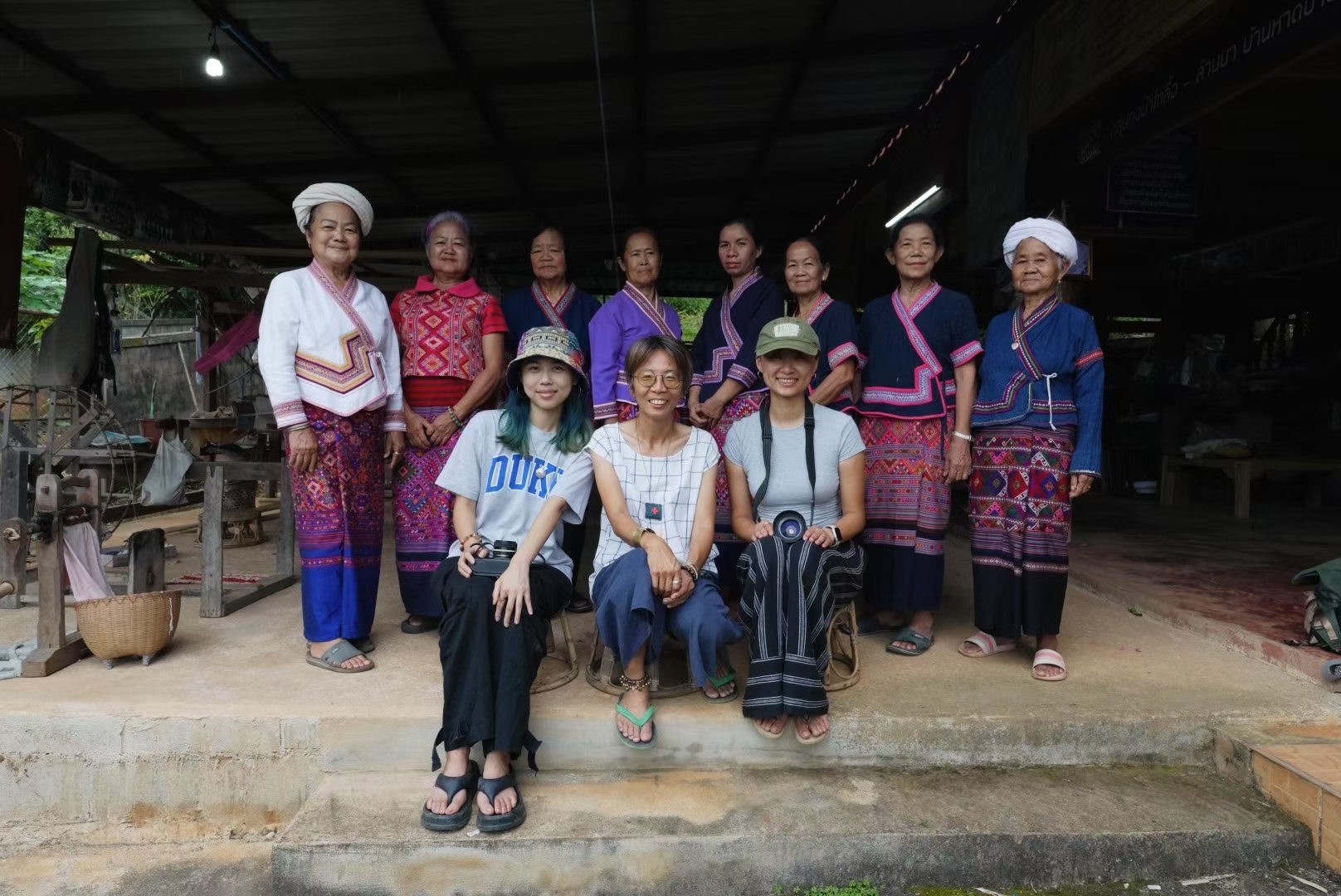
Your project Woven Currents: The Mekong’s Flow Through Art and Ecology explores traditional weaving practices among the Tai Lue people in northern Thailand. What did you learn from exploring environmental and cultural issues through art and craft traditions?
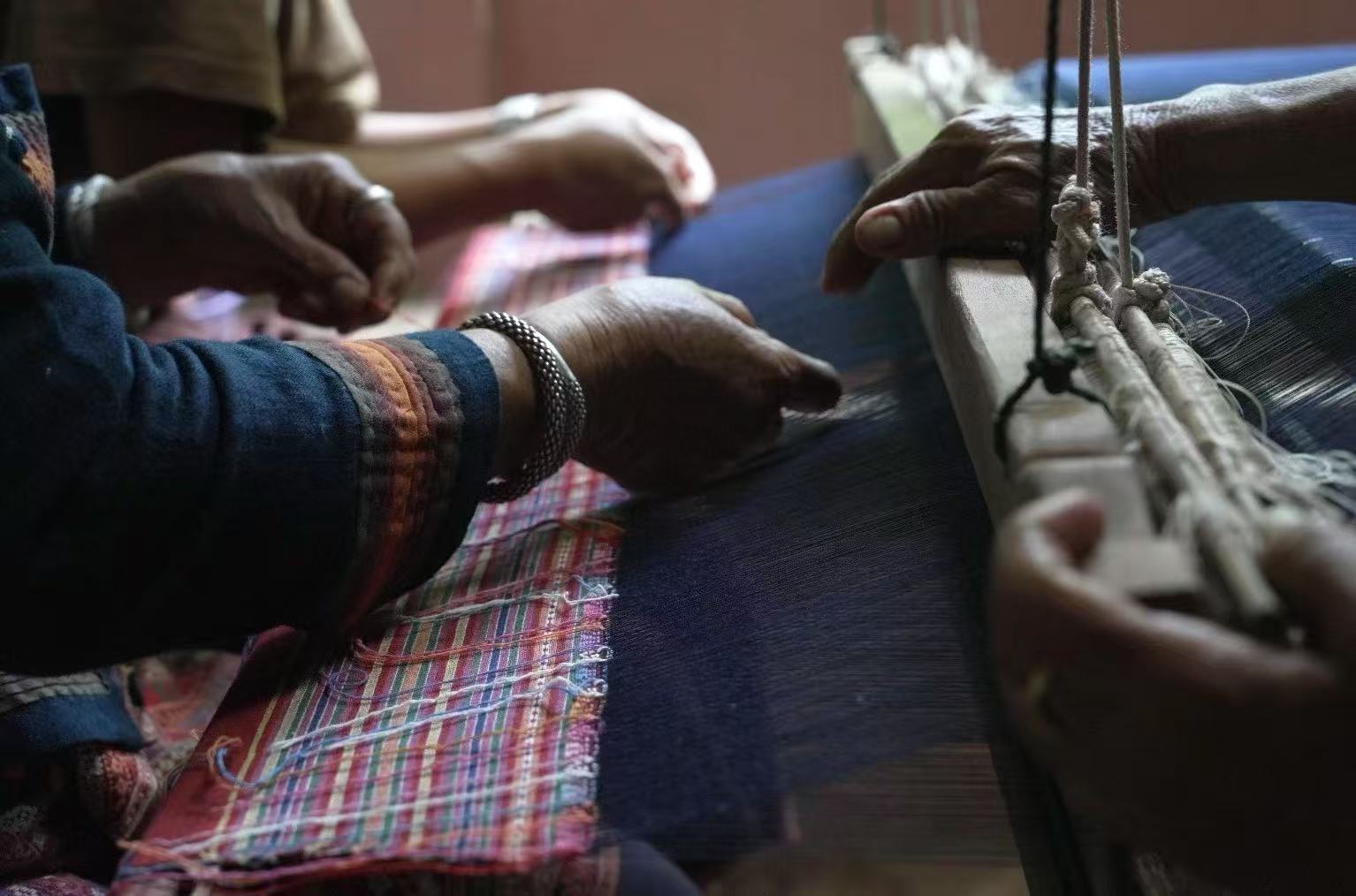
Before conducting my own research, I had already visited the Mekong region several times with Professor Kaley Clements and our community partners at the Mekong School. Those long-term relationships made it possible for me to engage more deeply with local communities. During one visit, I learned about a weaving village and became fascinated by the traditional looms and textile practices there. The Tai Lue people from northern Thailand have a distinctive weaving culture. Every ethnic group has its own weaving traditions, but theirs is particularly interesting because weaving is not just a craft but a way of recording history and expressing emotion. I had always been interested in weaving and handmade crafts, so I wanted to learn directly from the artisans.
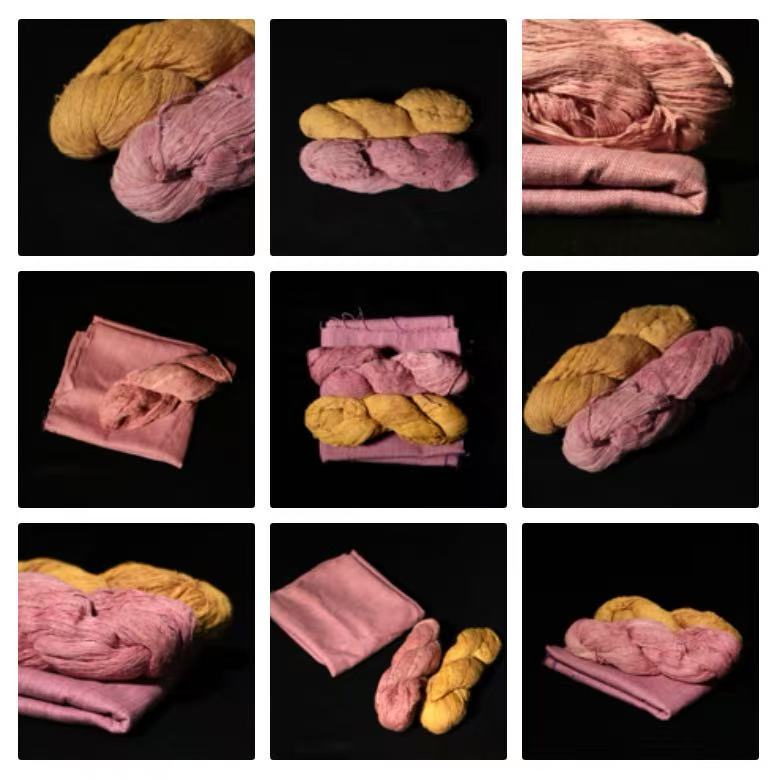
Making even a simple piece of fabric could take four or five days, from dyeing the threads to preparing the loom and weaving the final patterns. I wanted to understand not only the patterns themselves, but also what they mean and why these traditions continue, especially in an age of industrialised fabric and clothing production when clothes can be ordered online and delivered within days. Through that process, I began to understand how weaving carries cultural knowledge, environmental knowledge, and personal histories. The experience taught me that environmental issues are never only about ecology. They are also about culture, memory, and everyday life.
Your Bacheng community project combined photography, poetry, mapping, and digital storytelling. What inspired you to pursue this project and why was it important to use multiple forms of documentation?
We wanted to document Bacheng in ways that traditional maps often cannot. I became interested in mapping after taking a class taught by Professor Kaley that explored how maps are never neutral. Every map reflects decisions about what is included, what is excluded, and it tells you a great deal about who made them and for whom. When we went to Bacheng, I interviewed some of those aunties who sell their goods along the streets without official stores. Many of them sold products from their own gardens, such as mushrooms, vegetables, and eggs. I asked them about their selling routines, whether they changed locations every several days, and which routes they took from their homes to get there. I realised that many of these routes are not shown on maps. The routes local vendors take every day, their informal gathering spaces, and many buildings without formal names were largely invisible.
Our team wanted to create a more inclusive record of the town. I documented the community through photography and videography, while my teammate Mark Zhiyuan Ma used poetry to capture the atmosphere and emotional dimensions of the place. Another team member Jiaxin Wang designed a website and created 3D models of some abandoned sites. We also created a bamboo installation map that represented different degrees of preservation and change throughout the town. Visitors could scan different points on the map with their phones to access stories, photographs, and interviews connected to each location.
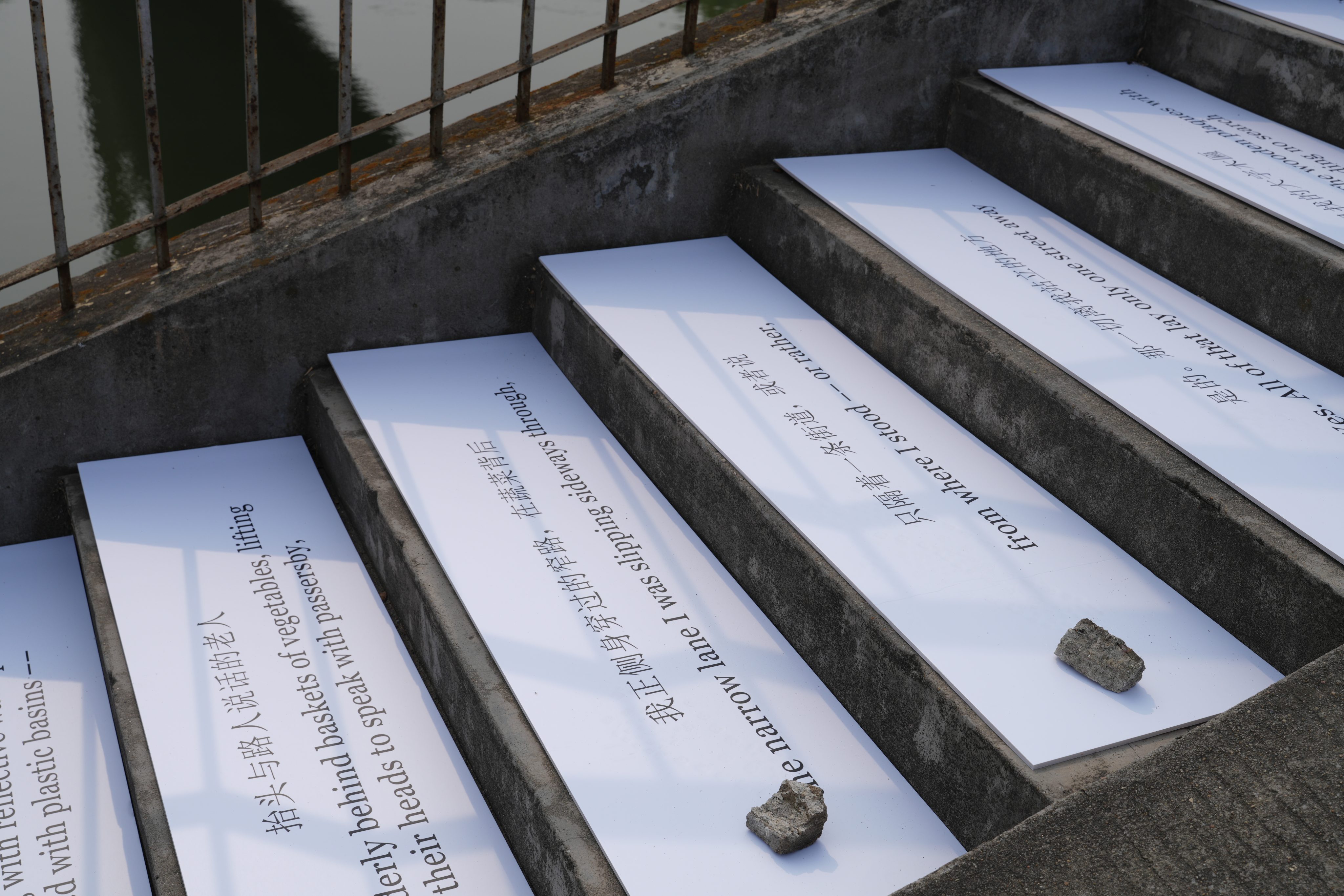
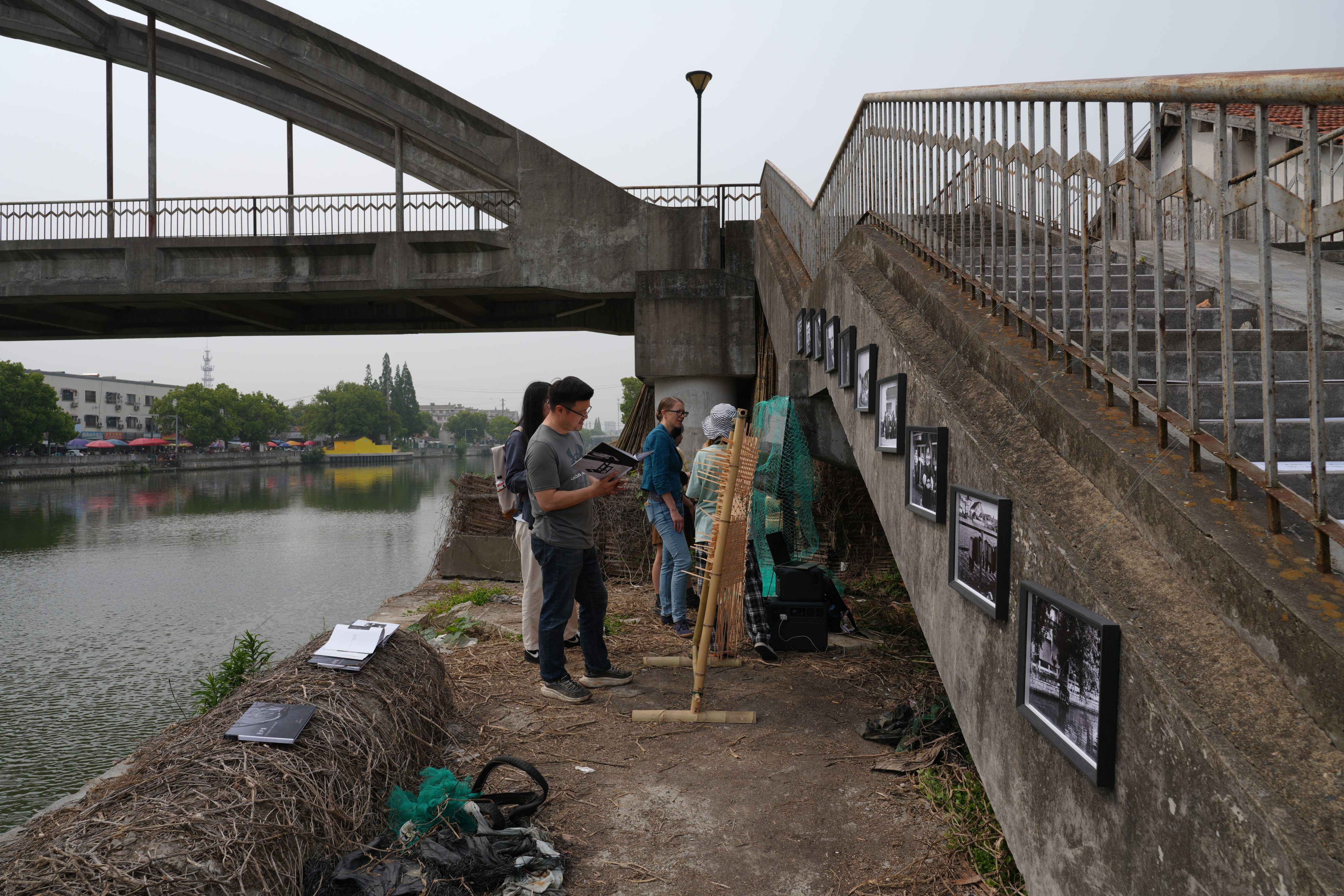
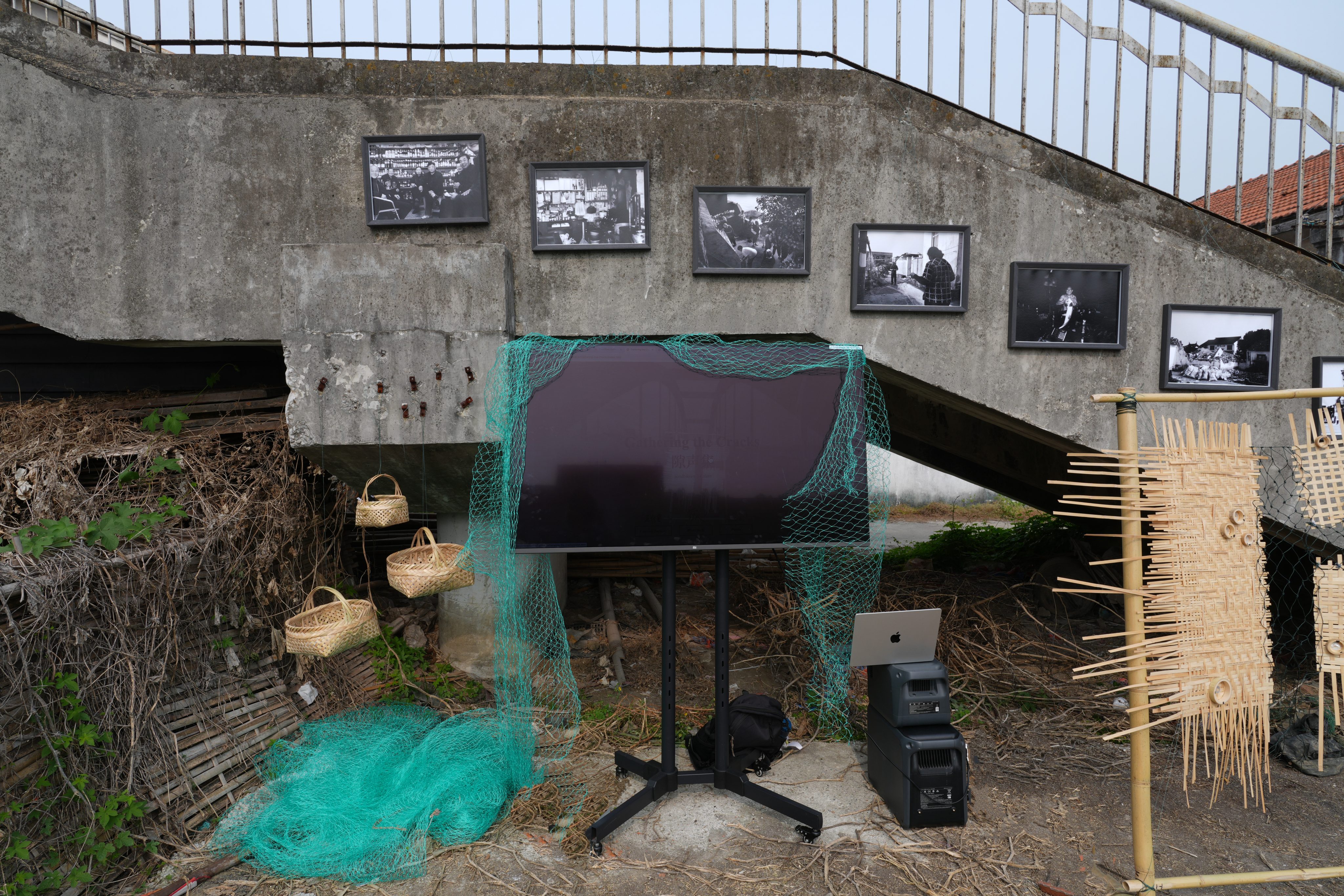
We held an exhibition in Bacheng itself. The poems were printed in large format and placed on the stairs leading up to the bridge, so anyone walking past would encounter them. The photos were hung on the bridge, and many local people came and engaged with the exhibition. That felt right to me: the work was about them and should be for them.
Your research combined photography, documentary practice, and community engagement. What first drew you to these interdisciplinary approaches?
I think the starting point of everything is that I genuinely enjoy talking to people. Whenever I travel somewhere new, I don’t like to just take photos and leave. I am much more interested in staying longer, talking with people, and understanding what they are actually experiencing rather than only seeing the touristy components of a place.
That interest deepened after taking Professor Kaley’s classes and becoming involved in documentary work. For me, documentary practice isn’t about observing from a distance. I want to get close enough that people feel comfortable sharing their everyday lives. I think that is where art and community engagement come together. They are all different ways of understanding how people live and how they make meaning in their lives.
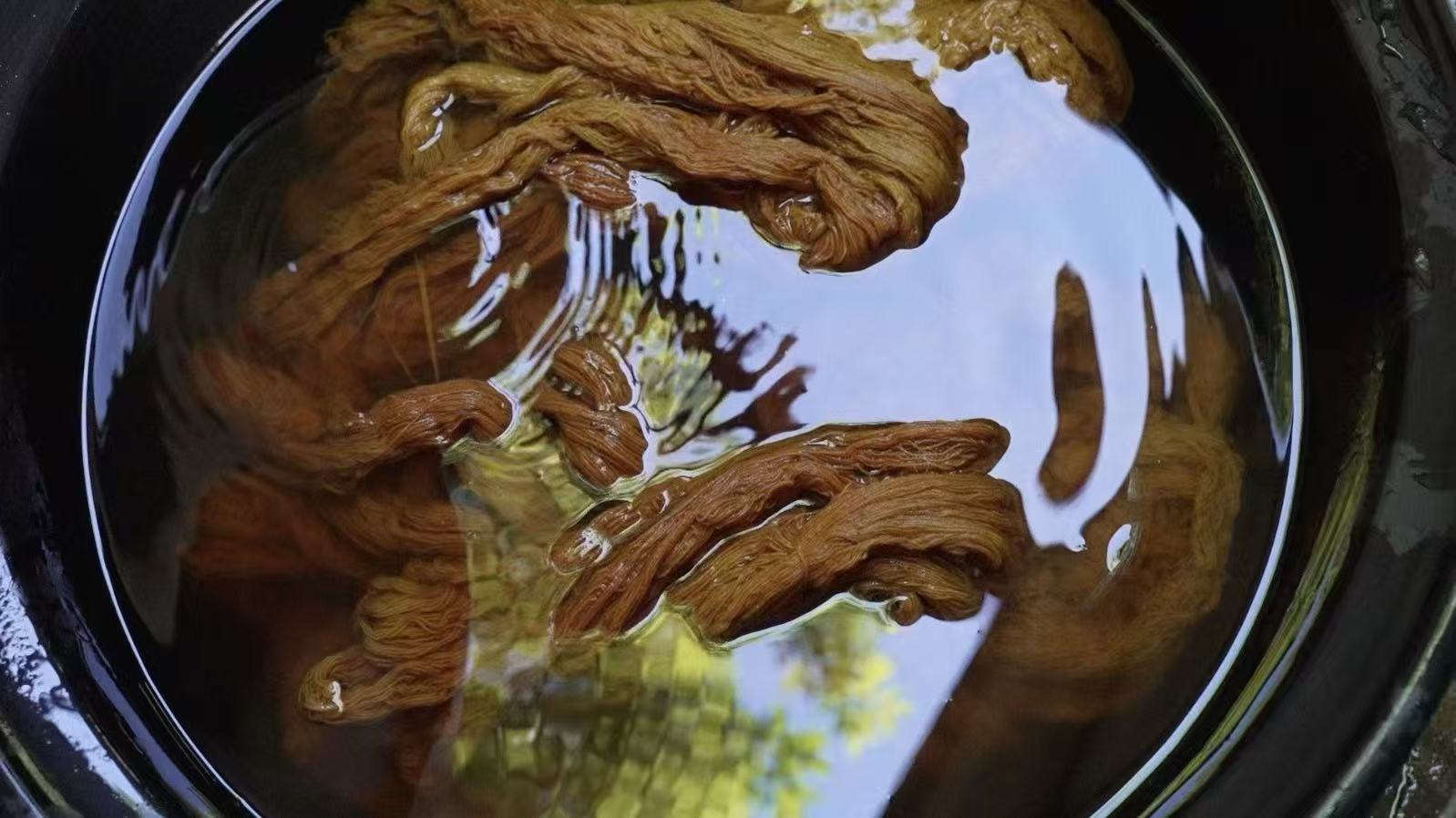
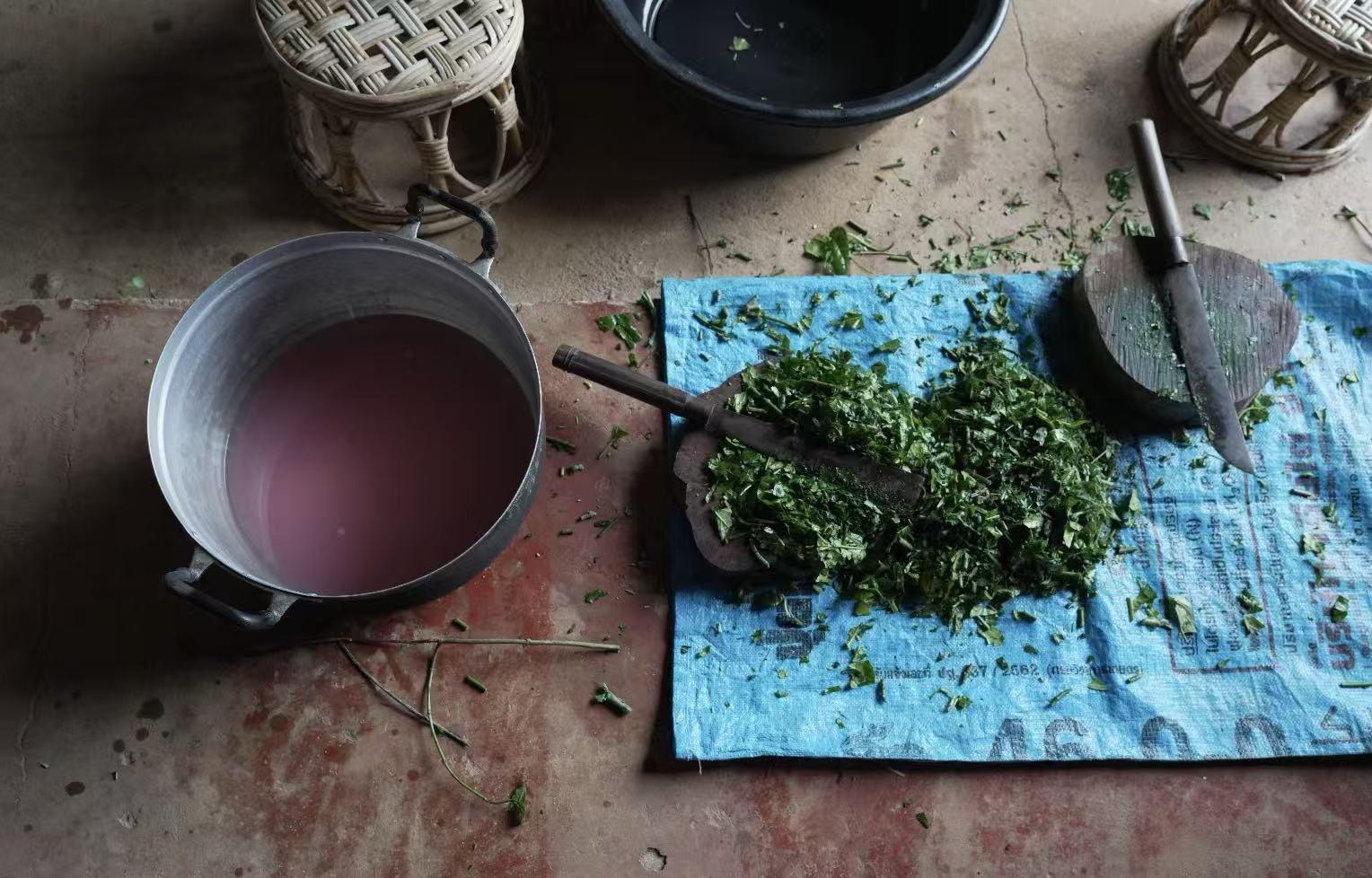
Across your projects in Thailand and Bacheng, you often focus on communities experiencing environmental, cultural, or social change. What motivates you to document these stories?
A lot of the places I work with are changing very quickly. When we were working in Bacheng, for example, many of the buildings we documented had already begun to disappear. Some of the local markets we visited were scheduled for redevelopment, and many residents weren’t sure whether they would still be able to sell their goods there in the future.
I think it is important to document not only the places that receive attention, but also the parts that are often overlooked. In Bacheng, the officially promoted “old street” is largely reconstructed for tourism. We wanted to document the everyday spaces beyond those tourist sites, such as the markets, the routes vendors take each day, and the stories of local residents whose lives are deeply connected to those places. These stories matter because they help us understand what may be lost during processes of development and transformation.
You emphasize the importance of spending extended periods of time in the field. How has this “slow research” approach shaped your understanding of community engagement and relationship building?
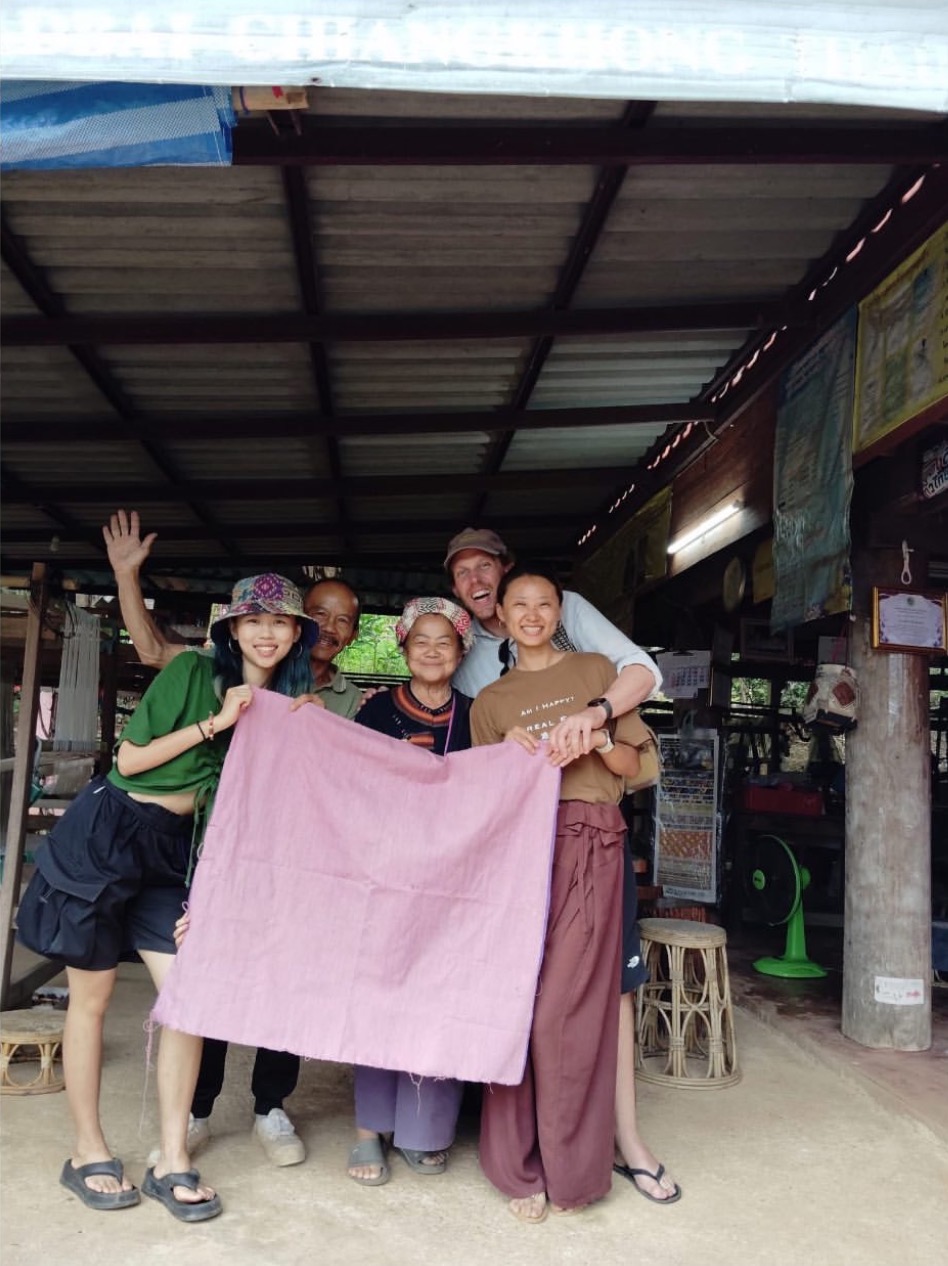
I think time and effort are incredibly important. We live in a very fast-paced world, but I believe that slowing down allows you to understand communities more deeply. You do not need to know everyone in a community. Instead, you build meaningful relationships with a few people, and through those relationships, your understanding gradually expands.
One of the most important lessons I have learned is that the best way to understand people’s lives is to work alongside them. When you participate in their daily routines and contribute to their work, people become more comfortable sharing their experiences. You are there as a participant and witness rather than an outsider who simply observes their lives. That’s something I learned through fieldwork in Thailand, and it has shaped how I approach all of my research.
How has your research influence your plans after graduation and what are they?
I have been incredibly fortunate to learn from mentors like Professor Kaley Clements and Professor Keping Wu. Working with Professor Kaley through fieldwork helped me realize that research can be collaborative, community-based, and deeply connected to everyday life. The relationships that he and the Mekong School built over many years made our work possible and showed me how important long-term engagement and trust are. These experiences have also influenced what I want to do after graduation.
Before, I thought I would simply continue to graduate school. Now, I want to spend more time learning directly from communities and understanding what is happening around us. I want to go to Cambodia. I have visited Cambodia twice, and I feel deeply connected to its history, culture, and ongoing social changes. My plan is to find work there, learn Khmer properly, and continue doing documentary and fieldwork.