By Feifei Luo, Class of 2027
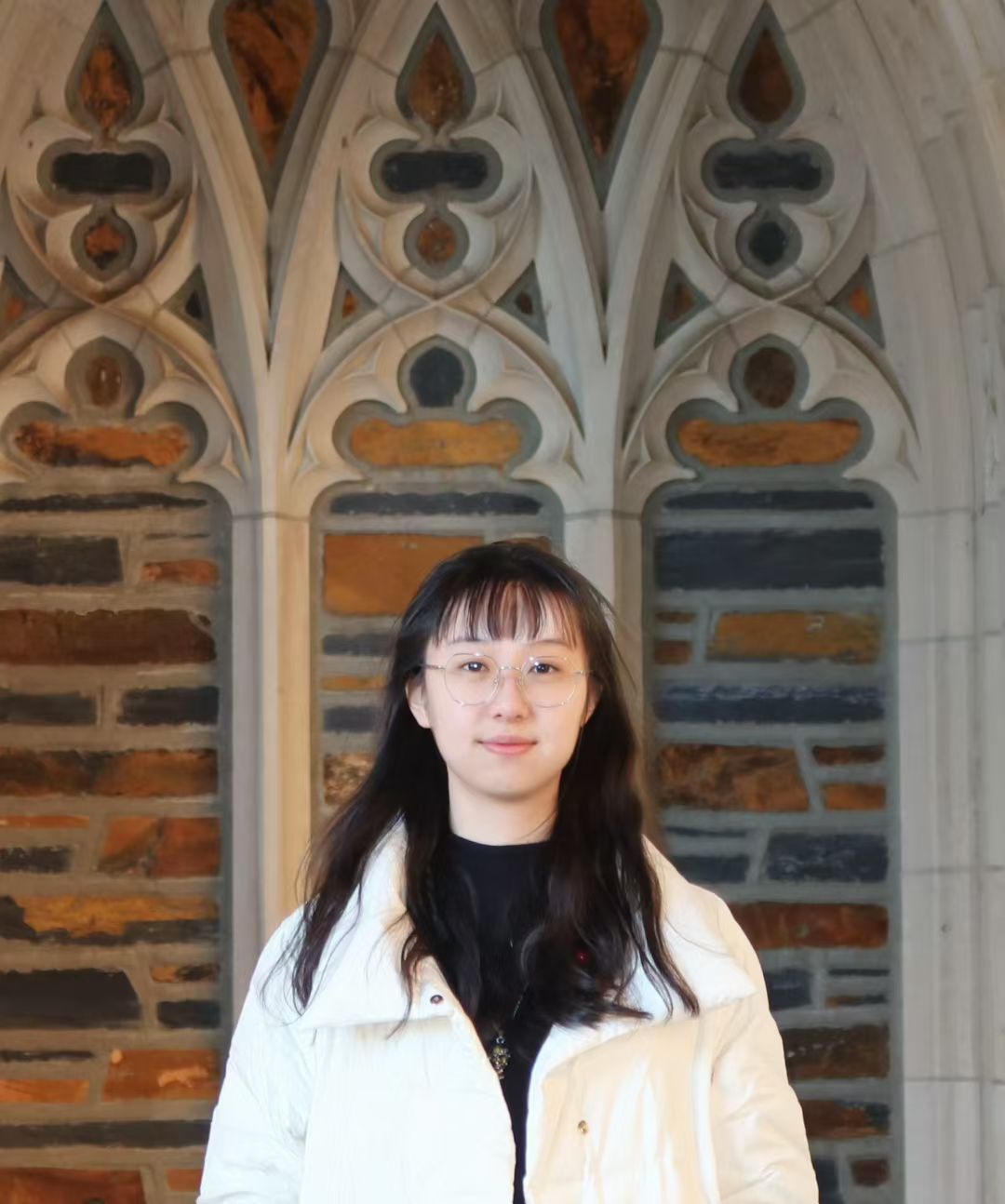
Ruyi Feng is a Class of 2027 student majoring in History whose research explores how funeral customs illuminate broader transformations in modern Chinese society. As a recipient of the 2024–25 CSCC Student-Initiated Research and Creative Inquiry Project Grant, she is conducting the project titled “The Evolution of the ‘Zuo Qi’ Funeral Custom in Suzhou, China from 1912 to Present”. Through this research, she examines how political movements, social change, and urbanization have reshaped “Zuo Qi”, a traditional funeral practice in Suzhou.
Drawing on archival research and field interviews, Ruyi approaches funeral customs not simply as rituals surrounding death, but as a window into changing relationships between the state, society, and everyday life. We spoke with her about how the study of funeral practices can offer valuable insights into China’s modernization, what she has learned from historical sources and interviews, and where her research is heading next.
Can you start by explaining what “Zuo Qi” is and how this study relates to your personal or research interest?
The foundation of “Zuo Qi” custom is a concept called “in-between life” (中阴身). Influenced by Taoist and Buddhist beliefs, this concept holds that after death, a person’s soul does not immediately enter the cycle of reincarnation but remains in the human world for 49 days. This period is divided into 7 cycles of 7 days each. As the soul gradually moves further away from the human world, the deceased’s family performs rituals at each cycle to guide the soul on its journey. In this sense, “Zuo Qi” is an extendedd farewell ritual between the deceased and their loved ones.
I have always been interested in traditional Chinese beliefs about death, ghosts, and funeral customs. This interest began in childhood, when I enjoyed listening to folk stories about ghosts. At the time, they were simply entertaining stories. But as I read more related literature, I started to pay attention to the cultural beliefs and practices embedded in those stories, and to how they have evolved alongside China’s economic, political and cultural development. These experiences naturally led me to study the “Zuo Qi” custom.
Your research differs from previous studies in that it focuses on the evolution of this practice rather than just its cultural origins. Why is it important to study how customs like “Zuo Qi” have evolved over time?
For me, the most exciting part of studying a custom is not simply examining it as a cultural practice but exploring its interactions with broader social factors. For example, the New Culture Movement brought about one of the earliest transformations of “Zuo Qi” after 1912. Chinese intellectuals introduced modern Western ideas into Chinese society, contributing to the growing popularity of new funeral practices – especially among educated urban groups – such as the memorial services, which gradually reduced the influence of traditional practices like “Zuo Qi”.
Each change in a custom reflects something significant about its historical moment. The history of a custom often reveals much about the broader social environment in which it develops. Since the establishment of the Republic of China in 1912, China has undergone rapid social transformation, and these changes have left their mark on “Zuo Qi”. Studying its development allows us to gain a more comprehensive understanding of China’s modernization.
Based on your research so far, what have been the major changes to “Zuo Qi” from 1912 to the present?
The overall trend over the past century has been the continuous simplification and reform of “Zuo Qi”. The New Culture Movement initiated this process. After the establishment of People’s Republic of China, policies promoting the “elimination of feudal superstition” (破除封建迷信), and the “avoidance of extravagance & waste” (杜绝铺张浪费) further simplified this custom. During the early decades of the PRC, the government also assumed a greater role in funeral management by establishing public funeral parlors to assist with funeral arrangements.
The Reform and Opening Up period marked another important turning point. As the government shifted its attention to economic development, efforts to “eliminate feudal superstition” became less stringent. As a result, “Zuo Qi”, along with other traditional customs, experienced a revival, particularly in rural areas.
However, this revival was later affected by funeral reforms introduced around the early 2000s. The government promoted highly simplified funeral procedures centered on immediate cremation, which were better suited to the needs of increasingly urbanized populations living in apartment buildings. Although some families continue to practice “Zuo Qi”, they often reduce it to symbolic rituals, such as preparing a family meal or “calling the soul of the deceased” (喊魂). These rituals may be performed only during the first, fifth and seventh seven-day cycle.
Interviews with Suzhou locals also suggest that the COVID-19 pandemic brought further changes. As mortality increased, lockdowns affected the ability of monks or professional service providers to conduct “Zuo Qi” ceremonies. According to accounts from local residents, some unauthorized service providers took advantage of the situation to offer these ceremonies for profit. Their involvement reportedly disrupted the local funeral service market, with effects that have continued since then.
Today, discussions of traditional culture in China emphasize preserving its valuable heritage, while funeral practices continue to undergo reform. How can we understand this relationship in the case of “Zuo Qi”?
One important distinction is that cultural preservation does not necessarily mean preserving every traditional practice in its original form. The concept of “excellent traditional culture” (优秀传统文化) emphasizes the aspects of traditional culture considered valuable and worthy of preservation, while practices regarded as outdated or problematic (文化糟粕) may be subject to reform. In this context, “Zuo Qi” has sometimes been viewed as a practice associated with cultural elements considered superstitious because of its religious foundations.
For this reason, the government has long advocated replacing the traditional version of “Zuo Qi” with a shorter process that can be finished within 5-7 days. This approach reflects both ideological and practical considerations. From an ideological perspective, simplifying funeral practices is consistent with the state’s emphasis on Marxist materialism. From a practical perspective, it accommodates the demands of modern urban life. A streamlined cremation process reduces the need for space to accommodate the deceased, minimizes disruption to neighbors, and allows family members to take less time away from work.
In this sense, funeral reform reflects broader priorities in China’s modernization, including the efficient organization of urban life and the adaptation of social practices to changing living conditions. From both ideological and practical perspectives, the reform of traditional funeral customs can be understood within the broader framework of the government’s approach to governance.
Some people lament the decline of traditional customs like “Zuo Qi”, viewing it as the cultural cost for economic development. How would you respond?
It’s true that some people remain deeply attached to traditional practices, especially older generations and residents of rural areas. For many people living in cities, however, giving up certain traditional practices is acceptable because efficiency, convenience, and compatibility with a modern lifestyle have become higher priorities.
Take “Zuo Qi” as an example. Calls to simplify it actually emerged long before the CPC came to power, beginning with the social movements in early ROC. In other words, the reform of traditional customs in pursuit of a modern society was never solely a government initiative; it also reflected the pursuit of ordinary people. The forces driving changes in traditional customs therefore came from both top-down policies and bottom-up demands. From my perspective, changes in traditional customs should not necessarily be understood as a loss of humanity, but as part of the evolving ways in which people organize their social and emotional lives.
As modernization continues, customs like “Zuo Qi” may eventually disappear from everyday practice. Rather than simply lamenting their decline, I find it more meaningful as a historian to study customs that have disappeared or are likely to disappear. Their value lies not only in documenting a particular practice, but also in revealing broader patterns of social change.
My research focuses on the period from ROC to the present. This may be only a brief moment in the long span of history, yet it has been a century of extraordinary change for China. As a small window into this era, “Zuo Qi” raises important questions: What can this custom reveal about borader historic transformations? What does it tell us about people’s lifestyles, attitudes towards life and death, and the process of urbanization? By keeping these questions in mind, we can develop a deeper understanding of the social changes reflected in the evolution of a traditional custom.
People who continue practicing “Zuo Qi” in modern China are central your research. Could you explain who they are and why they continue to perform “Zuo Qi” despite changes in funeral practics?
I have not yet identified the precise demographic characteristics of people who continue practicing “Zuo Qi.” However, based on my current research, they generally hold the traditional belief that the deceased deserve the utmost respect (死者为大) and should therefore be honored with an appropriate ceremony. More importantly, they believe that customs passed down by their ancestors should be followed.
These beliefs appear to be more common in rural areas. Urban living environments often make it difficult to conduct a traditional “Zuo Qi” ceremony. For example, live funeral music can create noise, gatherings of monks may disturb neighbors, and keeping the body in an apartment building for an extended period may be considered inauspicious. Families holding such funerals in urban areas may receive complaints from neighbors.
As a result, many urban residents follow more standardized funeral procedures. When someone dies in a hospital, the hospital may contact a funeral parlor directly to arrange transportation to a facility where the deceased is prepared for the funeral. A memorial service is then held, followed by cremation. In some cases, the entire process can be completed within one to three days.
This efficient system can shorten the time available for families to observe traditional mourning rituals. It is therefore understandable that some people prefer a more formal and extended farewell. For those who continue to practice “Zuo Qi,” the religious belief in an “in-between life” remains relevant, but it may no longer be the central consideration. Instead, “Zuo Qi” increasingly serves as a ceremony through which families express love, loss, and grief, and find comfort in the wake of bereavement.
Methodologically, your projects combines archival research and fieldwork, allowing you to investigate both official records and personal memories of “Zuo Qi”. What has the process been like?
So far, I’ve mainly worked with official records, which are more readily available. I usually find them in folk museums, local chronicles, government policy documents, and old newspapers.
Personal accounts and records are equally important but much harder to find. Government policies and official attitudes are one aspect of the story; how ordinary people experience and implement those policies is another. The relationship between policy and everyday practice is an important question in historical research, as official records do not always capture the full range of local experiences.
To explore these experiences, I plan to examine historical materials such as films, novels and local magazines as indirect sources of personal and collective memories. However, collecting first-hand informationa through interviews and questionnaires remains my priority during fieldwork.
What are the next steps for your research?
I will continue reading relevant literature and conducting interviews as I develop this project into my Signature Work. On the archival side, I plan to visit more museums and archives, both in person and online.
Conducting interviews will be more challenging. During my previous attempts to recruit participants, many people were reluctant to speak openly. One possible reason is the cultural belief that discussing death and funerals may be inauspicious, especially when potential interviewees may still be grieving the loss of a family member. I understand that both the subject matter and the timing of an interview can be sensitive.
To address this challenge, I plan to work through my connections with staff at local museums and refine my interview approach. My goal is to engage participants who feel comfortable sharing their experiences and perspectives, allowing me to develop a fuller understanding of how “Zuo Qi” has changed over time.