

By Yihan Liu, Class of 2029
In a talk hosted by CSCC’s Meanings, Identities, and Communities Cluster on September 21, Professor Jinchao Zhao of Tongji University explored how Buddhist art adapted to Chinese cultural traditions in early medieval China. Focusing on the transformation of Jataka stories from forest settings to mountain landscapes, she explored how this shift reflected changing interpretations of Buddhist narratives.
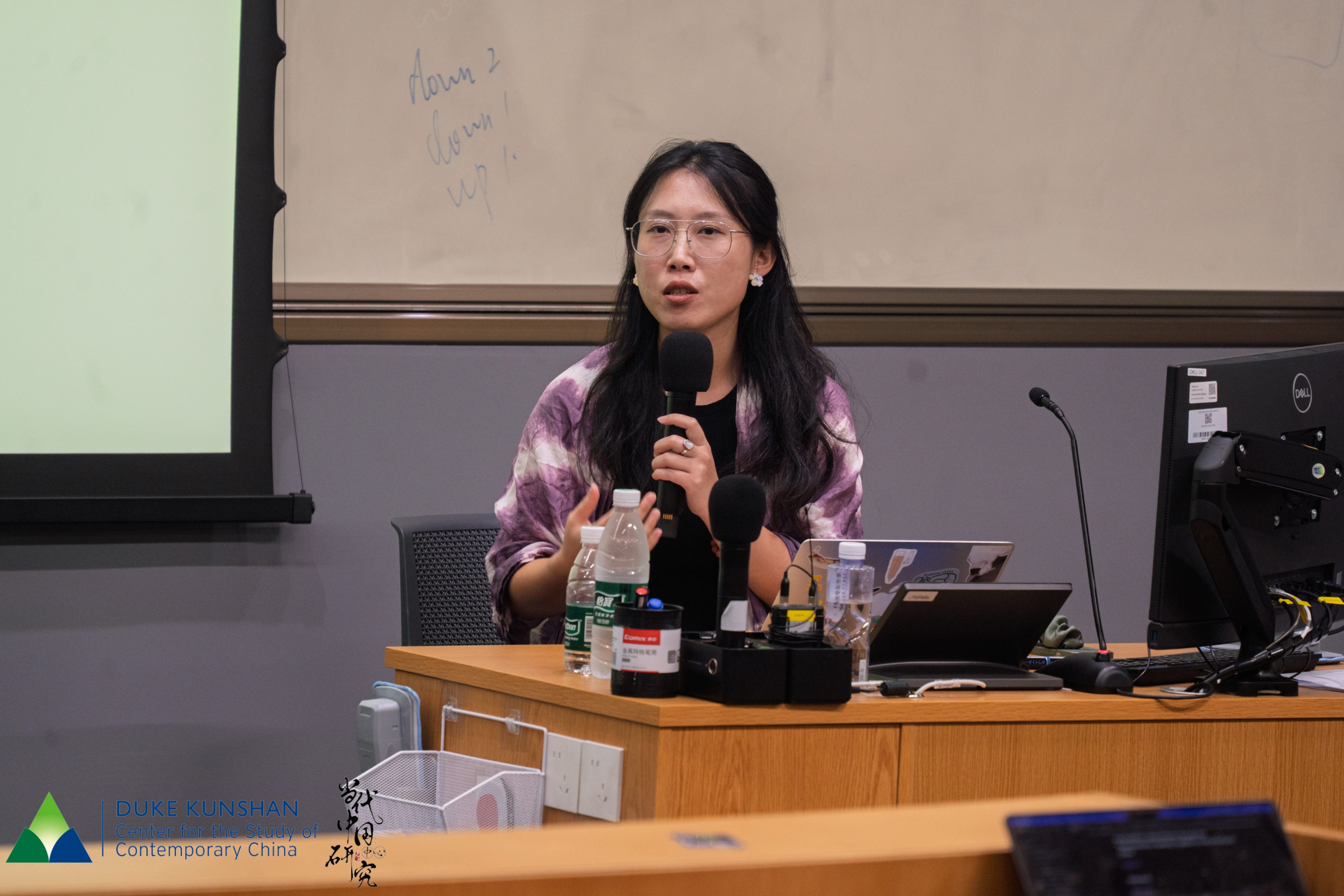
Professor Jinchao Zhao traced this transformation between the 3rd and 6th centuries, specifically examining how Chinese translations of Buddhist scriptures and the visual traditions of cave art reshaped the stories’ settings and meanings.
Professor Zhao explained that Jataka tales recount the Buddha’s virtuous deeds and acts of self-sacrifice in his past lives. Although hundreds of versions circulated across South Asia, only three were widely represented in visual form in medieval China: the Sudana Jataka, the filial Sama Jataka, and Mahasattva’s self-sacrifice to starving tigers. While Indian and Central Asian versions consistently placed these narratives in generic forests, Chinese translations relocated their key episodes among mountains. This spatial re-imagining suggests that Chinese representations were not simply direct copies of imported textual sources.
She argued that the adaptation of these texts began as early as the 3rd century in China, during the period of Buddhist scripture translation, about two centuries earlier than the surviving cave sculptures. The translation of Buddhist scriptures in China introduced a unique set of narrative details, depicting ascetics living in the mountains and monarchs who sought spiritual cultivation by retreating into the mountains. Many of these mountain dwellers were described as abstaining from grain and surviving on wild fruits, a motif connected to Chinese ideas about immortals. No counterpart to such passages exists in the extant Indian originals, yet they closely resemble native Chinese stories of immortal seekers who withdrew into the mountains in pursuit of longevity.
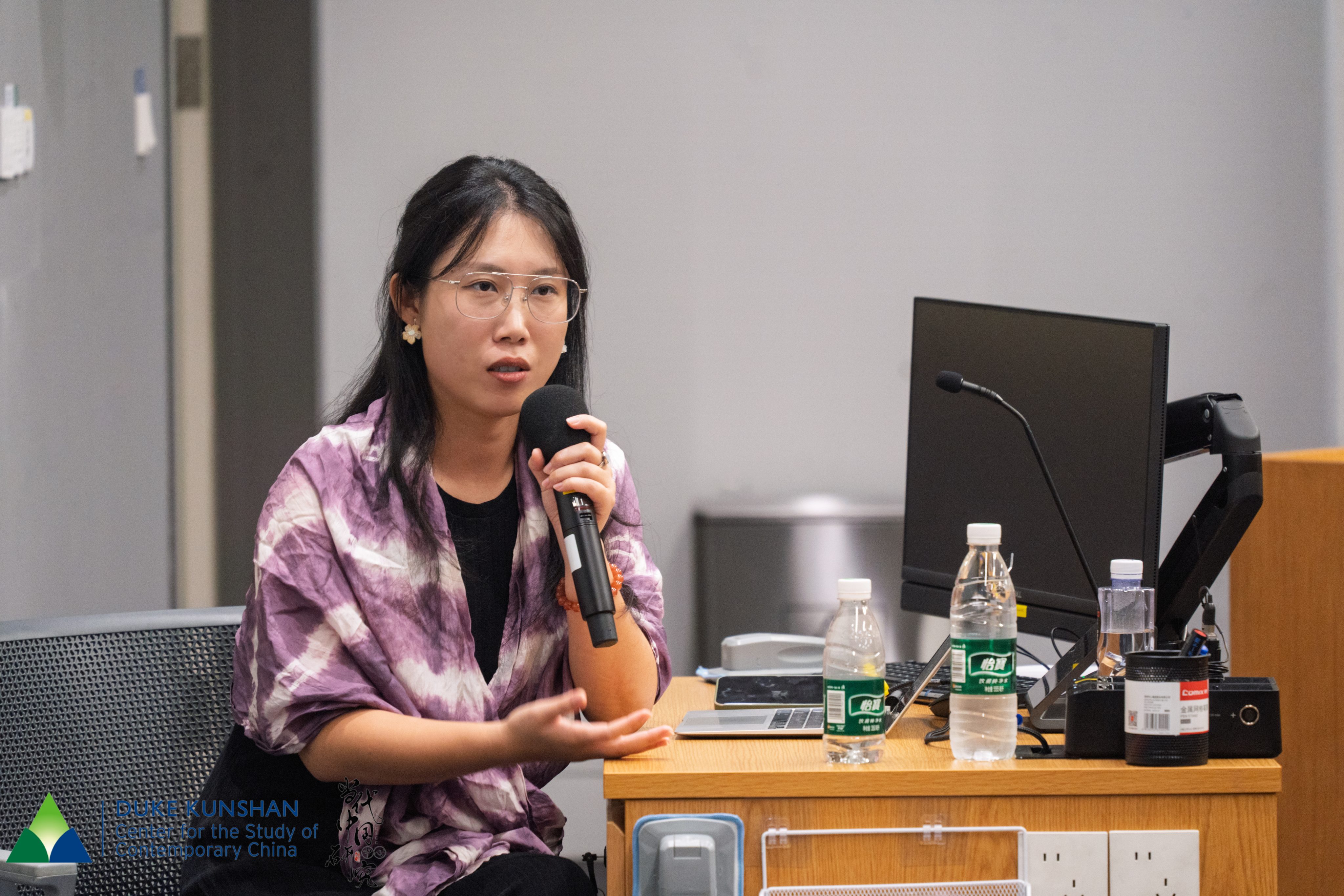
Professor Zhao used cave remains from the 5th and 6th centuries to analyze the dual functions of mountains in stone-carved images. Mountains not only served as backgrounds but also helped structure and divide different narrative episodes, replacing the trees traditionally used to separate scenes in Gandharan art. These compositions also drew on local visual conventions, such as depictions of the Queen Mother of the West sitting among the peaks of Kunlun Mountain. Since most ancient craftsmen were illiterate, the narrative content of the scriptures was conveyed to them orally by monks and believers before being carved into stone.
Professor Zhao also discussed how these caves were actually viewed, and more specifically, who was viewing them. The interiors of the caves were dimly lit, and viewers needed oil lamps to see the details of the murals. The main purpose of the sponsors in building the caves was to accumulate religious merit rather than to communicate stories clearly to a broad public. Wealthy nobles could commission elaborate Jataka murals and sculptures, while ordinary villagers could only afford simpler carvings. Traveling storytellers also helped circulate these stories among local communities by carrying painted scrolls and narrating the stories orally.
Professor Zhao concluded that the transformation from forests to mountains was not merely an aesthetic change. It reflected the way Buddhist narratives adapted to existing ideas in Chinese traditional culture. Mountains had long been associated with seclusion, spiritual cultivation, and transcendence. These meanings were incorporated into Buddhist visual narratives, showing how Buddhist art gradually became connected with local cultural traditions. In this sense, the changing representation of landscapes also reflects the broader process through which Buddhism became rooted in medieval Chinese society.