

By Feifei Luo, Class of 2027
On September 2nd, 2026, the Center for the Study of Contemporary China and the Environment Research Center jointly organized a seminar titled “Critical Minerals and Green Megawatts: China’s Influence on Energy Transition in the Global South”. The seminar welcomed Dr. Wei Shen, the Senior Research Fellow at the Institute of Development Studies (IDS), University of Sussex in the UK, who has extensive expertise in studying China’s role in global environmental and climate governance, with particular emphasis on energy transitions, critical minerals, and green investment across Africa and Southeast Asia. This talk was co-hosted by Coraline Goron, DKU’s Assistant Professor of Environmental Policy, and Jennifer Turner, the Visiting Professor of International Environmental Policy in DKU, with more than 40 students and faculties attending.
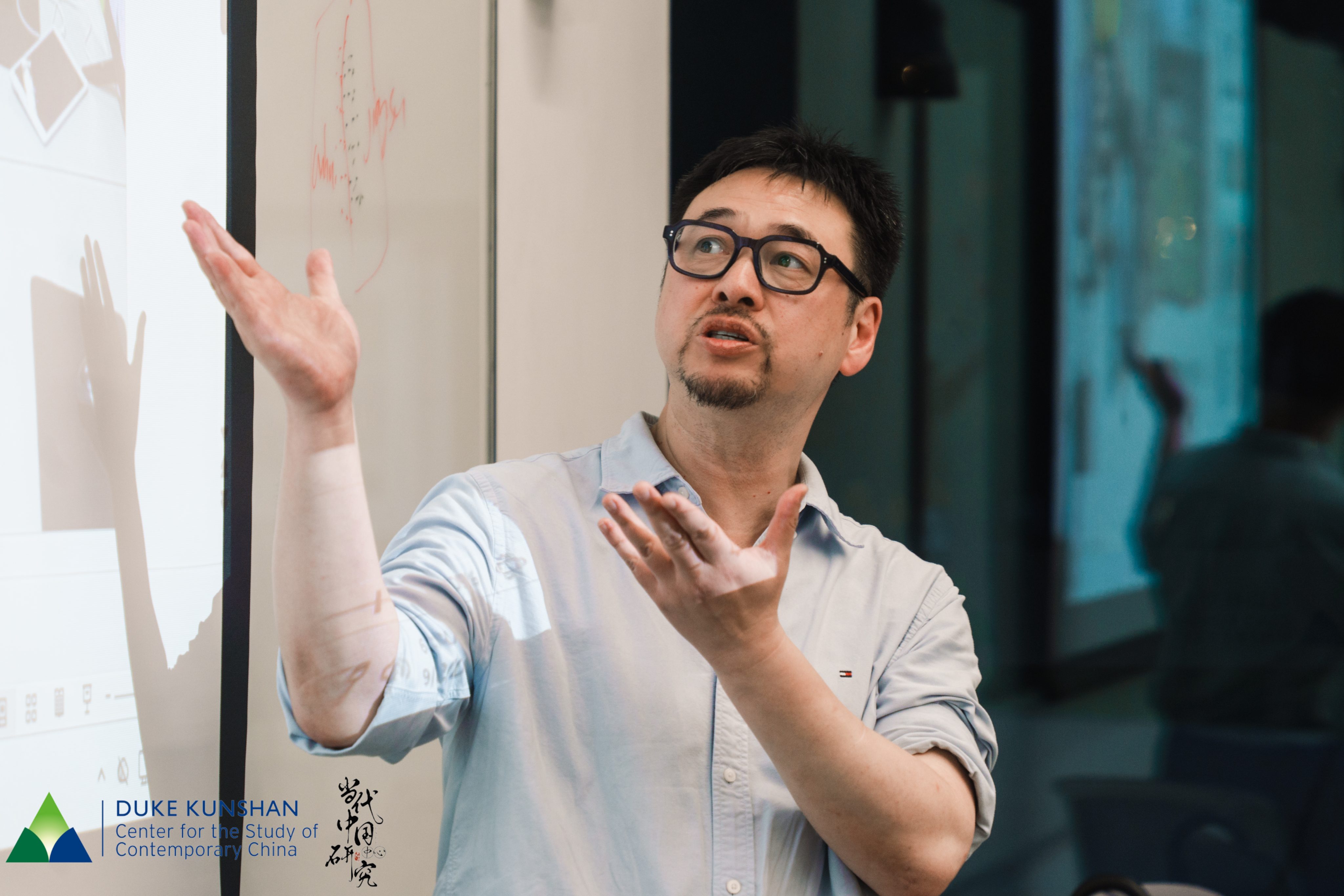
Dr. Shen’s talk centered China’s involvement in critical minerals, energy infrastructure, and renewable energy projects in the Global South, particularly Africa, and asked what these involvements actually mean for resource-rich developing countries. He approached the issue from the perspective of Global South countries themselves, using 3 examples of Zimbabwe, Democratic Republic of Congo (DRC) and Guinea respectively, to illustrate how developing countries gain from such projects and why many infrastructure and resource-development projects fail to generate broader development.
Firstly, Dr. Shen explained how the growing global demand for critical mineral has led to mass investment to extraction programs in resources-rich countries, including those in Africa. He highlighted a contradiction in the invested countries: although the mining companies may be able to obtain the construction of dedicated energy infrastructure, local communities and schools often remain out of electricity. To explain this situation, Dr. Shen explained that modern electricity systems are expensive to build and maintain, and can only be economically viable if there is a stable and significant demand for electricity, usually from industry and concentrated urbanized areas. Therefore, it is difficult to find private capital investment for country-wide, expensive power infrastructure projects in developing countries with a scattered rural population and without a strong industrial base. Then, he invited the audience to rethink the idea of “resource curse”. He proposed that the real reason behind it is the weakened relationship between taxation and government responsibility, because (corrupt) governments who can rely on revenues from natural resources rather than taxation have less incentives to respond to citizens needs. The consequence is not simply slow economic development but also lack of support from the populations towards infrastructure projects from which they don’t seem to benefit, which in turn, leads to the decline of industrial and manufacturing capacity, and results in the perpetuating the energy crisis in Africa.
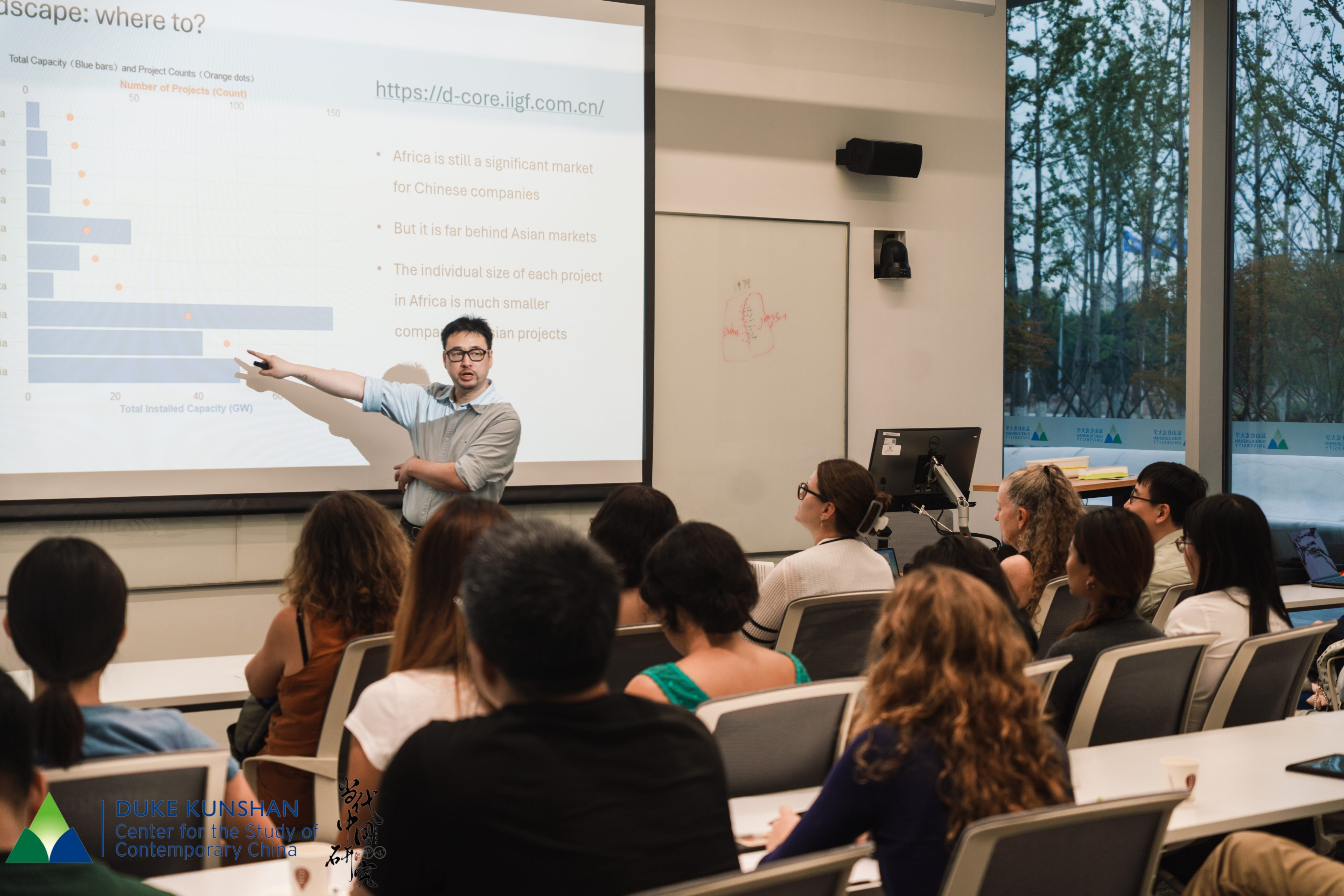
The ways that China engages in oversea resource projects are diverse. Often, China is the engineering, procurement or construction contractor, rather than the investor or owner of the projects that are build.. In the DRC, Chinese involvement in mining has developed alongside government efforts to increase local value addition and regulate artisanal mining. In Guinea, Chinese involvement in hydropower demonstrated how financial and management problems could lead to unfulfilled commitments to communities, including difficulties with resettlement, housing, electricity, and water. Towards the end, Dr. Shen argued that different actors involved in the competition over critical minerals, including western countries, China and the Global South, are all trying to obtain from someone else, creating a structural impasse. Therefore, “nobody is really winning”.
The Q&A session afterwards extended these issues to broader questions of development and accountability. Participants asked whether China might be transferring environmentally harmful industries to the Global South, whether resource-for-infrastructure arrangements are sustainable, and how taxation and resource revenues should be distributed. The discussion also addressed unemployment and skills development in Africa. Dr. Shen argued that development requires more than individual successful projects: countries need universities, technical training, local companies, and institutions capable of building long-term domestic capacity. He proposed “trilateral embedding” among local governments, local companies, and foreign investors as one possible approach.