

China’s One-Child Policy and the growth of digital finance bring a global question into focus: how do social conditions shape whether people adopt new technologies? Research on Chinese households connects family experience with trust, risk-taking, and the use of mobile payments and online financial services. It offers a perspective from contemporary China on the innovation-and-growth question recognized by the 2025 Nobel Memorial Prize in Economic Sciences. Joel Mokyr, Philippe Aghion, and Peter Howitt were honored for explaining innovation-driven growth, including how new technologies replace older ones through creative destruction. China’s experience invites a further question: what enables financial innovation to support sustained growth and wider social benefit?
DKU students explored these connections at the Finance Club’s September 7, 2026 event, “Ideas That Shape Financial Decisions,” at the Performance Café. Student chair Yuanjun Du hosted Professor Henrik Cronqvist of Chapman University for a keynote and discussion on Chinese policy, family life, and financial technology, or FinTech.
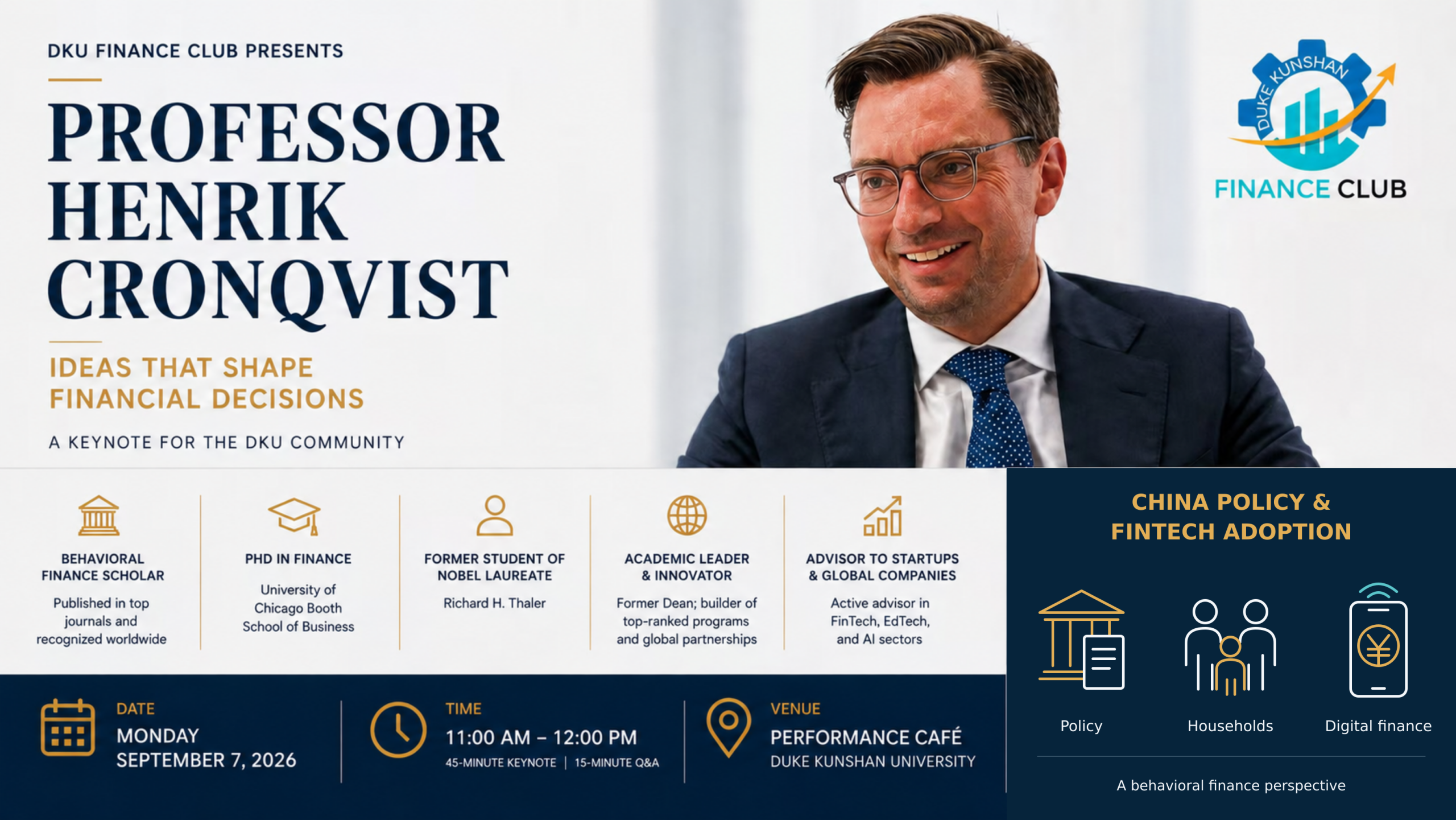
The Finance Club hosted the event in partnership with the Office of the Executive Vice Chancellor, with Katherine Yang, Executive Assistant to the Executive Vice Chancellor, serving as staff co-host. Faculty co-host Prof. Luyao Zhang, Assistant Professor of Economics and club advisor, is part of the SocioTech Future Lab, supported by DKU’s Social Science Division, and co-leads the Digital Technology and Society Cluster, supported by the Center for the Study of Contemporary China (CSCC). Shuqian Xu of the Social Science Division and Chi Zhang of CSCC provided additional staff support.
Behavioral Finance Meets China Policy
Cronqvist is Professor of Finance at Chapman University’s George L. Argyros College of Business and Economics. He earned his Ph.D. at the University of Chicago Booth School of Business under Richard H. Thaler, the 2017 economics laureate. Thaler’s work brought psychological insights into economics, showing how people’s judgments and self-control affect their choices. Cronqvist’s research follows this interest in how people actually make financial decisions. His publications include work in the American Economic Review, Journal of Political Economy, and Journal of Finance, and his academic experience in China includes an endowed chair at China Europe International Business School in Shanghai.
At DKU, he presented “Shrinking Families: How Does Demographic Decline Shape Investors?”, joint research with Yingmei Cheng of Louisiana State University and Jingyu Guo and Chaopeng Wu of Xiamen University. The study connects China’s One-Child Policy to a contemporary question: can childhood family experiences influence whether adults use online lending, digital wealth management, and mobile payments?
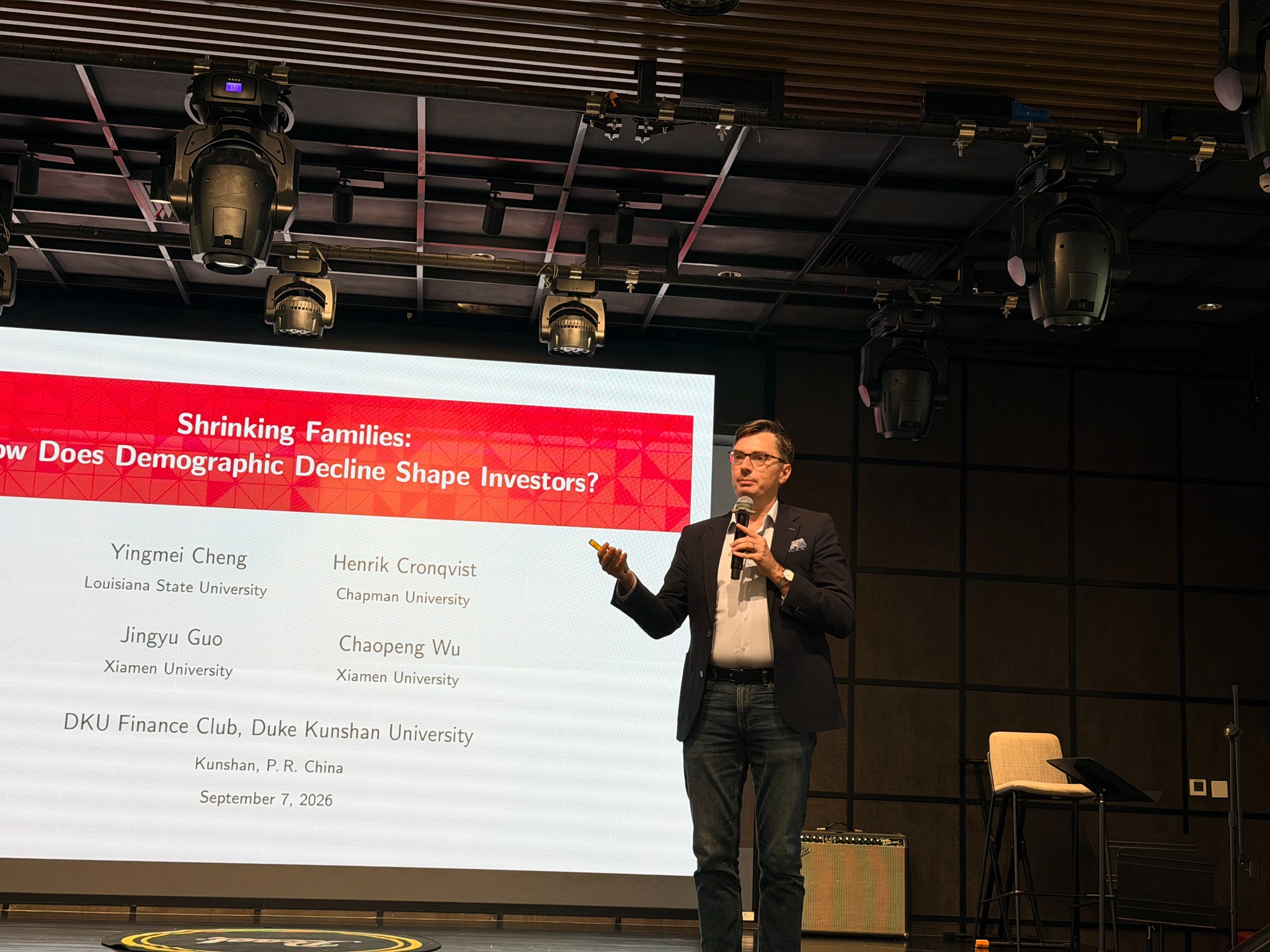
Using four waves of the China Household Finance Survey, the researchers assembled 36,780 household-year observations across 26 provinces. Their main design compares people born close to the 1980 policy cutoff, using the policy-related change in family size to study later financial behavior. The draft reports lower FinTech participation among only children, alongside greater risk aversion, lower trust, and less social engagement. These are findings for the study’s setting and population; they do not describe every individual raised without siblings.
The adoption gaps are more pronounced among less educated respondents and in regions with weaker investor protection. This connects policy history with current questions about financial inclusion: a phone and an account may leave concerns about unfamiliar providers unresolved. Greater adoption alone, however, does not establish a benefit to households. Whether a service improves financial security, and whether caution protects consumers from harm, remain questions for further research.
Students ask how the explanation can be tested
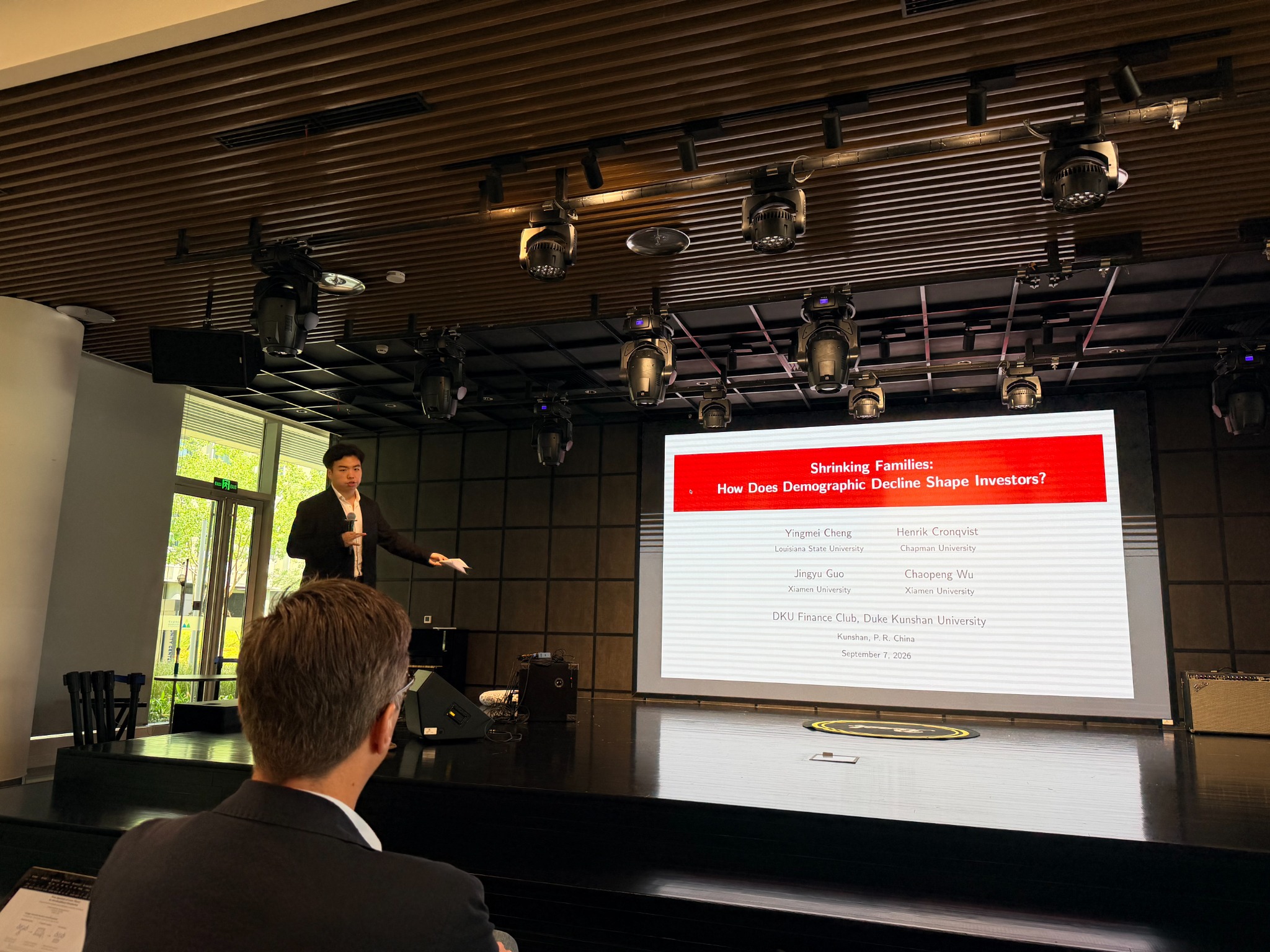
Xinrong Sun, president of the DKU AI Club, raised a question about the explanation behind the findings: how could the research distinguish learning from parents from learning through interaction with siblings? Growing up as an only child changes both relationships. The exchange with Cronqvist highlighted a challenge also acknowledged in the research framework: the present design does not separately identify the two channels. Finding a pattern and explaining exactly why it occurs require different evidence.
Other students asked whether behavioral science could help predict stock-market movements. The discussion brought attention to the difference between recurring behavioral tendencies and reliable market forecasts. For student organizers and participants, the opportunity to question methods and interpretations was an important part of the event. Yuanjun’s hosting and other students including Xinrong’s proactive contribution to the intellectual conversation helped turn a visiting lecture into an active research conversation.
China Insights and Global Questions for Social Good
The conversation between Prof. Luyao Zhang and Prof. Henrik Cronqvist connected insights from China’s policy experience with global research on innovation and human welfare. Their exchange pointed toward culturally aware inquiry into how social norms, including gender expectations, and public institutions shape trust and opportunity in digital finance. The broader question is how technological progress can create lasting social value across diverse communities.
These questions bring together the lab’s and cluster’s interests in technology for social good. Financial inclusion and informed choice offer concrete ways to connect research in China with the United Nations Sustainable Development Goals, while keeping people’s well-being central to the evaluation of innovation.
Prof. Luyao Zhang and Prof. Henrik Cronqvist plan to continue the dialogue through joint student advising, co-authored research, and academic conferences at DKU and internationally. For the Finance Club, this offers a path from student-led discussion in Kunshan to sustained participation in global scholarship.
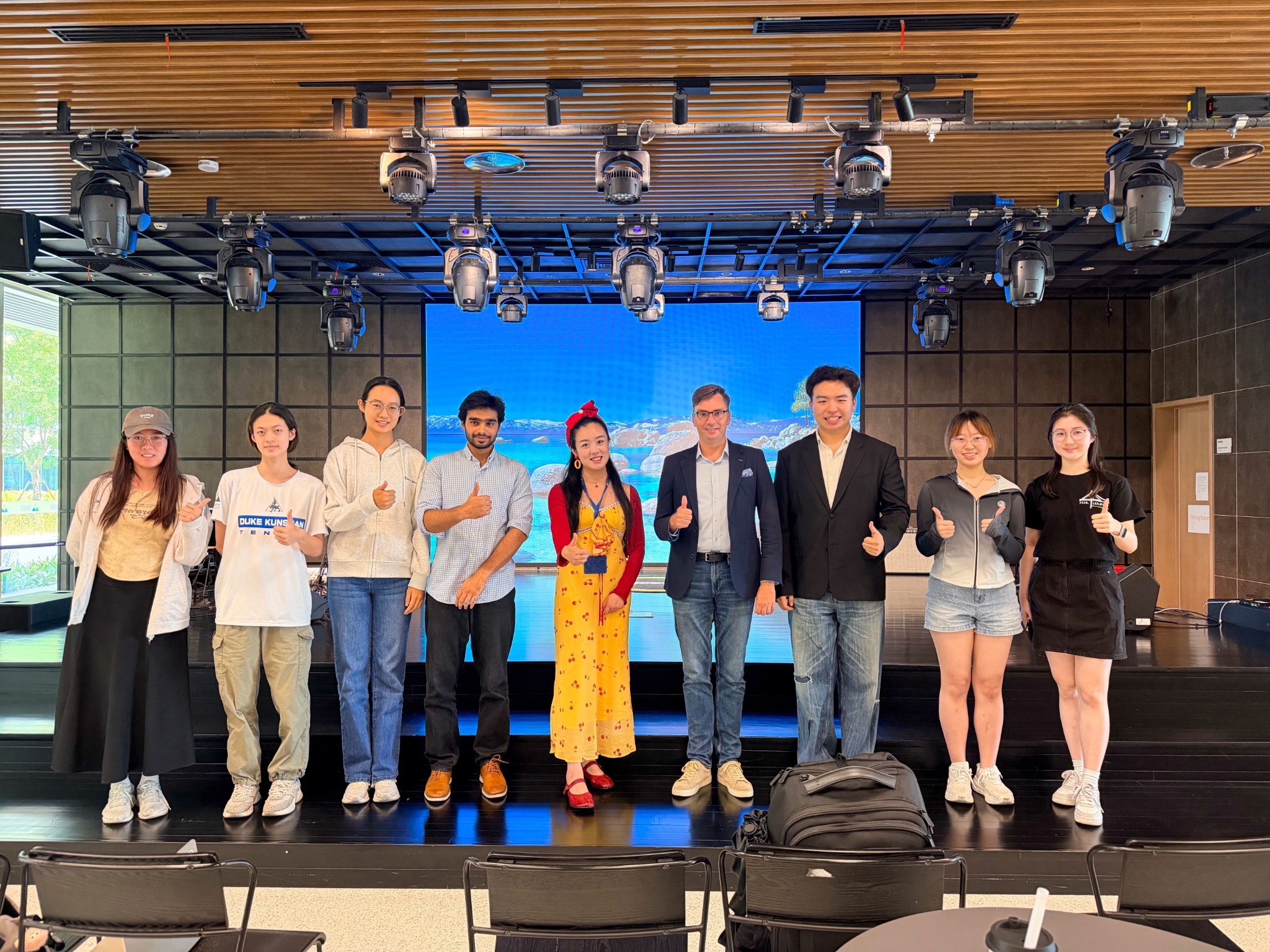
Drafted by: Yuanjun Du and Xinrong Sun
Advised by: Luyao Zhang
Supported by: Katherine Yang, Shuqian Xu, and Chi Zhang
Contributed by the Digital Technology and Society Cluster, Center for the Study of Contemporary China and SocialTech Future Lab at Social Science Division