By Zihan Chen, Class of 2026
On April 22, 2026, the Center for the Study of Contemporary China (CSCC) at Duke Kunshan University hosted Mr. Frank Tsai, Founder and CEO of China Crossroads and former Director at the Economist Intelligence Unit. The lecture featured Tsai, who holds a PhD in Sociology and has over two decades of on-the-ground experience in China, challenging the prevailing narrative that stark political differences between the U.S. and China inevitably lead to fundamental sociological divides. Instead, he offered a nuanced, sociology-informed framework to examine both the deep-seated differences and the striking, often overlooked similarities between the two societies.
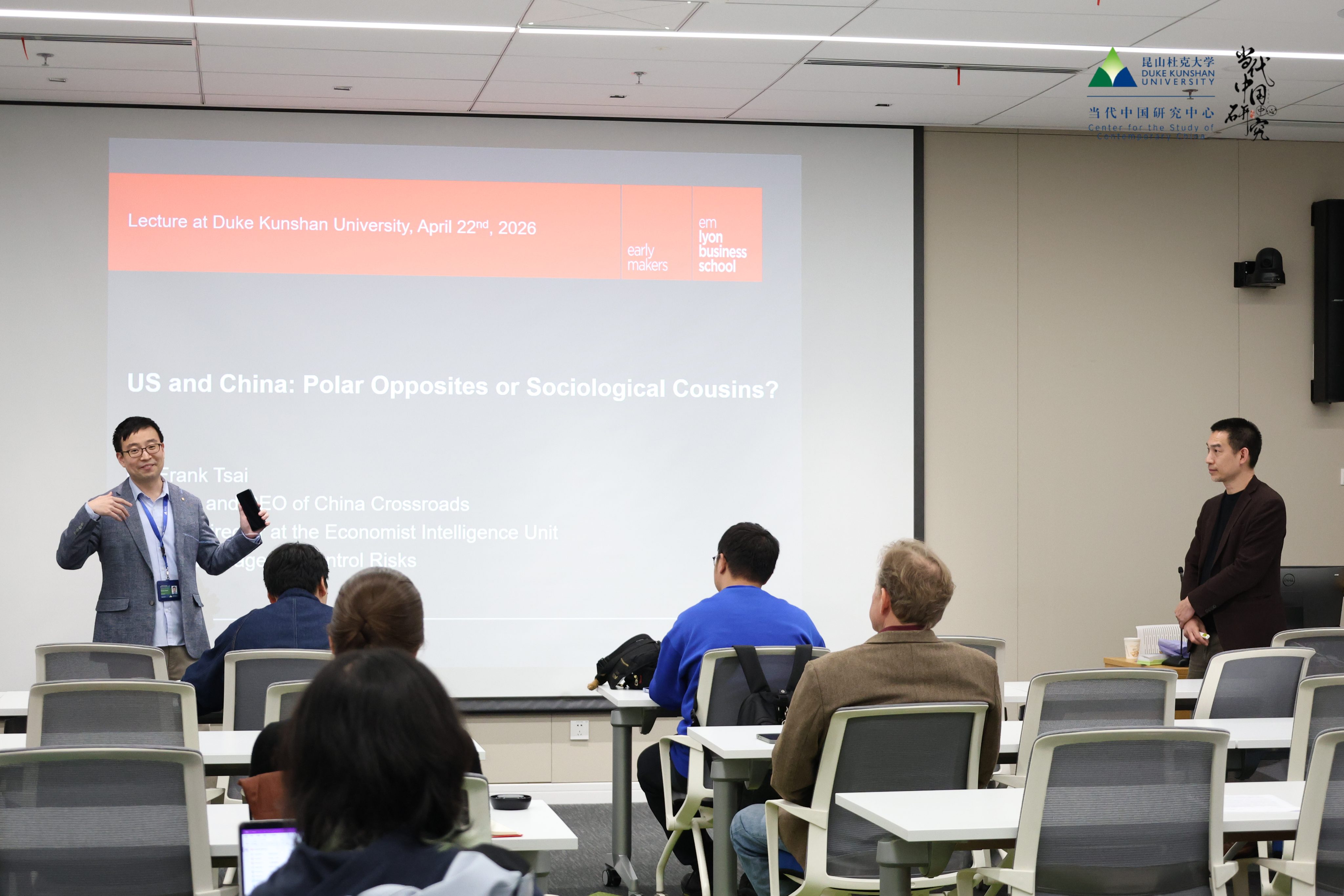
The content, according to Tsai, was originally designed for an undergraduate class in China, with the core goal of moving beyond the endless fixation on U.S.-China differences to encourage critical thinking about their comparative sociological traits. He reflected on the practical value of sociological theories and frameworks, setting a key methodological premise for the talk: effective cross-national comparison requires holding variables constant across time and space, distinguishing between fundamental structural drivers and surface-level phenomena, and avoiding the trap of reducing complex societal traits to simplistic cultural stereotypes.
Tsai first outlined the two most fundamental differences between the U.S. and China. The first lies in their political systems and approaches to the legitimacy of centralized power: China’s system centers on the centralized power of the party, which channels state power to achieve national strategic goals through a top-down governance model. In contrast, the U.S. was founded on a revolutionary ideology against concentrated state power, featuring a decentralized power system that shapes everything from official selection mechanisms to corporate management styles and workplace power dynamics. The second fundamental difference is rooted in cultural and civilizational traditions: Tsai characterized China as the world’s largest, most continuous secular society, while the U.S. retains a deep Christian heritage that underpins its longstanding sense of global mission to “save or change the world.” He was careful to note that these characterizations refer to relative cultural differences, not universal claims about every individual in either country.
He then addressed other commonly cited societal differences, pointing out that many are not fundamental to the two societies. These include the U.S.’s identity as a nation of immigrants with a formal naturalization system, as well as divergences in urban planning and transportation infrastructure (e.g., the prioritization of private cars in the U.S. versus heavy state investment in public transit in China). He posited that these phenomena are better explained by historical development stages, economic factors, and political structures, rather than inherent cultural traits. Tsai further supplemented this with empirical data from cross-cultural and business studies, highlighting that China scores high in power distance, with greater social acceptance of power inequality and hierarchical interaction norms, while the U.S. ranks low in power distance and high in individualism, with a stronger cultural emphasis on egalitarianism in both social and business settings.
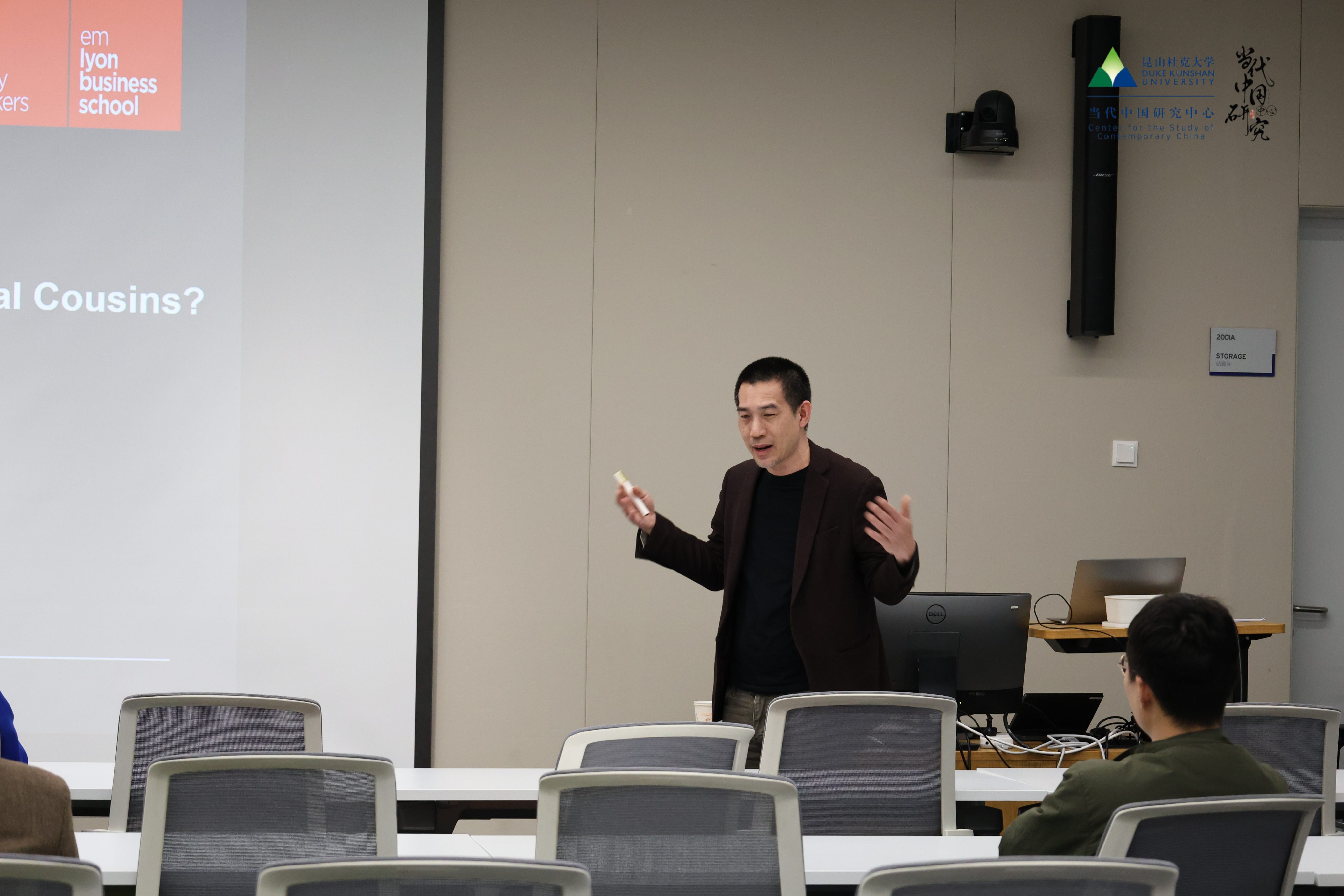
The centerpiece of Tsai’s talk was an in-depth analysis of the striking sociological similarities between the U.S. and China, which he framed as two of the most entrepreneurial, dynamic, and ambitious major societies in the world. First, both countries boast highly dynamic market economies and a pervasive culture of entrepreneurship, with a strong societal emphasis on individual ambition and upward mobility. Second, they share aligned attitudes toward social welfare: both populations are more likely to attribute personal setbacks such as unemployment or low educational attainment to individual failure rather than structural factors, with relatively low public support for extensive state-led welfare intervention compared to other developed nations. Third, both the U.S. and China face severe income inequality, alongside a notable degree of social acceptance of this disparity. Fourth, the two countries occupy structurally dominant positions in their respective civilizational spheres: the U.S. as the core of the English-speaking Western world, and China as the predominant cultural and political force in East Asia, with both having exerted far-reaching civilizational influence throughout history. Tsai also noted other shared traits, including a tendency toward national exceptionalism, a relative indifference to and ignorance of countries outside their own spheres of influence, a willingness to pursue large-scale, ambitious national projects, and similarly long working hours compared to peer economies at comparable development levels.
Tsai further explored how the revolutionary origins of both countries continue to shape their societies to this day, a perspective he highlighted as rarely discussed in mainstream U.S.-China comparisons. He acknowledged the core divergence in revolutionary spirit: the American Revolution was centered on limiting state power and preserving individual rights, while the Chinese Revolution focused on concentrating state power to achieve national modernization and catch-up development. Even so, he identified profound similarities in how these revolutions have endured as foundational national narratives. Both revolutionary ideals continue to define each country’s core national identity, and both societies face inherent difficulties in implementing fundamental institutional reforms that would contradict their founding revolutionary spirit. Tsai drew a striking parallel between the historical American view of Canada as an “unfinished” part of its revolutionary project and contemporary China’s stance on Taiwan, noting that both are rooted in the nationalist imperative to complete the revolutionary vision of national unity. He also argued that the leveling effect of both revolutions eroded old aristocracies and inherited status hierarchies, which created a “clean slate” that underpinned the long-term dynamism of both market economies.
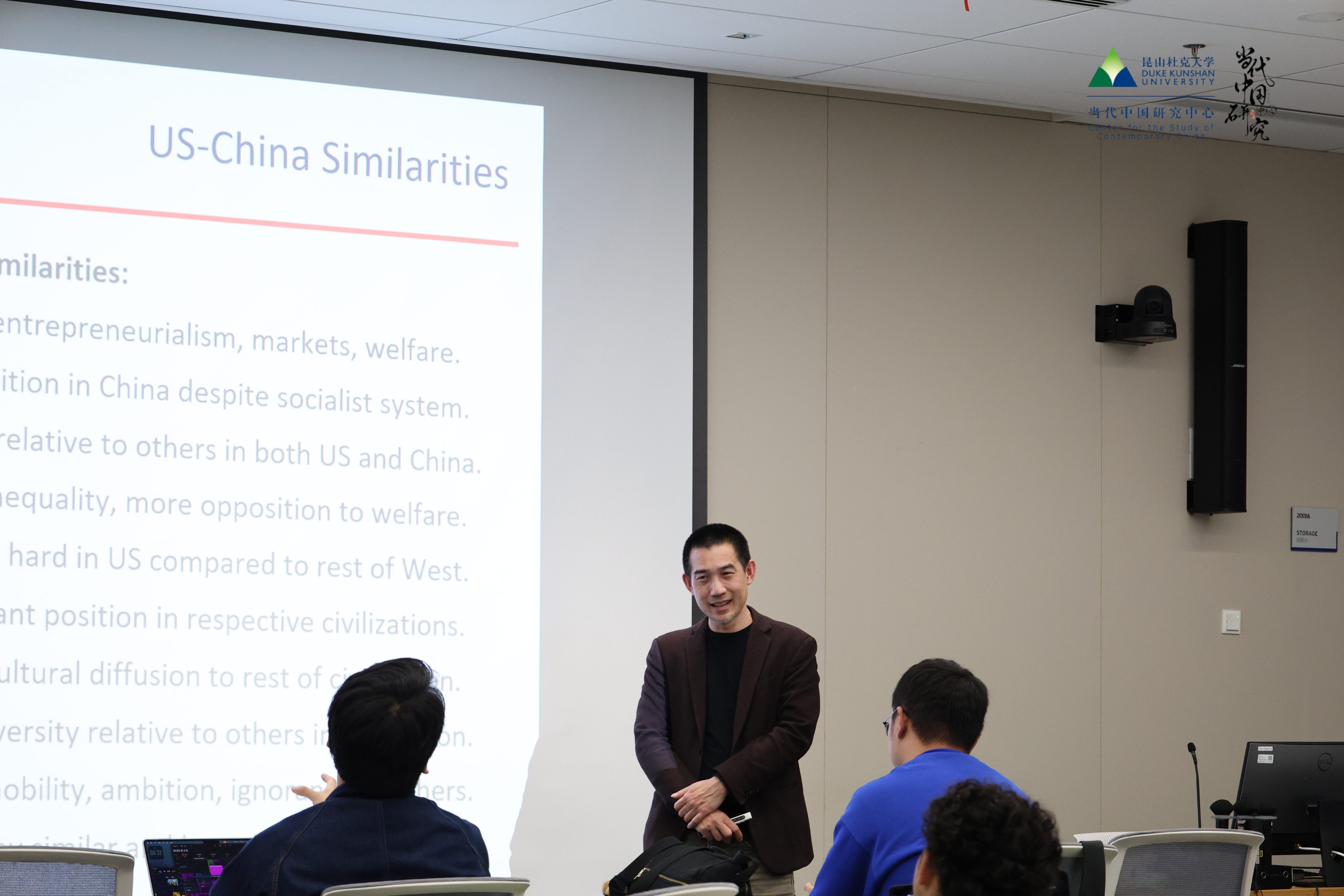
In the Q&A session, Tsai addressed a wide range of questions from the audience, further elaborating on his core arguments. On the perceived gap in social trust between the high-trust U.S. and low-trust China, he explained the difference as driven by structural factors such as social mobility and economic development, rather than inherent cultural traits, and noted that U.S. social trust has declined significantly in recent decades. When asked whether in-country presence is essential for credible China research, Tsai emphasized that immersive, on-the-ground experience is irreplaceable for understanding the nuances of Chinese society, and that many flawed China studies from overseas stem from a lack of contextual understanding and direct engagement with the country. In response to questions about the global influence of Chinese culture and development model, he argued that national power is the fundamental driver of cultural imitation and soft power, noting that China’s growing global influence will naturally rise with its national strength. He also addressed methodological questions about cross-national comparison, including how to account for internal heterogeneity within each country, the line between sociological essentialism and stereotypes, and the disciplinary distinctions between sociology and anthropology in cross-cultural research.
This event is part of the Guest Lecture Series of the China and the World Cluster under the Center for the Study of Contemporary China.