

On Thursday, November 27, 2025, Duke Kunshan University faculty, staff, and students attended a lecture by Professor Ziying Cui, Visiting Lecturer of Dance, titled “The Sublime Body in Pain: Ballet, the Nation and the Female Ideal in Contemporary China.” The lecture examined how the Chinese imagination has invested the ballerina’s disciplined, suffering body with symbolic meaning that extends beyond the stage, intersecting aesthetics, politics, and national ideology. Professor Cui opened with the widely discussed 2015 Huawei advertisement featuring a ballerina’s feet: one perfectly pointed in a satin pointe shoe, the other bruised and bandaged. Celebrated by Chinese media as a metaphor for national perseverance, the image fused pain and beauty, distilling a cultural narrative in which feminine suffering becomes an emblem of collective strength and ambition.
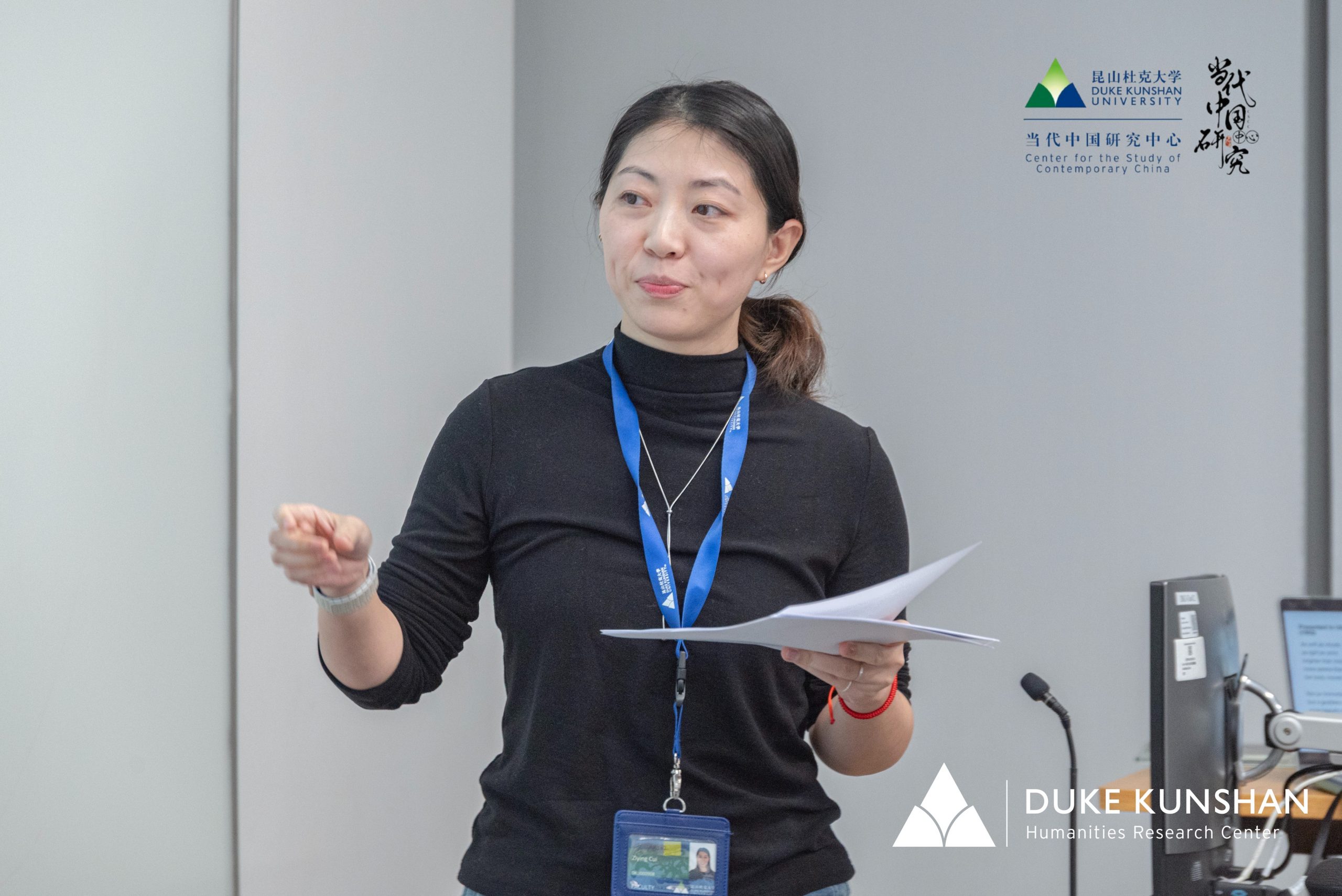
The lecture centered on the concept of the feminine sublime, in which the ballerina’s body naturalizes pain, idealizes beauty, and carries nationalist fantasies, serving as a nodal point between aesthetics and politics. Professor Cui explored how ballet, as a Western art form, traveled to China and merged with Chinese cultural thought. At the Secondary Affiliated School of Beijing Dance Academy, over 50,000 applicants compete annually for only thirty spots in the ballet program. With intensive pre-training, the applicants are evaluated according to both formal and unofficial aesthetic criteria that favor long limbs, small heads, and proportional extremes. Students undergo extreme bodily discipline, including restrictive dieting, intense training, and pubertal suppression, while pedagogical practices often involve verbal humiliation and physical punishment framed as moral training. Such practices transform the ballerina into a disciplined, almost sculptural body upon which ideals of femininity, moral virtue, and national aspiration are inscribed.
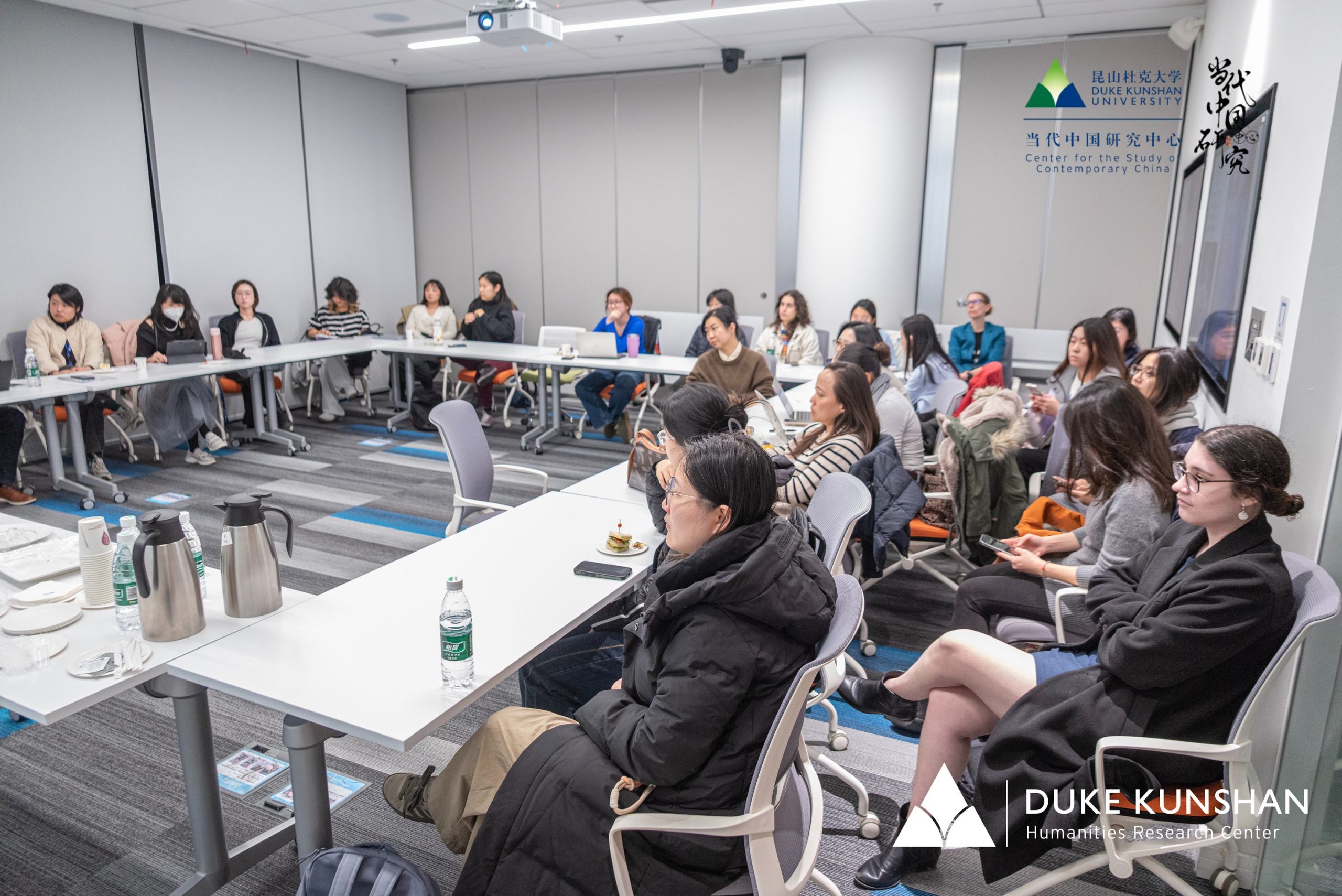
Professor Cui also traced the integration of Western ballet aesthetics with Confucian and socialist ideals. While 19th-century Romantic ballet valued ethereal grace over thinness, Chinese training emphasized flattened bodies and delayed sexual maturation, resonating with Neo-Confucian notions of chastity and symbolic purity. Socialist discourse further reframed ballet, portraying the dancer’s disciplined labor as an allegory of moral and national excellence. Within historical narratives linking bodily strength to national power, the ballerina’s suffering and transformation echo broader themes of national salvation. Ultimately, Professor Cui argued, the feminine sublime is not an alternative to masculine paradigms, but a patriarchal-nationalist aesthetic in which the silent, perfect-performing dancer becomes a symbol of the nation itself, simultaneously inspiring admiration and obscuring the lived realities of female performers.
The lecture concluded by urging the audience to recognize the ambivalence embedded in these cultural representations. The suffering ballet body can inspire admiration, yet it can also reinforce narratives that normalize sacrifice and invisibilize women’s pain. Through this nuanced exploration, Professor Cui invited attendees to reconsider how national stories are written on—and through—the female body.