Report: Miaoshu Li; Photography: Junyi Yu
On Tuesday, January 27th, the Center for the Study of Contemporary China, the Humanities Research Center, Cultures and Societies, and Anthropology@DKU co-organized a workshop and academic talk featuring Zhuo Niu, a PhD candidate at the Graduate School of East Asian Studies and the Institute of Social and Cultural Anthropology, Freie Universität Berlin. The workshop reflected on anthropological fieldwork in borderland contexts, and the academic talk explored post-pandemic border transformations along the China–Myanmar frontier, with a focus on “drying mechanisms” and everyday mobility negotiations.
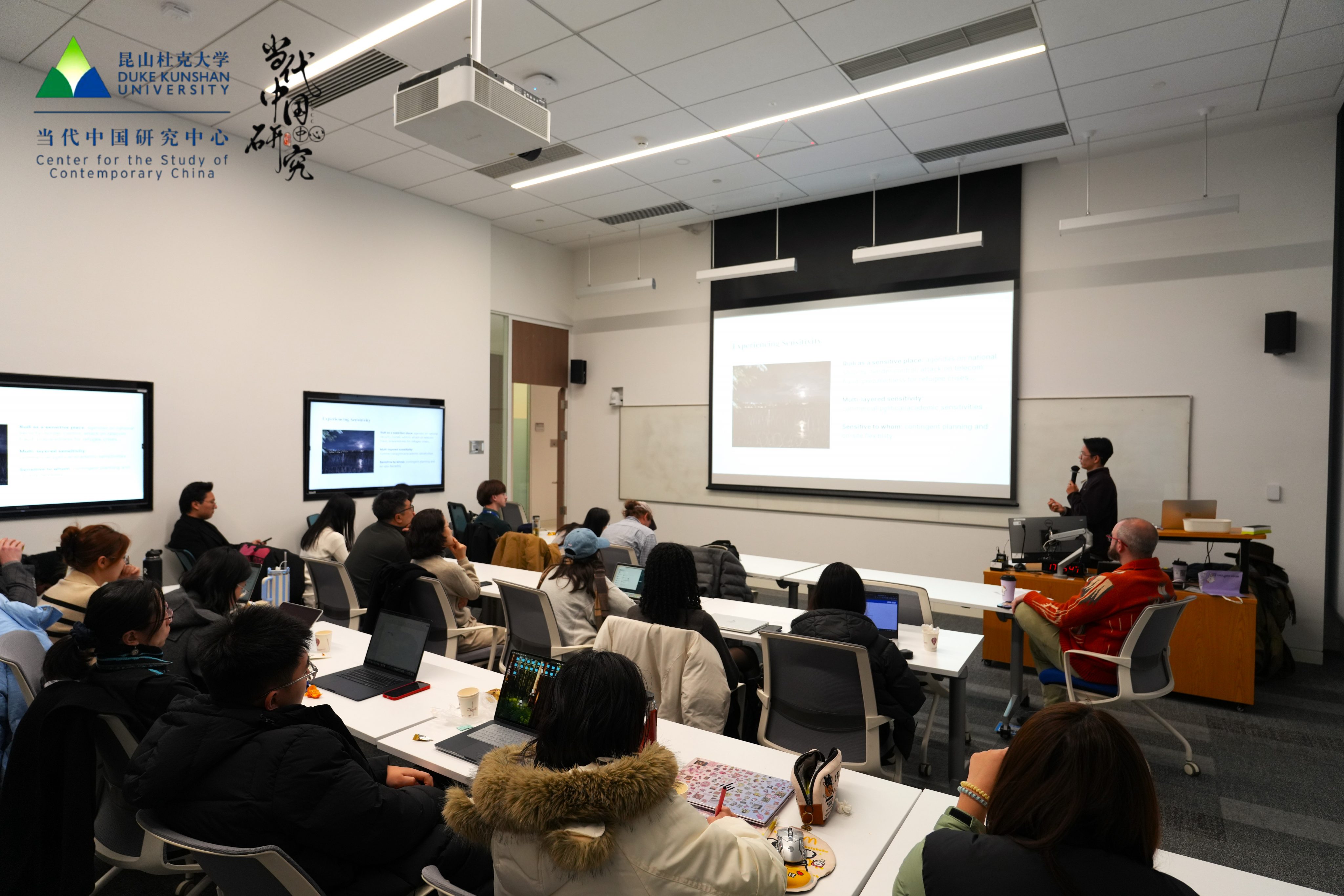
The workshop addressed a core question: what does it mean to conduct long-term, immersive qualitative fieldwork in such a borderland setting? Drawing on Zhuo Niu’s ten-month doctoral fieldwork in a border city in Yunnan Province, where he used anthropological methods to study cross-border movements of people and goods, local economic dynamics, and migrant labor markets, the session challenged popular stereotypes by pointing out that “danger” is often a secondary reproduction of prejudices. Instead, the most persistent challenge was how he, as an outsider-researcher with few pre-existing local connections, could establish initial social relationships and build a viable research foundation. Zhuo elaborated on the positionality of the outsider-researcher, framing fieldwork not as a mere process of data collection but as one involving social learning, emotional labor, and ethical negotiation.
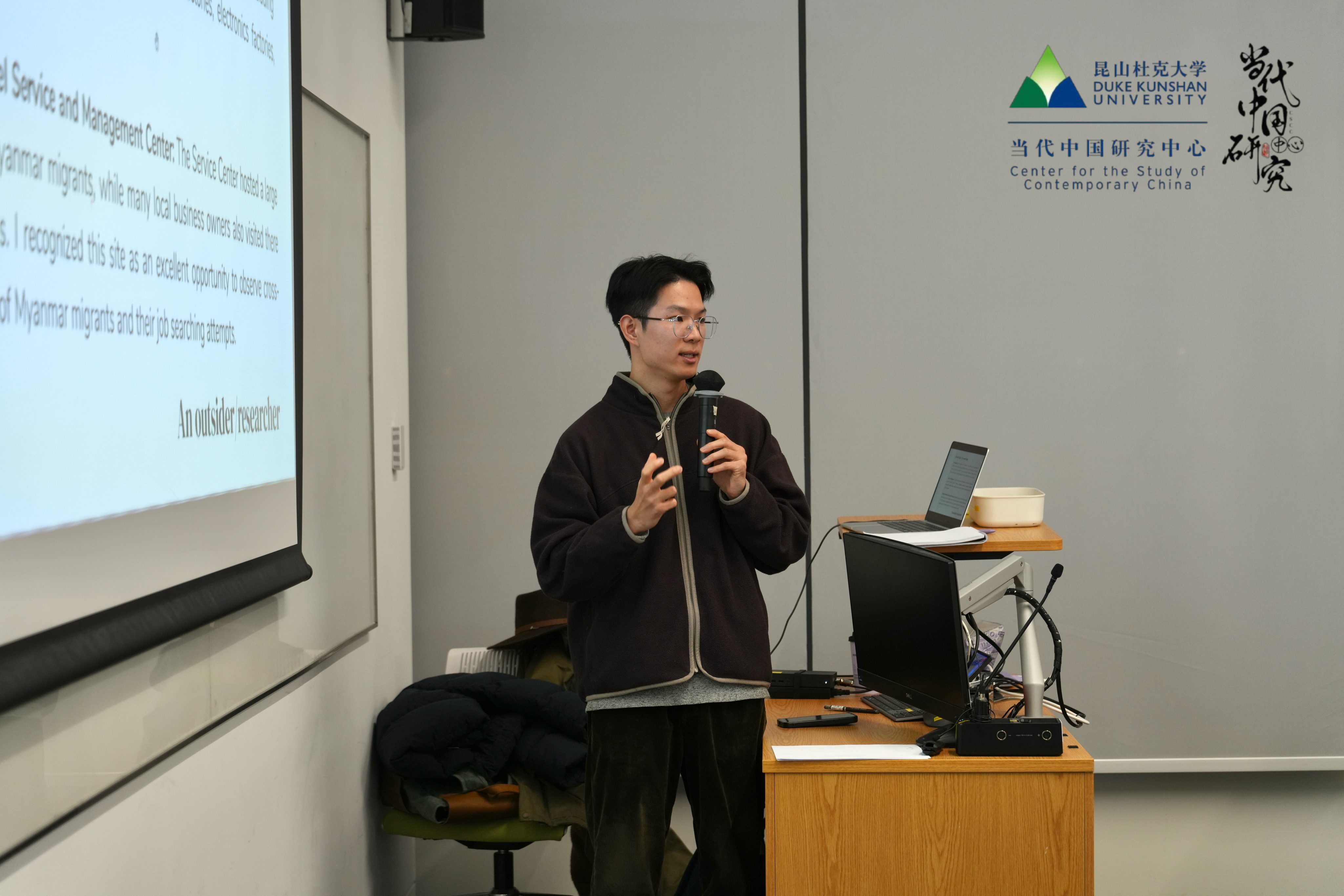
During the academic talk, Zhuo Niu shifted the focus to a critical process: “drying.” Based on extensive fieldwork in a major border city on the China–Myanmar frontier, he examined how cross-border mobility has been increasingly constricted in the post-pandemic era, a transformation captured by one key local informant in the phrase, “the border turns very dry.” This “drying” is not a single policy event but the result of layered “drying mechanisms.” Zhuo Niu elaborated on three specific “drying mechanisms.” The first involves the material reconfiguration of border infrastructures during and after the COVID-19 pandemic. The second refers to evolving documentation regimes that selectively filter migrant mobility, regulating who can cross the border and under what conditions. The third mechanism is the extension of administrative governance, which integrates border control deeper into post-entry social and economic life, particularly in the management of migrant labor.