

By Zihan Chen, Class of 2026
On November 22, 2025, the Center for the Study of Contemporary China welcomed Sidharth Kamani, a Financial Risk Manager and a risk specialist at the New Development Bank (NDB), a multilateral development bank founded by the BRICS countries. Mr. Kamani brought his expertise from roles at Goldman Sachs and the NDB to demystify the world of multilateral development banks (MDBs). Drawing on global economic challenges and his hands-on experience in credit appraisals and risk analytics, he explained the essential role of MDBs in crisis response, sustainable development, and bridging gaps left by commercial finance.
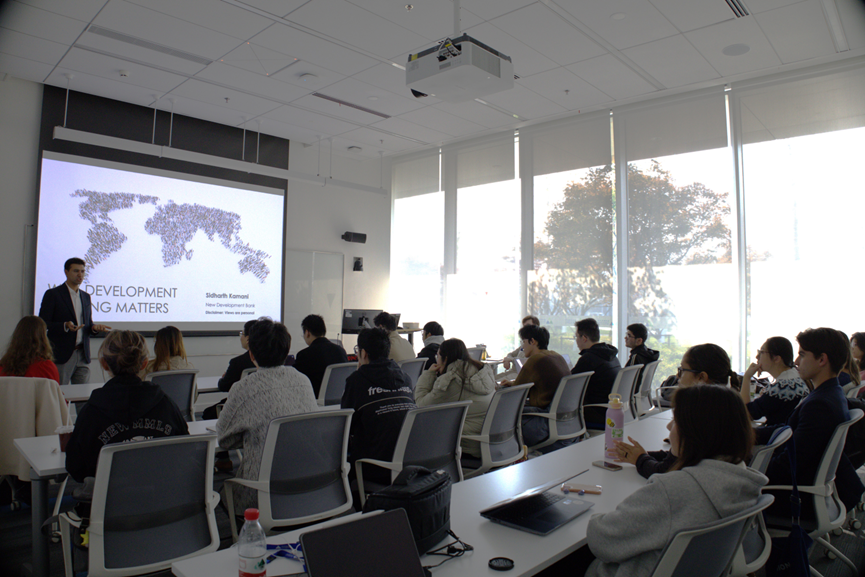
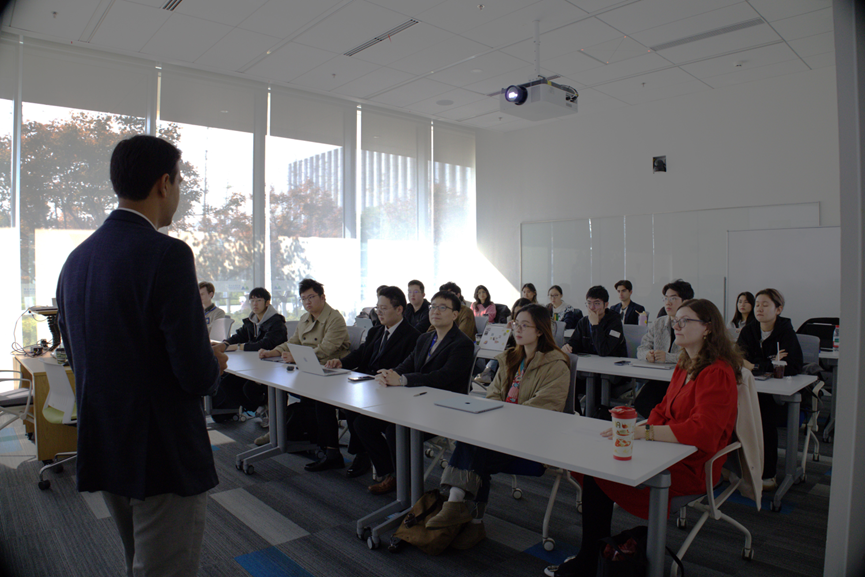
Kamani opened with a stark global context, quoting a G20 expert panel report that described the world as “on fire”: fracturing economies, slowing growth, 600 million people in extreme poverty, off-track 2030 Sustainable Development Goals (SDGs), and difficulties in meeting the target of 2°C under the Paris Agreement. In this landscape, he argued, MDBs are indispensable, as no major global goal can be achieved without them. He simplified the MDB model: countries provide equity, MDBs leverage it to raise debt, and lend the total for infrastructure, social services, climate projects, and economic development, forming a catalytic mechanism that fills gaps where private markets falter.
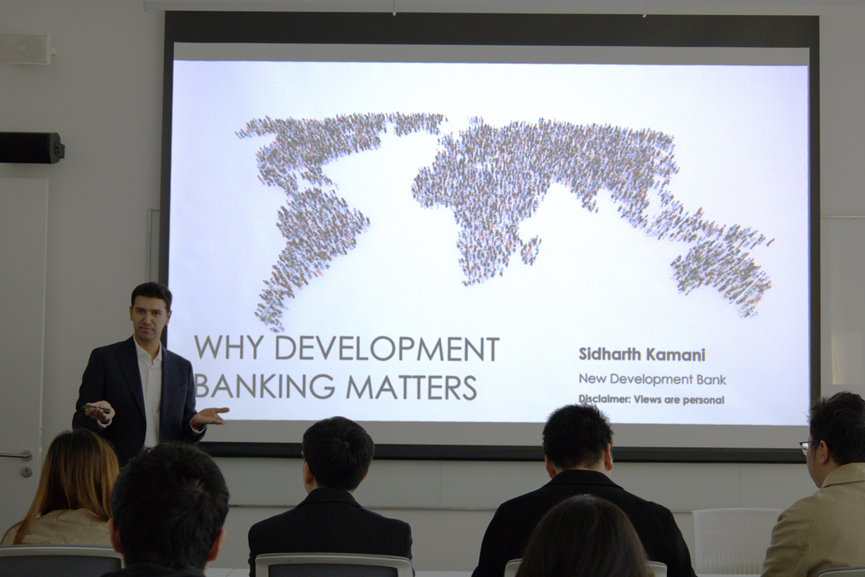
Delving into why MDBs exist alongside commercial banks, Kamani highlighted their unique offerings: long-term loans, low-cost financing, entry into high-risk sectors, crisis support, and a focus on development outcomes over profits. Unlike commercial banks, MDBs operate under international treaties, not domestic laws; and maintain conservative risk profiles to safeguard high ratings despite riskier lending. On the shareholding structures, advanced economies typically contribute capital without borrowing, while developing countries both contribute and borrow. The core of the talk outlined MDB operations: raising “nearly free” equity from members to borrow cheaply via high ratings, preferred creditor status (sovereigns prioritize repayments), and callable capital (government backstops). Lending includes sovereign loans to governments and non-sovereign loans to private firms for development-aligned projects. Counter-cyclically, MDBs ramp up lending during crises like pandemics while private banks retreat.
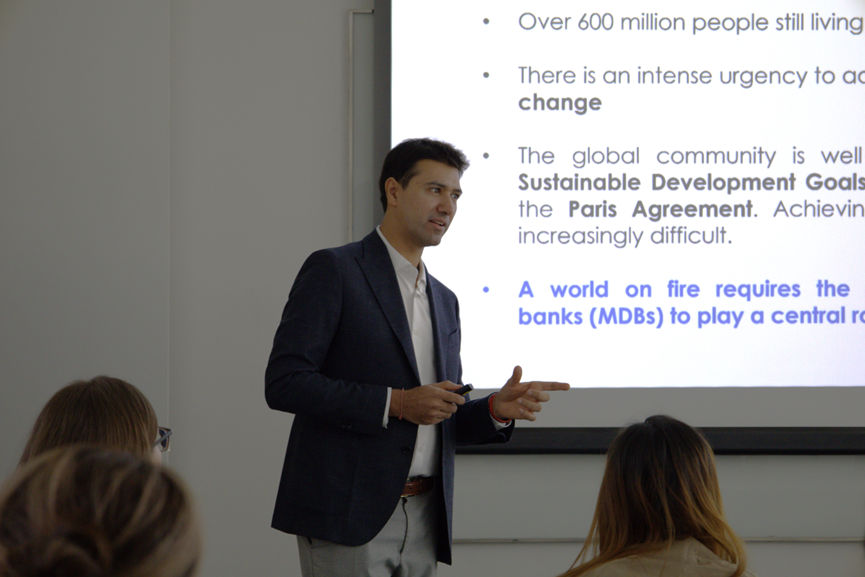
In the Q&A, Kamani addressed rating maintenance (via preferred treatment, callable capital, and conservative portfolios), financing biases toward middle-income countries (higher repayment probability), NDB-AIIB overlaps (co-finance as needs exceed competition), bond buyers (institutions and investors seeking safety), and cryptocurrency (consideration for transparency and risk management). The discussion also covered infrastructure financing, climate risk, and international finance’s role in China’s global partnerships. Kamani’s accessible analogies and insider perspectives made complex finance approachable, underscoring MDBs’ potential amid rising crises.
This event is part of the Guest Lecture Series of the China and the World Cluster under the Center for the Study of Contemporary China.