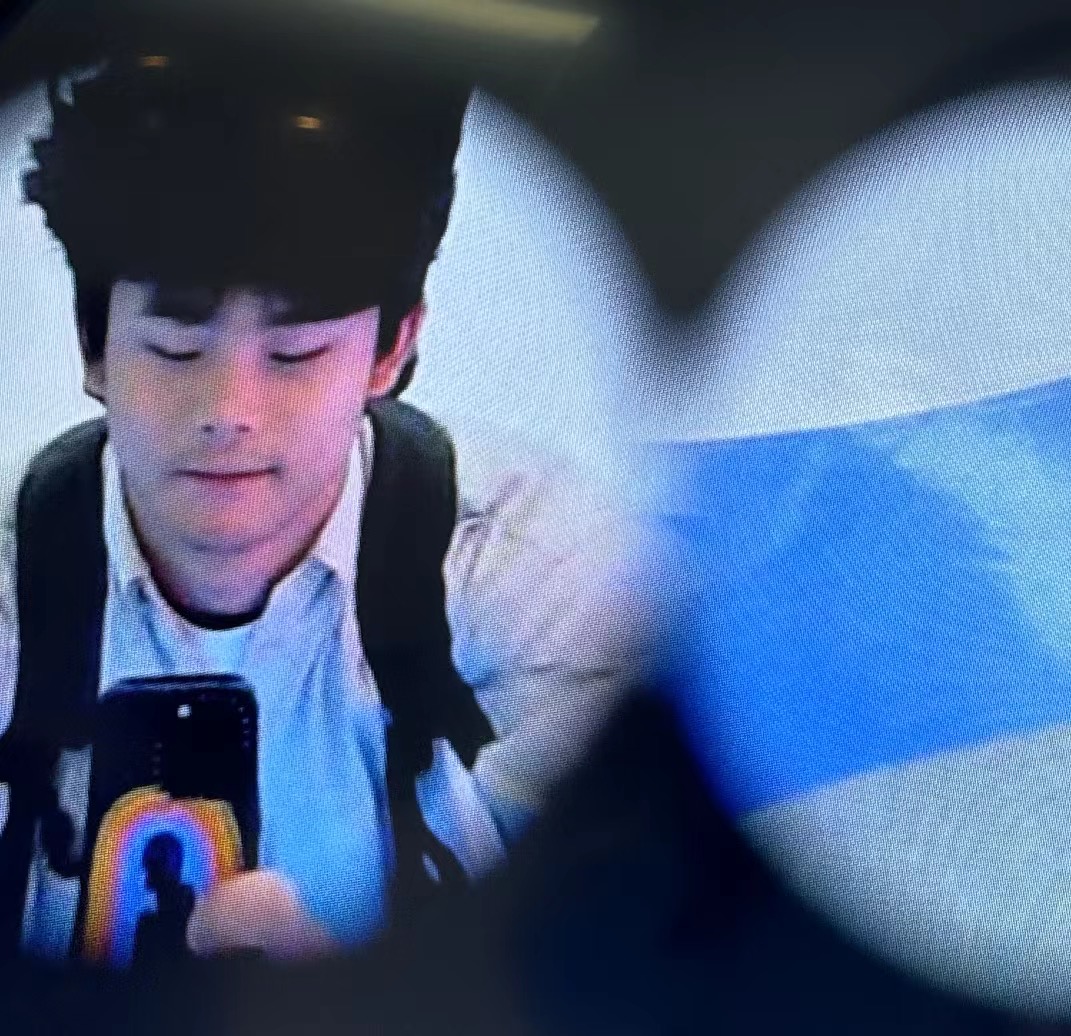
Mingjiang Gao is a student from the Class of 2026 majoring in Arts and Media (Digital Culture and Communication) and a researcher in the CSCC Faculty–Student Collaborative Project “Queer Transnational Media Flow: Exploring Queer (In)Visibilities on Chinese Digital Platforms.” Guided by Prof. Fan Liang, the project examines how foreign queer media circulates on Chinese digital platforms under conditions of censorship, with particular attention on the role of individual users who transmit, adapt, and mediate such content across borders. Situated at the intersection of queer studies, digital media studies, and transnational communication, Mingjiang’s work contributes to ongoing scholarly conversations about visibility, platform governance, and the cultural politics of media flow. In the interview below, Mingjiang introduces the project, reflects on his research process so far, and discusses the broader significance of studying queer media visibility in contemporary China.
To start, could you describe the project in your own words and share what motivated you to pursue this research topic, and how does this project connect with your academic interests in digital culture and communication?
This project is both inspired by my daily observations and existing academic works. In my life, I often notice how many conversations, aesthetics, and trends among Chinese sexual minorities’ communities relate to Western internet culture and social media, sometimes more so than other Chinese online communities. This led me to question: what are Chinese queer users watching on their screens every day?
Transporting (Ban Yun) has long been a media culture in China, where individuals download foreign media content and share it on domestic sites. Driven by the question above, I realized how crucial such transporting cultures are for Chinese queer communities. Since the domestic production of queer media content faces many restrictions and challenges, those “transported” media from the West can sometimes constitute the majority of content that a queer user consumes, even on platforms like Douyin or Bilibili.
The connects directly with my academic interests in platform studies and global media, since this phenomenon is exactly about transnational media flow in a cross-platform context. Yet, research on transnational media flows often emphasizes institutional flows like Hollywood, while platform-creator studies often center on mainstream Western creators and “original” productions. This case thus helps us shift the focus to creators with intersecting marginalized identities, whose content is cross-platform and also not a typical kind in Western cases. It also provides an empirical case study of Chinese queer communities that helps scholars from diverse domains to understand the current media environment of this group in contemporary China.
For readers who may not be familiar with the topic, what do you mean by “queer transnational media flow,” and why is it important to study this today?
Transnational media flow refers to media content that is produced in one cultural, national, or linguistic realm and later introduced to and consumed by audiences from another. Common examples include American news consumed by East Asian audiences or K-pop entertainment shows watched by audiences in North America. Queer media here particularly refers to content featuring non-heteronormative gender expressions, identities, narratives, and intimacies. It can be films themed on queer people, television shows featuring LGBTQ+ character storylines, or trans influencers social media content.
For studies on sexual minorities, transnational communication across borders has long existed, and many scholars have addressed these issues in previous media contexts, such as the mass media and early internet eraa. However, we are now in the age of social media platforms, where content is user-generated, communication is algorithm-mediated, platforms govern visibility, and images are expected to be commercialized. How these conditions shape queer transnational flow thus requires an up-to-date case analysis.
For studies on platform content creators, scholars often look at middle-class, mainstream, and Western creators in cosmopolitan cities. While they have contributed greatly to the theories that help us understand such new forms of media practice, there should be more research that looks at creators with marginalized identities who are based in non-Western cities and create content in a less mainstream fashion. This is important for de-Westernizing existing creator studies and providing a valuable case for ongoing discussions in this field.
Your research looks at how foreign queer media circulates on Chinese platforms despite censorship. What kinds of content are you examining, and where do you usually encounter it in your research?
To operationalize this research, I focus on content featuring male homosexual identities and intimacies, which are one sub-category of queer media. There is no limit on genre, so the content can be global queer films, TV series with homosexual characters, audiobooks of gay romance, celebrity talk shows, YouTube videos, and social media content from gay influencers on Instagram or TikTok.
A key part of your project focuses on individuals you describe as “transporters” of foreign queer media. Without naming individuals, could you explain who these transporters are and why they are so central to understanding queer visibility on Chinese digital platforms?
The “transporters” are creators who run accounts that routinely download foreign homosexual media content and upload it to mainstream Chinese platforms such as Douyin, Bilibili, and RedNote. They are people with one or more accounts that particularly upload such content and continue doing so over a long period of time. While foreign homosexual media content can be introduced through other means, they are the major actors conducting such transnational practices on Chinese media platforms. They select what can be transported, and they may adjust the content, add their creative elements, and present it differently from the original sources. How and why they mediate and intervene in this content thus becomes crucial to understanding the visibility of foreign queer media content on Chinese digital platforms.
Censorship and platform governance are key challenges in this research. From your interviews and content analysis, what kinds of visibility challenges do transporters most commonly face, and what strategies have you observed them using to stay visible or intentionally invisible?
Existing scholarships often considers visibility as something creators should maximize and “game” for on digital platforms, and invisibility as a form of suppression or restriction, such as censorship or shadow-banning. In my case, transporters are experiencing their visibility challenges differently. While they do struggle with invisibility, such as the platform restrictions on homosexual content and transported Western media without copyright permissions or institutional review, they also risk overexposure by platform algorithms to the public, such as harassment and offensive comments from the heteronormative audiences. In this case, some visibility becomes “unwanted”.
While some research has also pointed out that marginalized creators can encounter such “unwanted visibility”, this case further demonstrates that it can be perceived differently within the same group. For instance, those who regard their transportation work as a form of connection with other queer users in China avoid unwanted visibility through various strategies such as coded languages and strategic tagging. In contrast, those who intentionally transport sensational and pornographic content on short-video platforms to gain audience traffic for commercial possibilities may embrace such shock exposure to maximize engagement metrics. These observations suggest understandings creators’ visibility as a more contingent concept shaped by various factors rather than something that should always be maximized. This can help us better understand how minority creators produce content, present themselves, and frame their work in these normative spaces. They are not always gaming platform algorithms to maximize visibility but are instead managing their visibility through various tactics and negotiations.
Methodologically, this project combines large-scale content analysis with in-depth interviews. What has it been like to work with this mixed-methods approach, and what skills have you developed so far?
In practice, this project prioritizes qualitative interviews and supplement them with three months of online participatory observation conducted last summer. This is because I found that transporters of this kind do not have a shared network; rather, they are separate individuals with different social background and motivations. This makes it impossible to use snowball sampling to recruit participants, and there isn’t a specific and static “field” where I can participate. Moreover, no one explicitly labels themselves as a “transporters of foreign gay media content” in their profiles, so I need to identify them myself. Therefore, I spent three months identifying as many transporters as possible through keyword searches and algorithmic recommendations. I also joined many group chats and online forums hosted by these transporters to understand their practices and develop a list. During later interviews, I also invited participants to expand the list based on their subscription lists. Eventually, I developed a list of more than 110 creators across three platforms: Bilibili, Douyin, and RedNote. Then, I contacted them personally and eventually recruited 17 participants for online semi-structured interviews.
The most important skill I developed was learning how to build trust and connections with marginalized communities for research. These are anonymous online individuals who want to hide themselves from various forms of surveillance and scrutiny, while I, as a researcher, inevitably represent a figure of authority and observation. There was a time when I received very few responses from these transporters because they were not willing to participate due to privacy concerns. Luckily, I found a way to address this challenge by building a personal website that includes my academic experiences, educational background, and some of my artworks. While this might seem unrelated, transporters told me that it really helped build a virtual persona that they could trust. They also shared that it made the dynamic more comfortable because they could first “gaze” at me freely and anonymously before deciding whether to respond. I received significantly more responses and acceptance after doing this.
Another thing I learned is the flexibility required in research methodology. Although creating a personal website helped build trust and connections, many creators still feared having online interviews because they felt that their voices might be heard not only by me but also by Duke Kunshan University as an institution. I therefore offered another option by converting the interview guide into an open-ended survey that participants could complete and return to me asynchronously. I then followed up with additional questions and sent them back to the participants. Through this iterative process, I manage to conduct conversations of similar depth while making participants feel more secure. Eventually, 11 people chose to participate in interviews, and 6 used the survey methods. Moreover, these transporters come from diverse social classes and educational backgrounds, so their literacy levels and communication styles vary greatly. I had to learn how to communicate with them and adjust my approaches constantly. These challenges were not something I anticipated when proposing this research, and the process of navigating them has not been easy for a senior undergraduate student. Yet, I believe that handling these ambiguities and challenges is exactly the kind of skill required for empirical research in the social sciences and humanities involving human subjects. This project has taught me a great deal, and I also appreciate my mentor, Professor Fan Liang, who has consistently supported me and guided me through this maze.
As you move into the next phase of the project, what will you be focusing on in the coming months?
I’m still adjusting the structure of my findings and reviewing more relevant literature to position my work better and clearer to scholars studying platform creators and transnational media. I’m grateful that Professor Fan Liang has been very patient and supportive in helping me through this process. We have also submitted the paper to several relevant conferences. Although it was rejected, I received valuable feedback from scholars in related fields, and I am glad that I had a mentor who encouraged me to take this step. I hope that this research could be refined into a strong scholarly work that can be presented in an international conference or perhaps accepted by an academic journal. Ultimately, I hope to make it visible to those who may find it valuable.