

Dr. Hua Wang, Lecturer in Politics at the University of Glasgow and a core member of the Scottish Centre for China Research, joined Duke Kunshan University in Fall 2025 as the Scholar in Residence at the Center for the Study of Contemporary China (CSCC). Over the course of her residency, she has actively participated in the Center’s academic life—engaging in seminars and workshops, collaborating with faculty across disciplines, and advancing her ongoing research on community governance and public policy in China. Her residency has also opened new avenues for scholarly exchange between Glasgow and DKU, strengthening CSCC’s mission to foster comparative, interdisciplinary, and globally connected research on contemporary China.
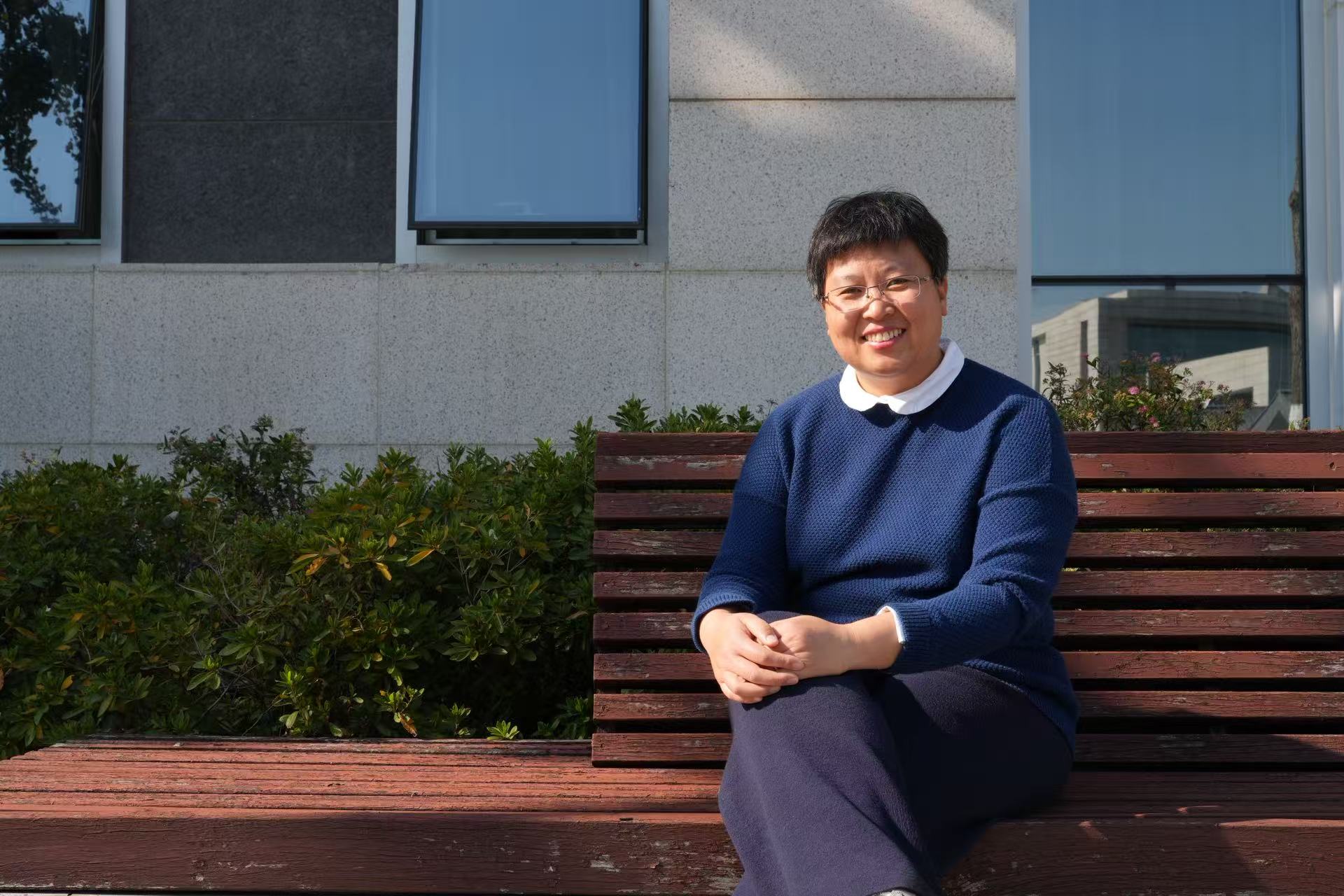
In this featured interview, Dr. Wang reflects on her work, the ideas and collaborations that have emerged during her stay, and her experience living and conducting research within the DKU community.
Hi Prof. Wang, to begin, could you introduce yourself to our readers and share what brought you to Duke Kunshan University as the 2025 Scholar in Residence at CSCC?
I am Hua Wang, currently a Lecturer in Politics at the University of Glasgow. My research focuses on Chinese politics, governance, and policy processes. I am also a core member of the Scottish Centre for China Research (SCCR) at Glasgow. I completed my undergraduate and master’s degrees at Nankai University, and my PhD at Glasgow. Because of this mixed academic background, I deeply appreciate the importance of understanding China both from within and from outside. As the only China centre located in China, CSCC offers a unique platform for integrating these two perspectives.
I have known Prof. Annemieke van den Dool since 2022 through an online workshop, which led to our collaboration on a special issue for an academic journal. It was a very enjoyable experience. When the opportunity arose for me to take study leave from Glasgow, CSCC immediately came to my mind. The staff and faculty here have been incredibly helpful, making my application and arrival a smooth and pleasant journey.
What impressions do you have of the academic environment at DKU, both within CSCC and across the broader campus community?
I have been deeply impressed by the diversity and richness of seminars, workshops, and lectures at CSCC and across the DKU campus. The equality and inclusiveness between staff, faculty, and students, as well as the collaborative spirit both inside and outside the classroom, stand out to me. It truly feels like an oasis in an increasingly polarized and uncertain world.
Collaboration is an important goal of the Scholar in Residence program. Have you had opportunities to work with DKU faculty during your stay?

I have met many excellent scholars and had wonderful conversations that have sparked new research ideas, which I am still processing and mapping out. I also joined the DKU community gardening network and the DKU cycling club. These are excellent staff–student co-production initiatives that have the potential to extend beyond campus and benefit the wider community. They also align closely with my current research interests in community governance and the co-production of community services.
During your residency, what specific aspects of Chinese public policy have you focused on, and in what ways has the DKU environment influenced or informed your research?
My research here has focused on elder care policymaking and implementation at the community level, as well as broader issues of community governance. DKU itself, as a diverse and dynamic community, provides an interesting setting for observing community governance in practice.
At the same time, I have been able to take advantage of the rich resources available through the DKU library and online databases to systematically review relevant policy documents and academic literature. Thanks to various networks at DKU, I have also had opportunities to visit Yuefeng Dao Organic Farm, the Ciwei ecological farming experiment, and the Biolan compost bin factory. I have participated in several thought-provoking workshops on cycling governance and community garden governance. These experiences have greatly enriched my research agenda and sparked new ideas for future projects and collaborations.
Your research spans topics such as lobbying, governance, and political institutions. How do you see your work connecting with the comparative or interdisciplinary research efforts underway at DKU?
There are many possibilities for connecting my work with DKU’s strengths in comparative and interdisciplinary research, as well as for fostering collaborations between Glasgow and DKU. I am still exploring and reflecting on the best ways to collaborate with the excellent scholars here.
Beyond your research activities, how has your time living and working in Kunshan been? Have there been any memorable experiences or aspects of campus life that stood out to you?
Living in Kunshan has been a truly joyful experience, and I have enjoyed every moment of it. Some of the most memorable experiences include living in a local neighborhood and talking with my neighbours, enjoying the convenience of food delivery services, cycling in the forest park and to Yangcheng Lake, celebrating the harvest festival at the Yuefeng Dao farm, and taking friends on a weekend trip to Zhouzhuang.
I bought a second-hand Giant bike and have been enjoying an ecological and active lifestyle, which has given me not only a good work–life balance but also a “bike balance.” My daughter and I even adopted a wild cat, whom we named Meow Meow.
Looking ahead, how do you envision continuing your connection with CSCC and DKU? Are there potential future collaborations or projects you would like to pursue?
I am currently working with Annemieke to explore possible collaborations, potentially on chambers of commerce lobbying practices and community garden governance. I also hope that CSCC at DKU and SCCR at Glasgow can establish a more sustainable long-term partnership to support joint academic activities and student exchanges.