

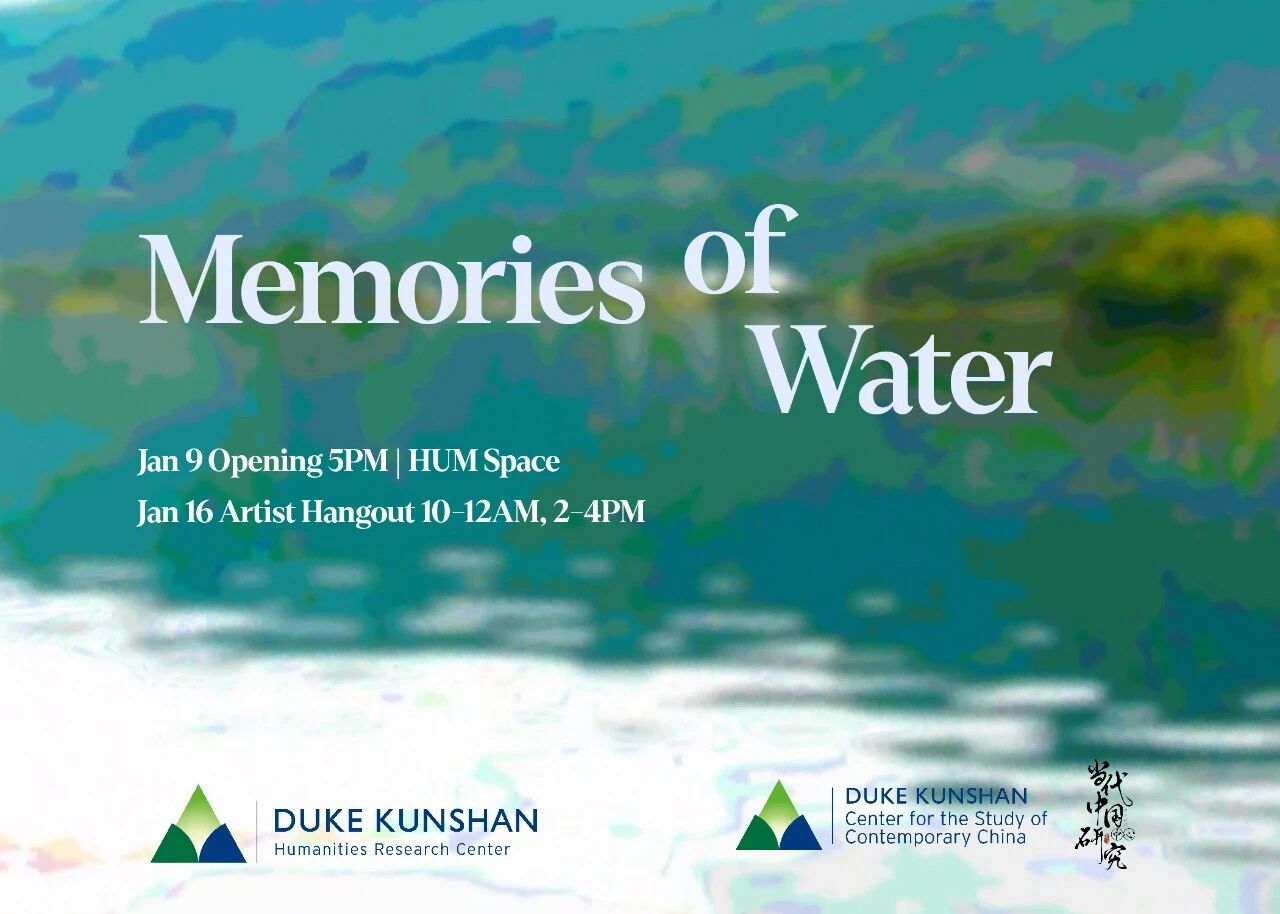
Time:
Venue: HUM Space (AB1075A)
By AH Visiting Lecturer, Dingyi Xu, MFA
What is your earliest memory of water?
Since ancient times, water has nurtured life and civilization, while also bringing challenges. Over the centuries, Hubei Province, known as the “Province of a Thousand Lakes,” was shaped by cycles of flood and drought. In response, large-scale water conservancy projects emerged across the region, especially from the 1950s, built through collective labor under conditions of scarcity and urgency. Reservoirs and canals were carved into the land by hand, carrying the belief that nature could be reshaped through human effort. My grandfather, Changqing Xu, was one of the many farmers who worked on the reservoir called “Wangying” and the major Yangwu Canal in rural Wuhan, now stands as crucial source of irrigation and drinking water for rural areas.
This exhibition grows out of my return to my grandfather’s path after his death, documenting the physical traces that remain and reshaping the memories and stories that move, fade, or reappear through ongoing environmental and social changes. Like water that never stops flowing, these memories move between times. No matter how the place changes, they carry the remembered and the lost.
你最早关于水的记忆是什么?
自古以来,水既孕育了生命与文明,也不断带来挑战。几个世纪以来,被称为“千湖之省”的湖北,一直在洪水与干旱的反复交替中被塑造。为了应对这些问题,从20世纪50年代起,在“向大寨学习”运动的推动下,湖北各地陆续展开了大规模水利建设。在物资匮乏、条件紧迫的情况下,人们依靠集体劳动,用双手在土地上修建水库与干渠,寄托着“用人力改变自然”的信念。我的祖父许昌清,就是当年参与修建武汉农村王英水库和阳武总干渠的众多农民之一。如今,这些工程仍然是当地重要的灌溉和饮用水来源。
这个展览源于我在祖父去世后,沿着他的足迹重新回到这些地方,记录那些仍然存在的痕迹,并梳理在持续的环境与社会变化中流动、消散或再次浮现的记忆与故事。就像从不停息的水流,这些记忆穿梭于不同的时间之中,无论地方如何改变,都承载着被记住的,也带着已经失去的。