By Yuran Wang, Class of 2028
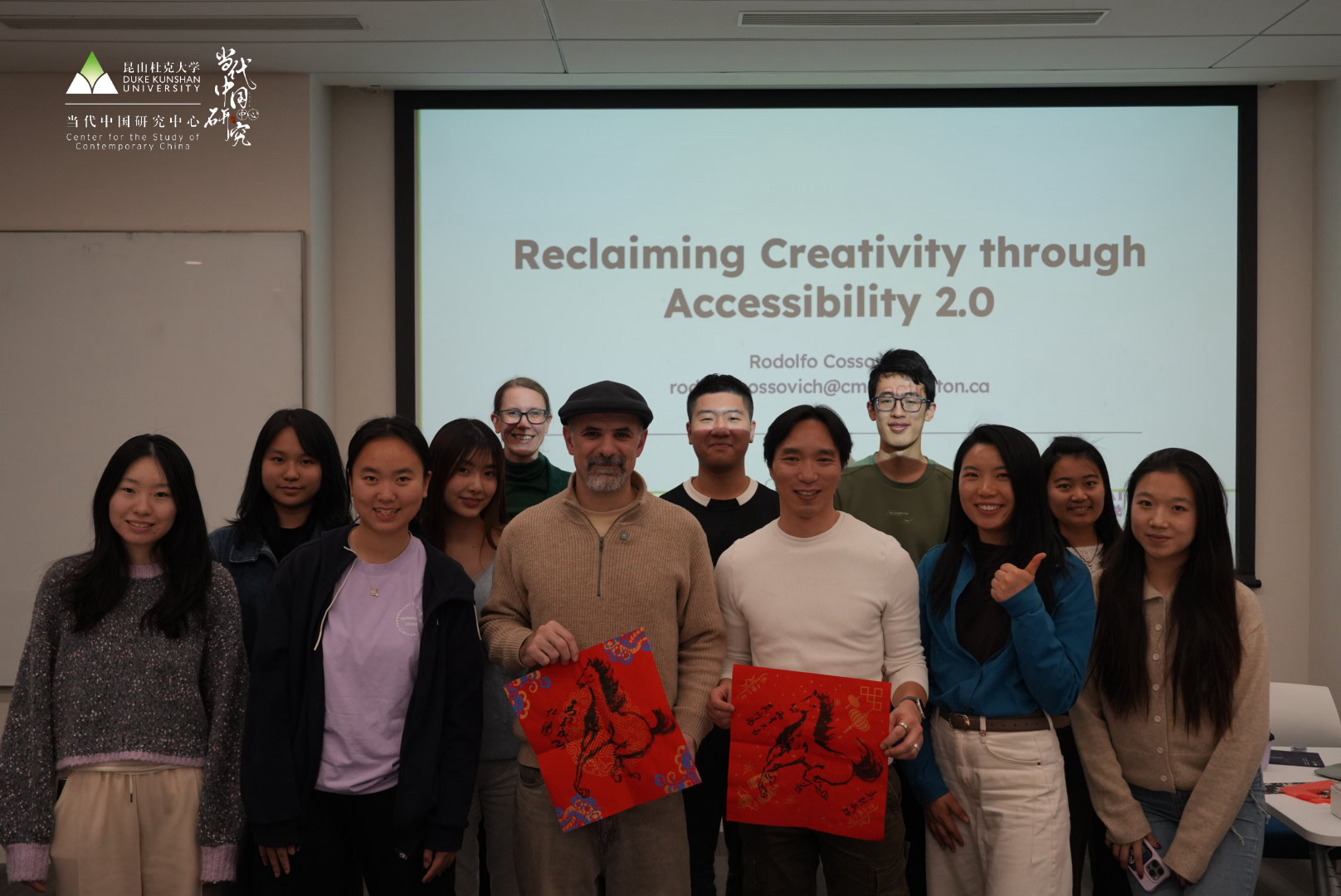
On the evening of February 11, 2026, Reclaiming Creativity through Accessibility 2.0 was held at DKU, featuring Rodolfo Cossovich, Assistant Arts Professor of Interactive Media Arts (IMA) at NYU Shanghai. In a world often obsessed with normative metrics and idealized bodies, the talk challenged the audience to rethink accessibility not merely as a means to productivity, but as a pathway to true creative agency and human expression.
Cossovich began by sharing a series of projects developed with his students, ranging from augmented reality interfaces for hearing-impaired baristas to adaptive gaming controls for wheelchair users. These early examples set the stage for his core thesis: “Accessibility 2.0.” He argued that while Human-Computer Interaction (HCI) has made significant strides in efficient tasks such as data entry, there remains a profound gap in tools that facilitate the non-linear process of artistic creation. Traditional digital tools often act as barriers for those with motor impairments, and current AI trends risk automating the creative act entirely rather than enabling it.
A highlight of the session was the detailed exploration of Cossovich’s artist residency program. He introduced the audience to artists like Gene and Yumi, illustrating how custom wearable technology and gesture recognition allow them to translate specific body movements into digital brushstrokes. Central to this work is the methodology of “co-design.” Rather than acting as an engineer solving a problem for a user, Cossovich emphasized a partnership model where technologists listen deeply and design with artists. This collaborative approach ensures the technology adapts to the artist’s body and intent, preserving the struggle and satisfaction inherent in the creative process.
The event drew a diverse group of students and faculty, sparking a lively Q&A session. Questions ranged from the challenges of bridging the rigid expectations of the engineering industry with the fluidity of art, to the potential for these technologies to aid novice users. Cossovich also spoke about his experience as a “misfit” in traditional engineering roles and the importance of cross-disciplinary research.
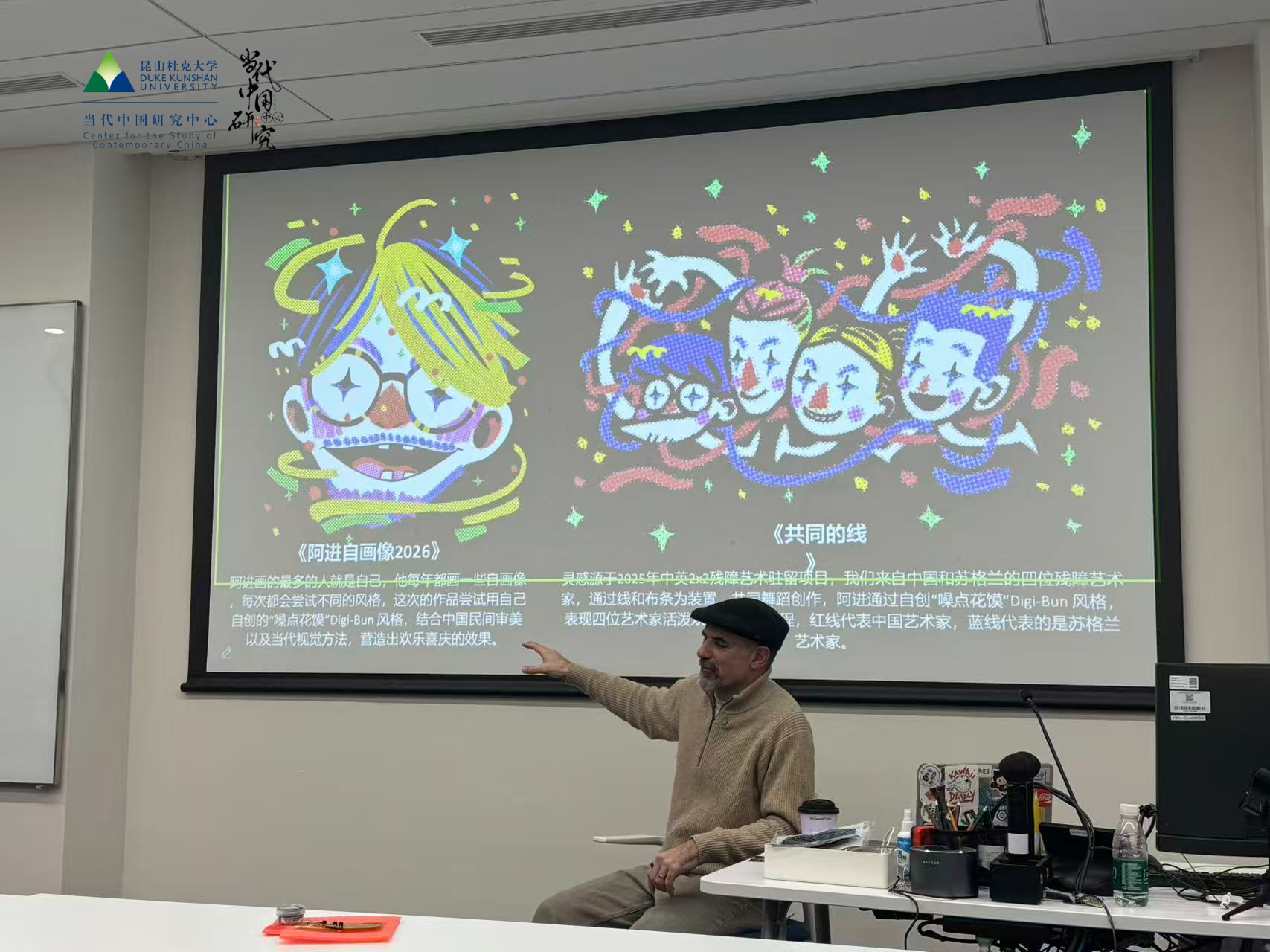
The evening concluded with a visual showcase of the artwork produced during the residency, vibrant portraits and expressive digital paintings that stand as a testament to the potential of inclusive design. By bridging critical disability theory with digital fabrication and machine learning, Cossovich’s talk offered a compelling vision of a future where technology can amplify the diverse voices of human creativity.