
By Zihan Chen, Class of 2026

On April 24, 2026, CSCC‘s Cluster for Gender and Global China and the Digital Technology and Society Cluster hosted a two-hour academic lecture From the Digital to the Good Life. The event featured two distinguished speakers: Daniel Miller, Professor of Anthropology at University College London (UCL) and Fellow of the British Academy, and Dr. Xiaolin Li, postdoctoral researcher on the ERC-funded ReWorkChange project. Centered on the core value of digital anthropology, the lecture explored how everyday digital practices in China challenge Western ideological assumptions about technology, and why anthropology rooted in real lived experiences offers a more practical guide to imagining the “good life” than traditional philosophical frameworks.
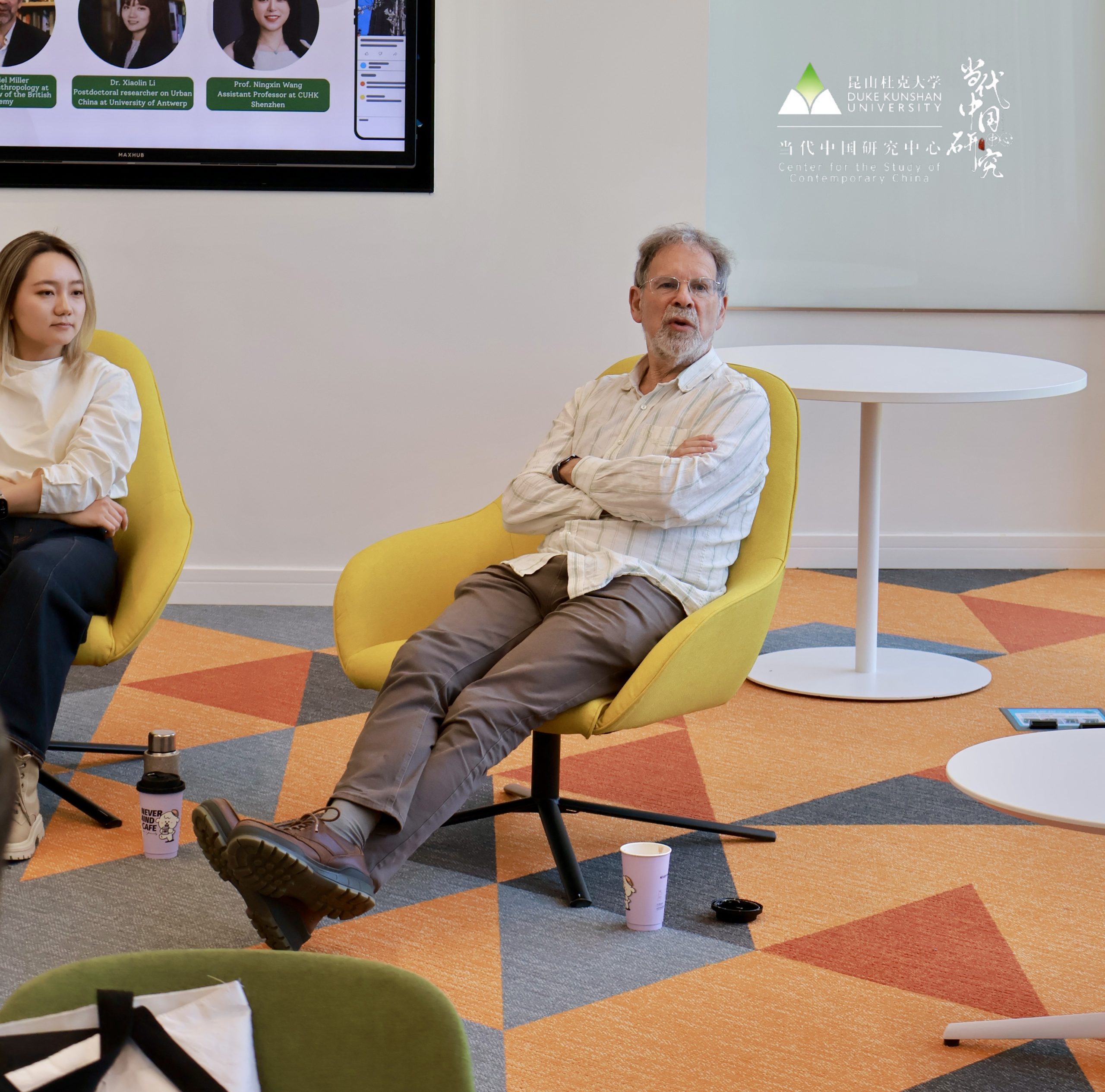
Professor Miller, a leading scholar in digital anthropology and material culture studies, opened the lecture by outlining three core contributions of anthropology, drawing from his book《人间烟火2.0:人类学家眼中的数字中国》(Understanding China through Digital Anthropology) and forthcoming book《不卷人生》(The Good Enough Life). First, in-depth ethnographic research breaks generalized stereotypes of China: his case study of a fourth-tier Chinese city revealed that local residents primarily use social media to uphold traditional conservative values, rather than emulating the lifestyles of first-tier metropolises, fully conveying the diversity and complexity of Chinese society. Second, the comparative dimension of anthropology exposes Western-centric biases: he juxtaposed the predominantly negative Western discourse on digital technology with the broadly positive attitudes in Chinese society, a divide rooted in deep historical factors, and argued that cross-cultural research must move beyond rigid stereotypes to face the real context of digital practices. Third, anthropology provides grounded insights into the pursuit of the good life. Challenging the mainstream narrative that datafication fundamentally reshapes people’s perception of their bodies, Miller shared cross-cultural ethnographic findings that most users treat body-tracking data as a practical tool for health management, rather than letting it redefine their core sense of self. He also highlighted a key divergence: Chinese period-tracking app users’ core privacy concern is preventing people around them from accessing their intimate data on their phones, not corporate data usage, a finding that subverts mainstream Western assumptions about digital data power.
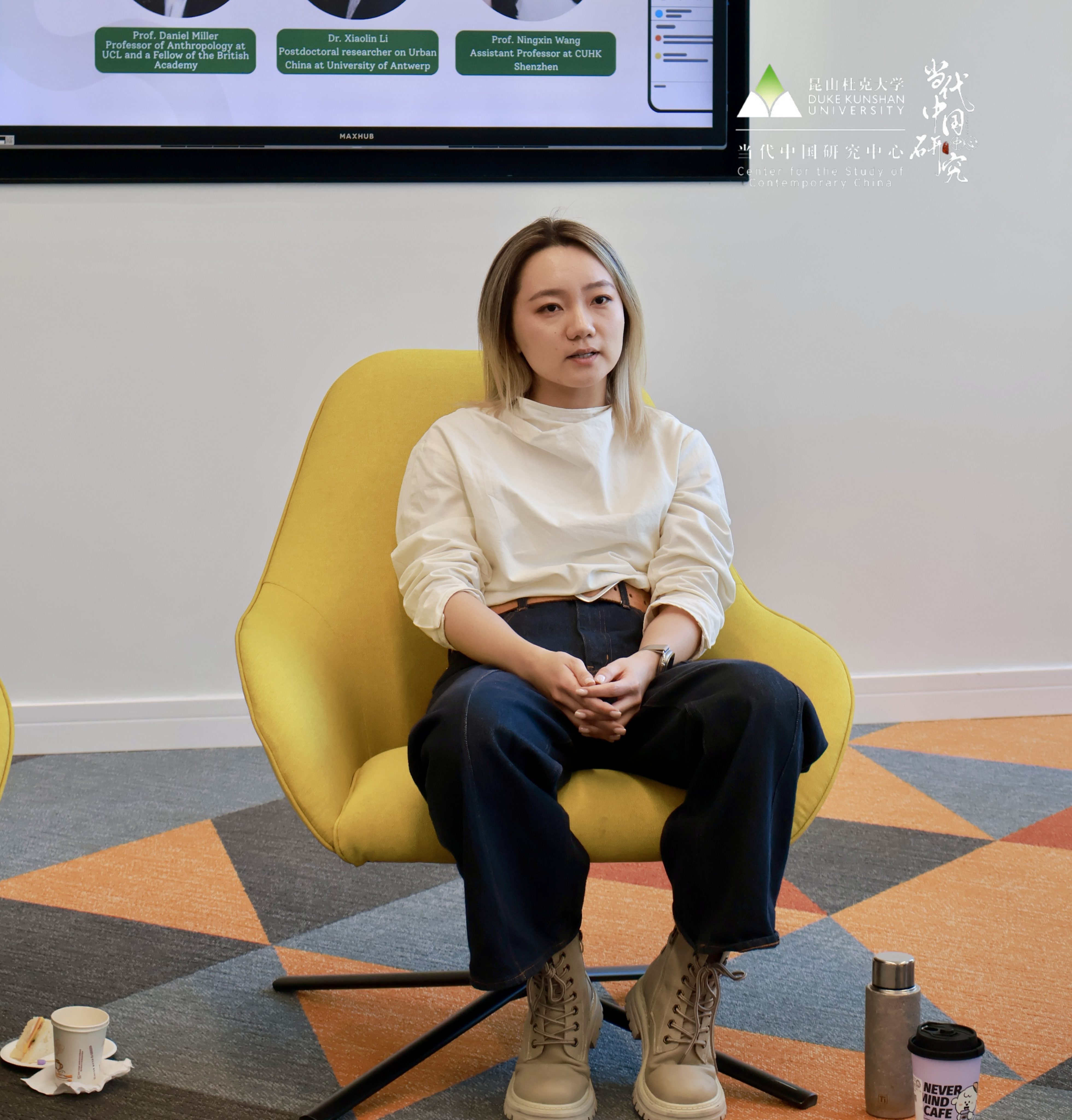
Dr. Xiaolin Li then presented her book project, adapted from her Ph.D thesis on menstruation, sexuality and digital period-tracking in urban China. She introduced the expanded concept of “intimate tech”, which moves beyond the narrow “fem tech” framework to cover the full ecosystem of reproductive health materialities, centering a diverse user base including trans people to form a truly user-centered research perspective. Her research is anchored in dual field sites: an ordinary urban community in Hangzhou, chosen for its representativeness of normal urban life across China with a highly diverse population across class, age and migration status; and an IT company in Xiamen, where she conducted immersive research across product design, algorithm development and content moderation teams. This dual lens allowed her to fully unpack the tensions, negotiations and power dynamics between users and producers of intimate technologies. Li walked through the core findings of her seven-chapter book, including the historical evolution of menstrual hygiene products in China, the unique privacy and intimacy of period self-tracking (distinct from other social forms of self-tracking), the grassroots politics of menstrual advocacy, gendered power dynamics in Chinese contraceptive culture, user adaptations to period prediction algorithms, and the complex content moderation process for intimate online discourse. She also briefly introduced her ongoing fieldwork on remote work and social change in Shanghai.
In the subsequent Q&A session, the speakers addressed core audience questions. On her field site selection, Li clarified that the Xiamen site was chosen for the host IT company of her producer-side research, while the Hangzhou community was selected for its representativeness of ordinary urban China. On how period tracking shapes users’ body perception, Li explained that in the traditional Chinese medicine-influenced Chinese context, period tracking functions as a holistic self-care practice, helping users understand the links between their bodily signals, lifestyle and mental health. On data privacy tensions, both speakers noted that Chinese users show little concern for corporate data usage, unlike the intense Western academic focus on data power, while Miller added that sufficient high-quality user data is critical for platforms to optimize better health services for women, challenging the narrative that data sharing inherently erodes user rights. Miller also reaffirmed his core finding that body tracking data does not fundamentally reshape users’ core perception of their bodies, disputing dominant theories in digital sociology. In addition, the pair responded to queries on cross-cultural digital attitudes, ethnographic research ethics and sex education in Chinese universities.
On the whole, the lecture offered participants a rich interdisciplinary dialogue on digital technology, everyday life and the pursuit of well-being in contemporary China. By grounding theoretical debates in ethnographic observation and lived experiences, both speakers challenged dominant assumptions surrounding digital technology, privacy and selfhood, while highlighting the importance of culturally situated approaches to understanding social change. The event also reflected CSCC’s ongoing commitment to fostering critical conversations at the intersection of technology, society and global China through collaborative and cross-disciplinary engagement.