As part of the courses PUBPOL 301, taught by Professor Annemieke van den Dool, and POLECON 201, taught by Professor David Landry, on April 24, approximately 40 students participated in a field trip to Shanghai focused on understanding public policy and political economy in real-world settings. The purpose of the trip was not only to connect classroom concepts with practical experiences, but also to better understand how China functions politically and economically, as well as China’s evolving role in the global system. Through presentations, discussions, and a site visit, students gained firsthand insight into the economic and political forces shaping China’s role in the global economy.
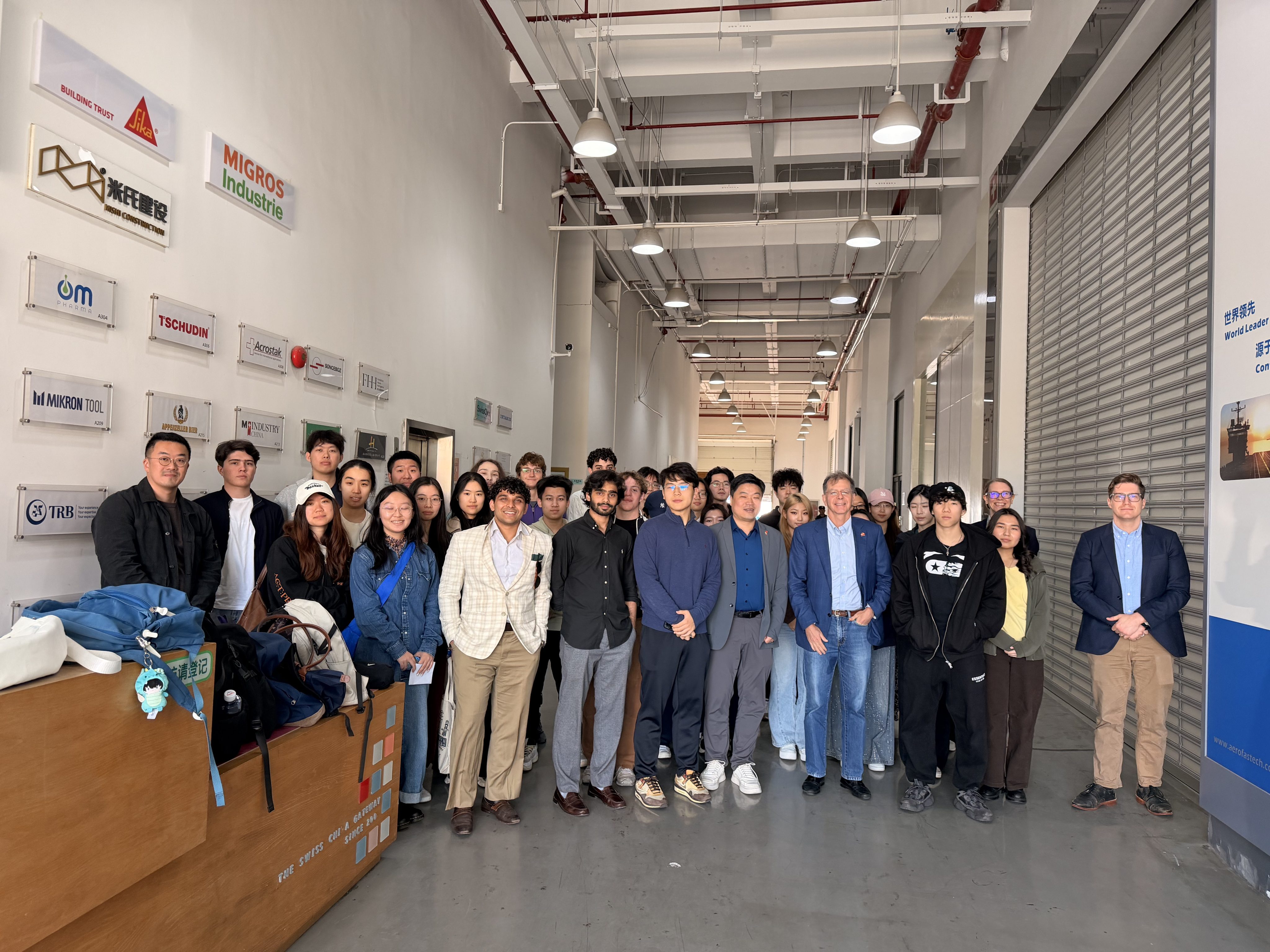
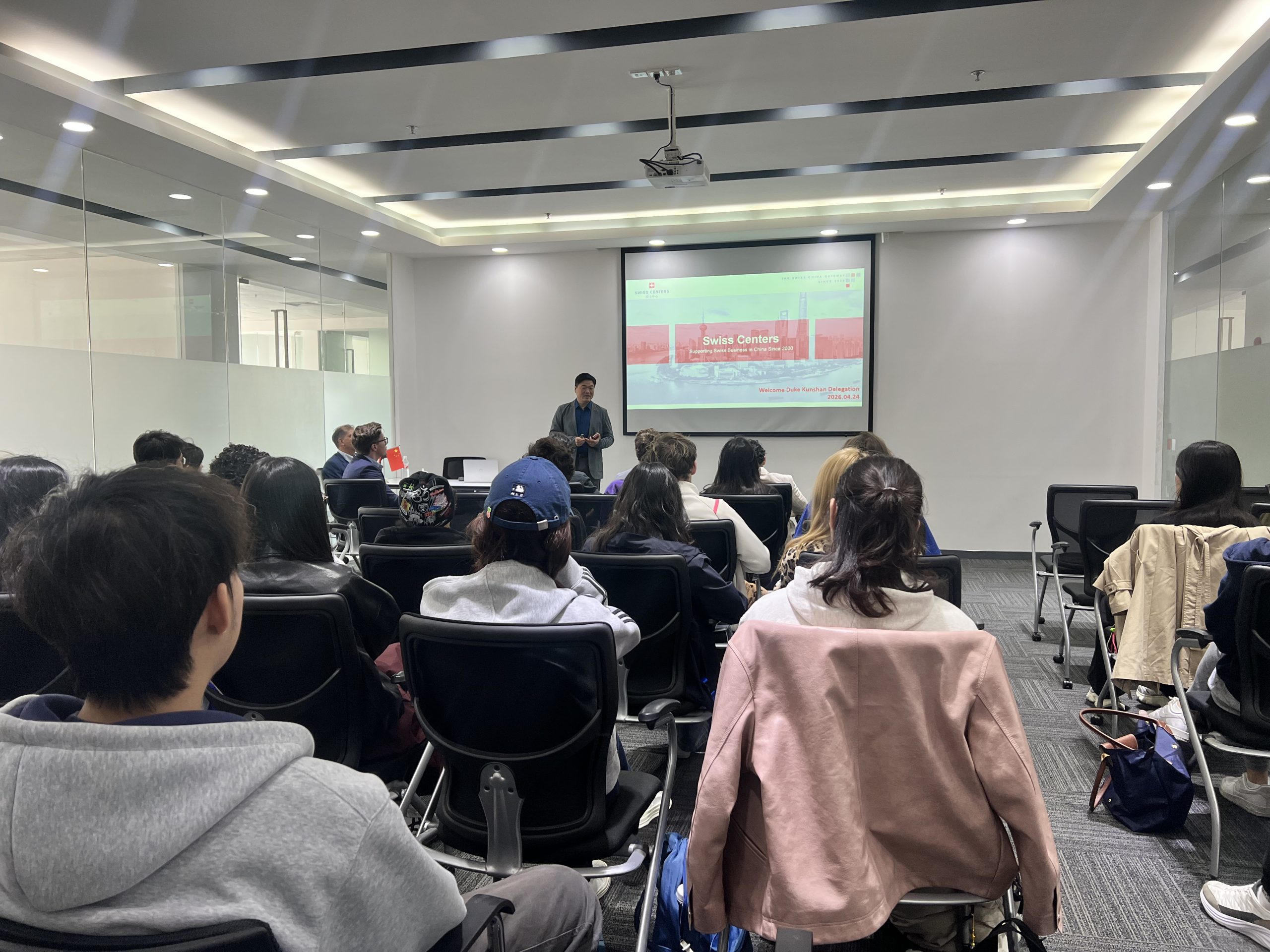
The day began with a visit to the Swiss Centers in Pudong. We were welcomed by Mr. Zhen Xiao, CEO of the Swiss Centers, who introduced the organization and explained its role in supporting international companies, particularly Swiss businesses, entering the Chinese market. One interesting aspect of the presentation was the explanation of the free trade zone in Shanghai. Mr. Zhen Xiao explained that companies are able to test machinery and equipment within the zone before officially importing them into China. This arrangement significantly reduces costs and risks for foreign companies seeking to expand into the Chinese market and demonstrates how China uses special economic policies to encourage international trade and investment.
The second presentation at the Swiss Centers was delivered by Mr. Nicolas Musy, founder of China Integrated, who has worked in China since the 1980s. Based on his wealth of experience, Mr. Musy discussed the evolution of trade in China, the country’s growing economic relationships with other countries, and the major changes that have taken place since the country’s economic reforms. One of the key themes of his presentation was the emergence of Chinese companies as global competitors. He explained how Chinese firms are increasingly expanding abroad, investing internationally, and competing with established multinational corporations. His insights helped us better understand the changing dynamics of global trade and China’s expanding influence in the international business environment.
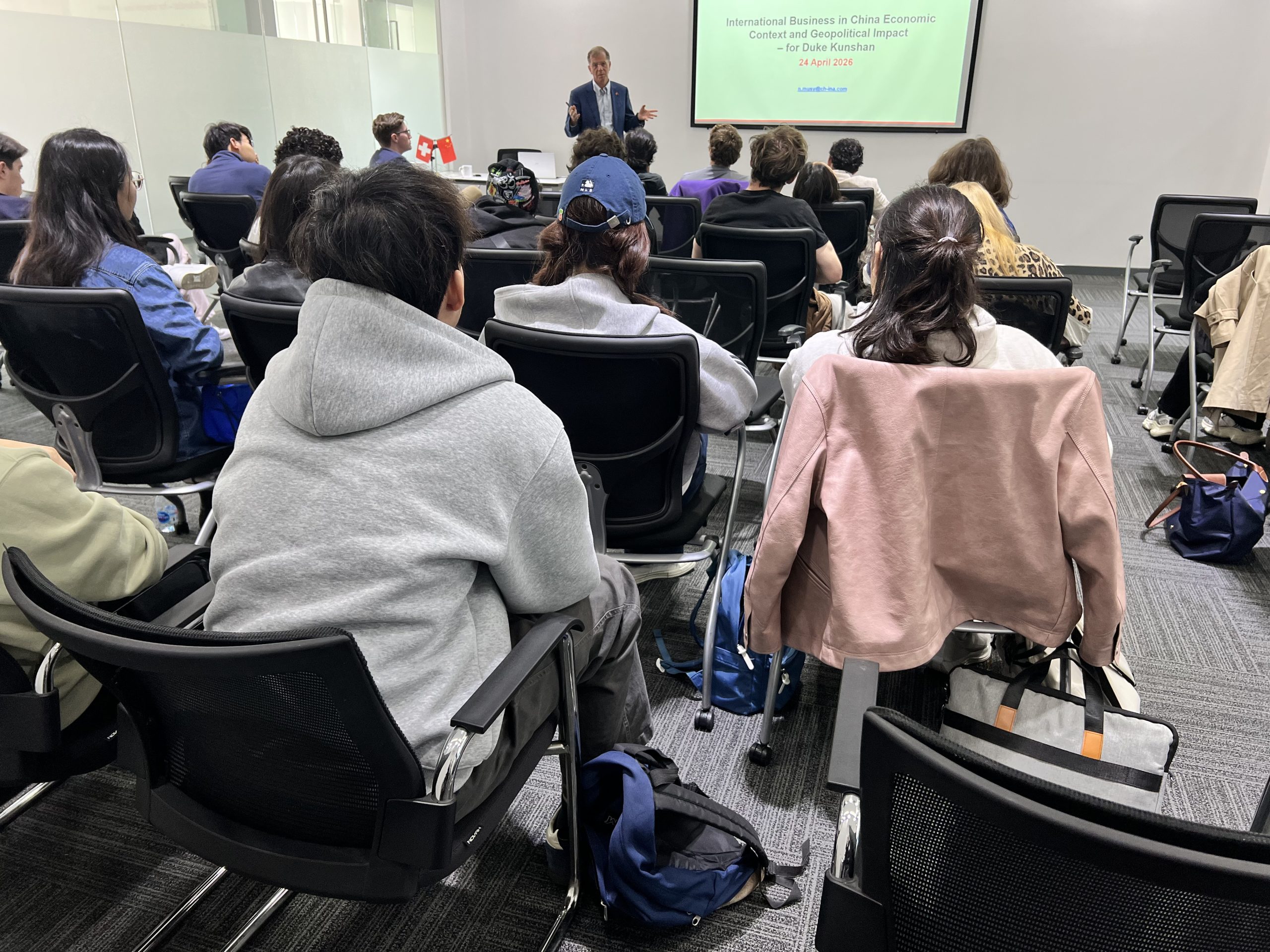
Following the presentations and Q&A, the group had lunch at the Swiss Centers before continuing the afternoon program.
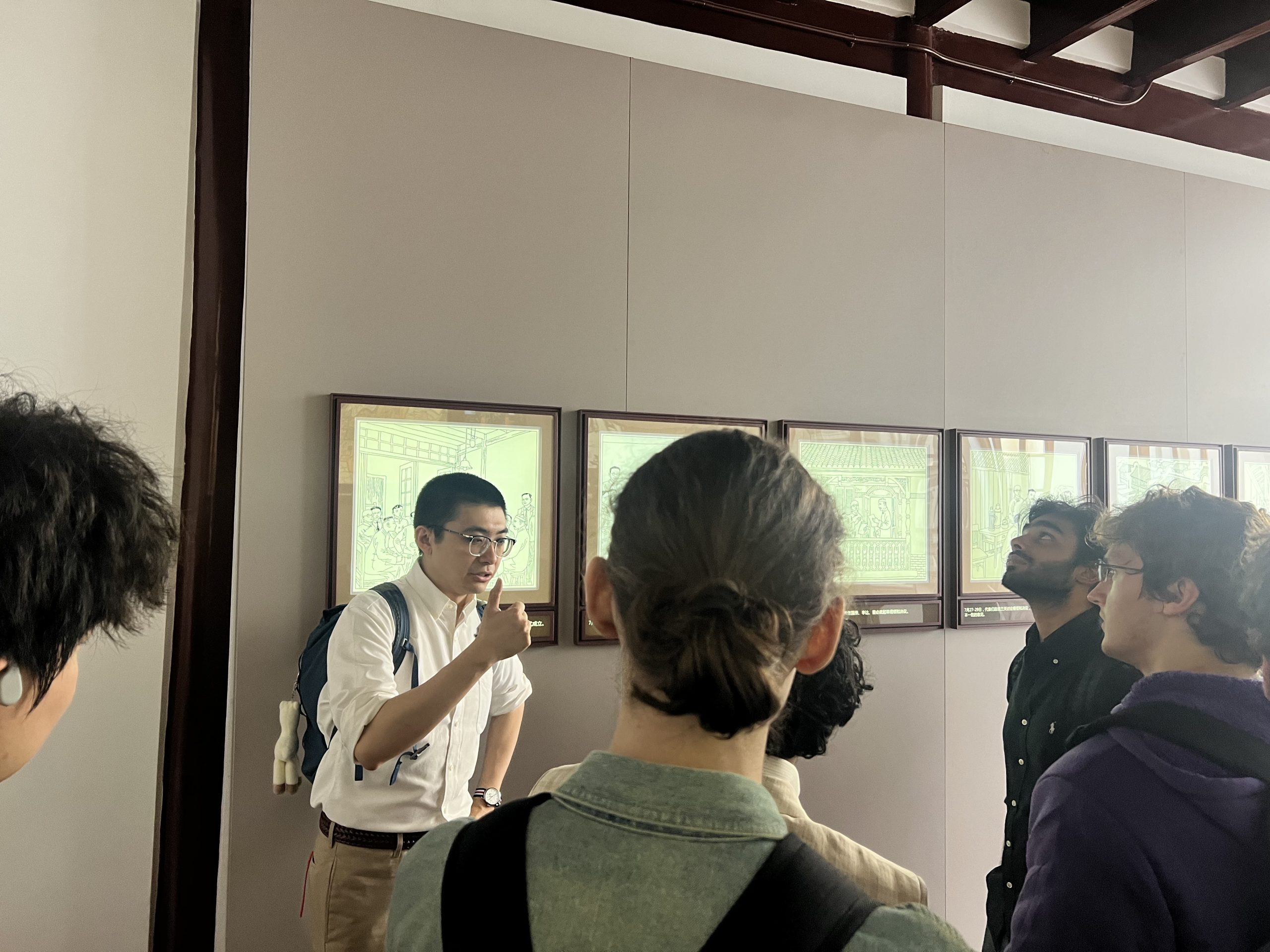
In the afternoon, before heading to our next destination, the American Chamber of Commerce in Shanghai, our group visited the site of the First Congress of the Chinese Communist Party in Shanghai. This visit provided important historical context for understanding modern China. During the visit, Professor Kent Cao offered additional explanations and background about the historical significance of the site.
Our final visit was to the American Chamber of Commerce in Shanghai. Rather than a formal presentation, we participated in an informative discussion led by Mr. Peter Cuthbert, Government Relations Manager, and Stephanie Sam, Editor-in-Chief of China Business Report and members-only Weekly Briefing. They introduced us to the history and current activities of the Chamber and explained its role in supporting American businesses operating in China. The discussion highlighted how communication, advocacy, and cross-cultural understanding are essential in navigating the broader political and policy environment that shapes international business conditions. The conversational format allowed students to ask questions and gain practical insights into how government–business and international relations influence the operating environment for foreign firms in China.
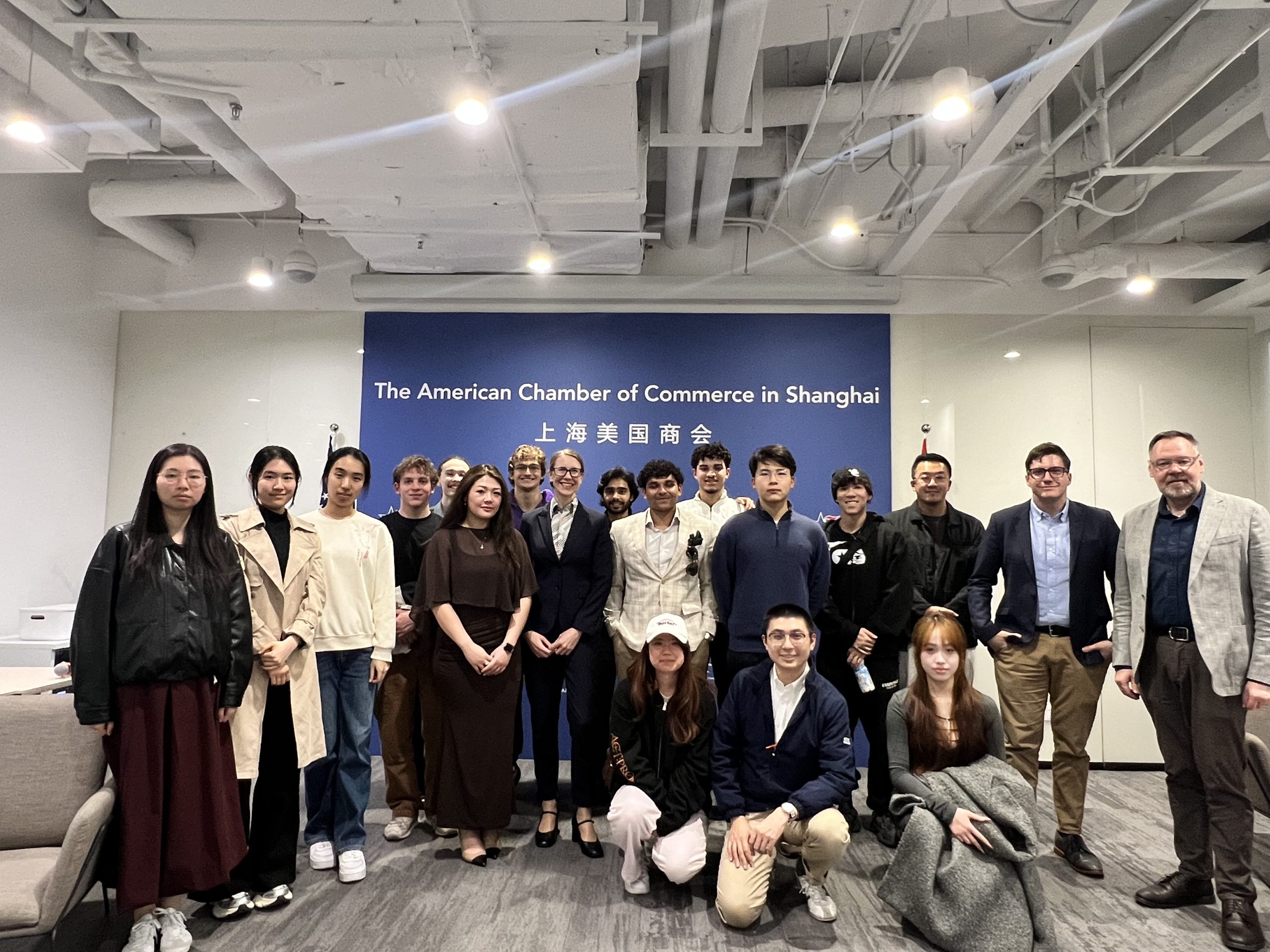
Overall, the field trip was highly educational and provided valuable insights into international trade, government policy, advocacy, business strategy, and China’s economic development. The participation of approximately 40 DKU students, Professors David Landry, Kent Cao, and Annemieke van den Dool, and DKU Senior Academic Activity Coordinator Isaac Zhu contributed to a productive and engaging learning experience.