
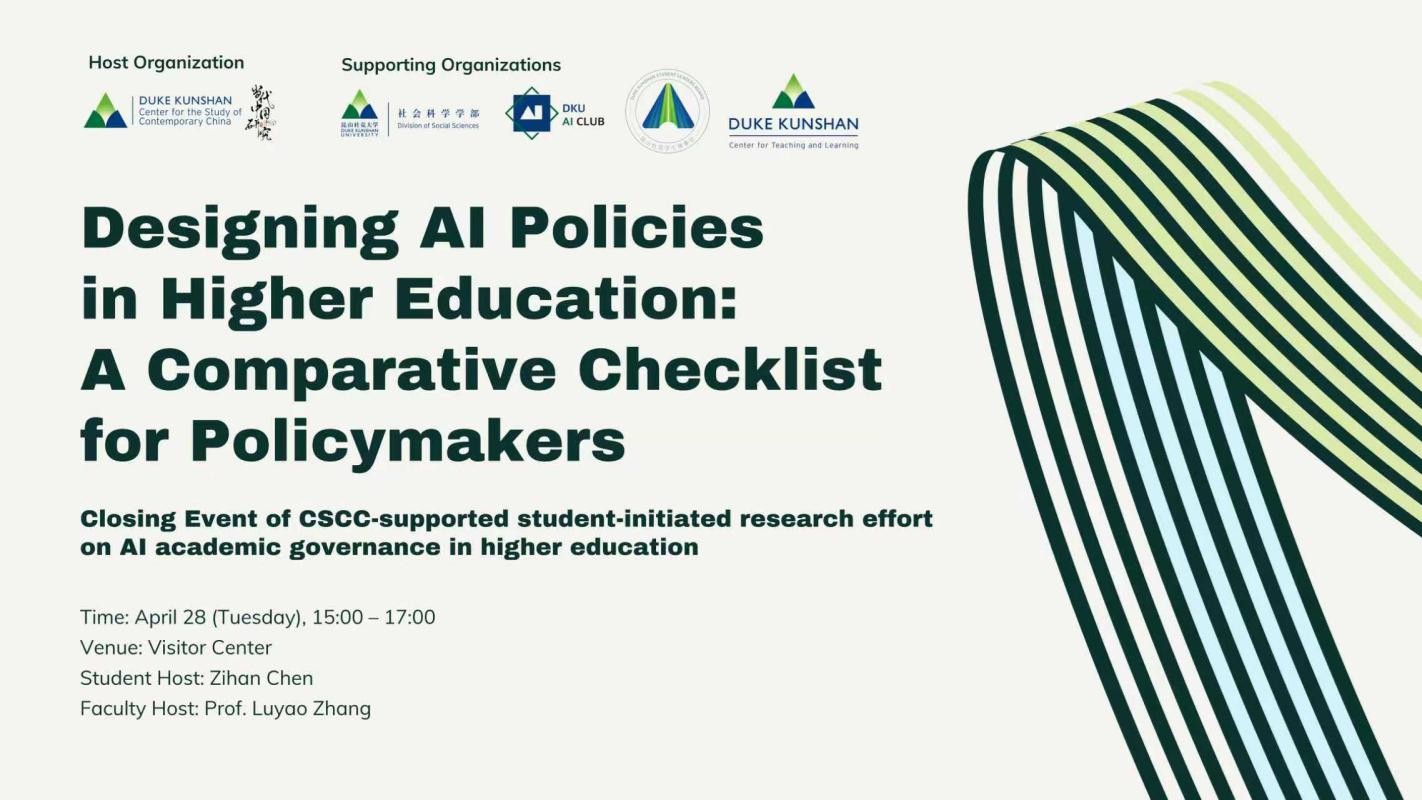
On April 28, 2026, the DKU Center for the Study of Contemporary China hosted “Designing AI Policies in Higher Education: A Comparative Checklist for Policymakers” at the Visitor Center, jointly supported by the Division of Social Science, the DKU Center for Teaching and Learning (CTL), the DKU AI Club, and the DKU Student Leaders Board (SLB). The seminar was not merely an event — it was the capstone of a year-long, CSCC-supported student research initiative on AI academic governance, led by Zihan Chen, majoring in Institutions and Governance with Political Science Track, Class of 2026 under the mentorship of Prof. Luyao Zhang. Drawing together external experts, faculty, student leaders, and audience participants, the closing event asked how universities can navigate rapid technological change while upholding academic integrity, meaningful learning, and human development.
The April 28 event capped a year-long research journey that began in spring 2025. Early milestones included the April 11, 2025 student-faculty dialogue on AI policy, co-organized with the DKU AI Club, which opened vital conversations on fairness, academic integrity, and the limits of standardized AI governance. A follow-up report channeled these insights to the Center for Teaching and Learning. The project then expanded through interviews at the Digital Technology for Sustainability Symposium, poster presentations at the symposium and the SocioTech Futures panel during the Annual Presidents’ Forum of the Alliance of Asian Liberal Arts Universities 2025, and a feature interview and newsletter for SIGGRAPH Asia 2025 the Educators’ Forum events. Each stage sharpened the project’s comparative lens and public reach. By April 2026, what began as a campus conversation had become a sustained, multi-platform research initiative — and the closing seminar stood as both its synthesis and its springboard toward a practical policy checklist for universities worldwide.
From Research Project to Campus Conversation
Opening the event, Zihan Chen positioned the seminar as the culminating synthesis of a year-long research effort encompassing comparative policy analysis, student-faculty dialogue, public reports, poster presentations, and interviews — all converging toward a practical checklist for higher education policymakers. Rather than prescribing a universal policy, the project distills baseline principles to guide universities, instructors, and students as AI tools continue to evolve.
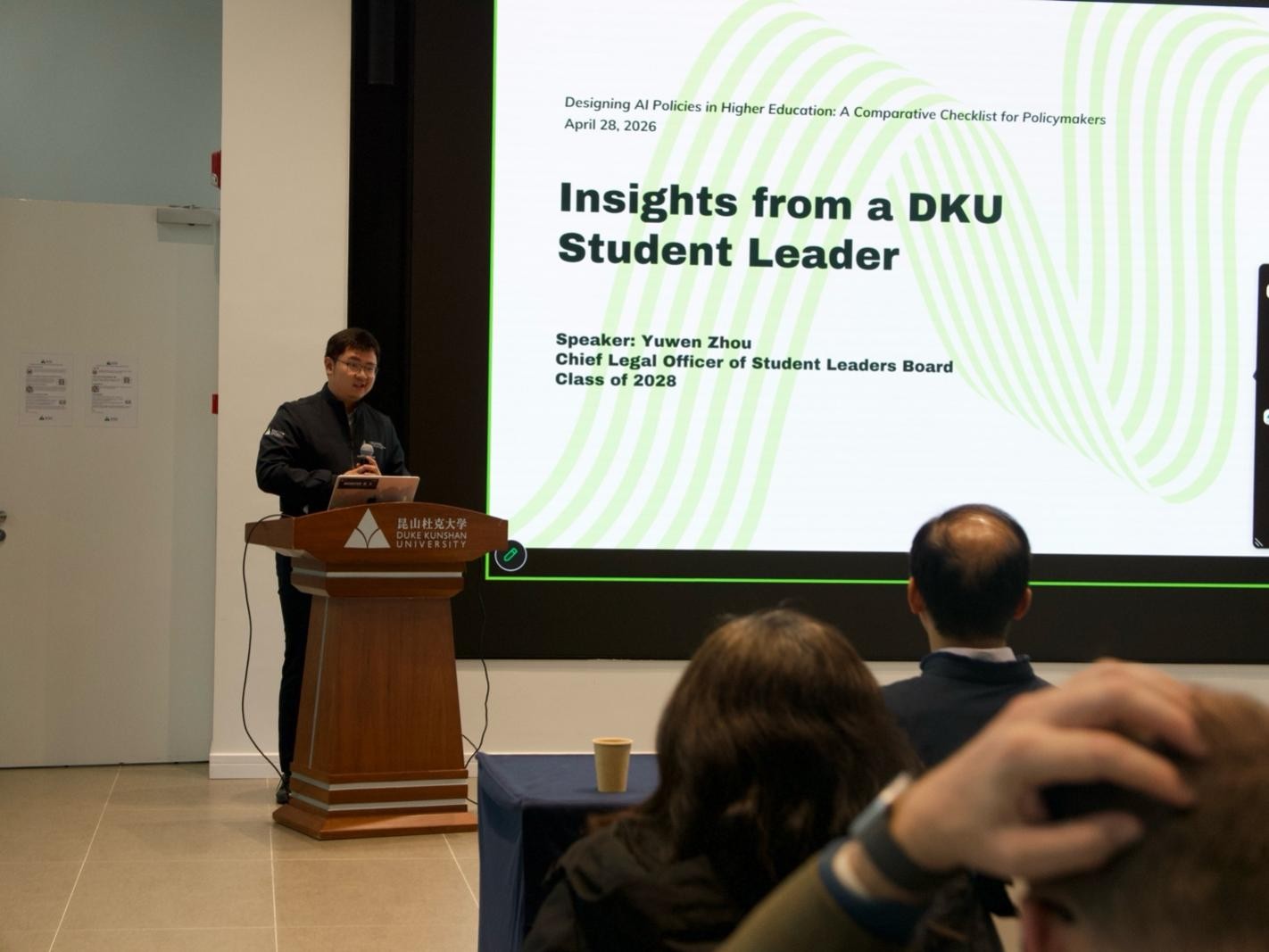
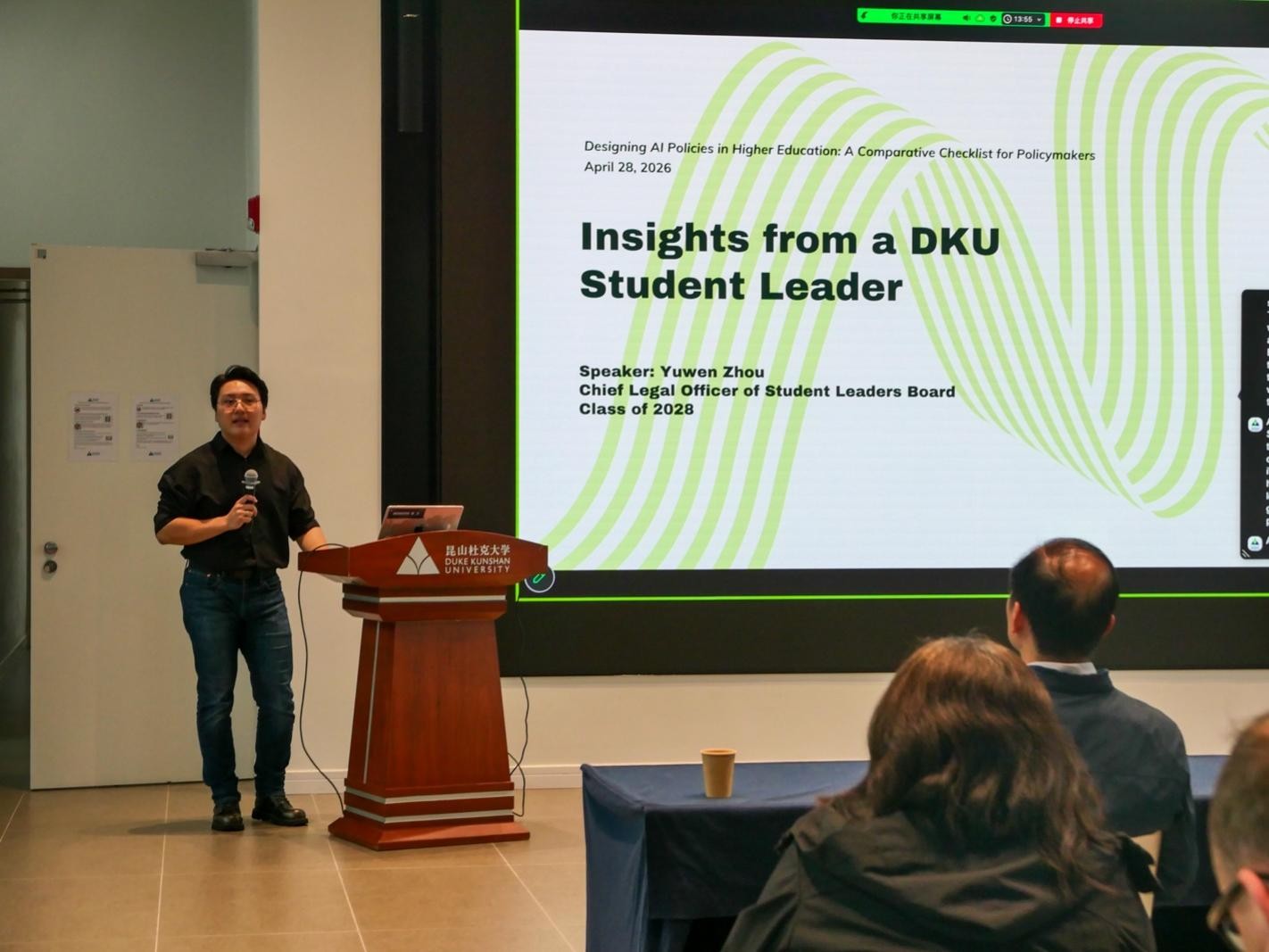
Representing the Student Leaders Board, Yuwen Zhou, Class of 2028, Chief Legal Officer of the Student Leaders Board, emphasized the importance of both faculty autonomy and student participation in the policy-making process. He noted that because AI use differs greatly across disciplines, instructors need room to design course-specific rules. At the same time, students should be actively involved in shaping and reviewing those expectations, especially when repeated confusion or violations suggest that a policy may need clarification or revision.
Institutional Framing: AI Should Work for Human Development
In his opening remarks, Chancellor Scott MacEachern, Vice Chancellor for Academic Affairs and Professor of Archaeology and Anthropology, placed AI governance within DKU’s broader educational mission. He emphasized that institutional policies, procedures, rules, and guidelines carry different levels of formality and should not be conflated. While AI tools are changing rapidly, he argued that a university’s core objectives should not be dictated by any single technology.
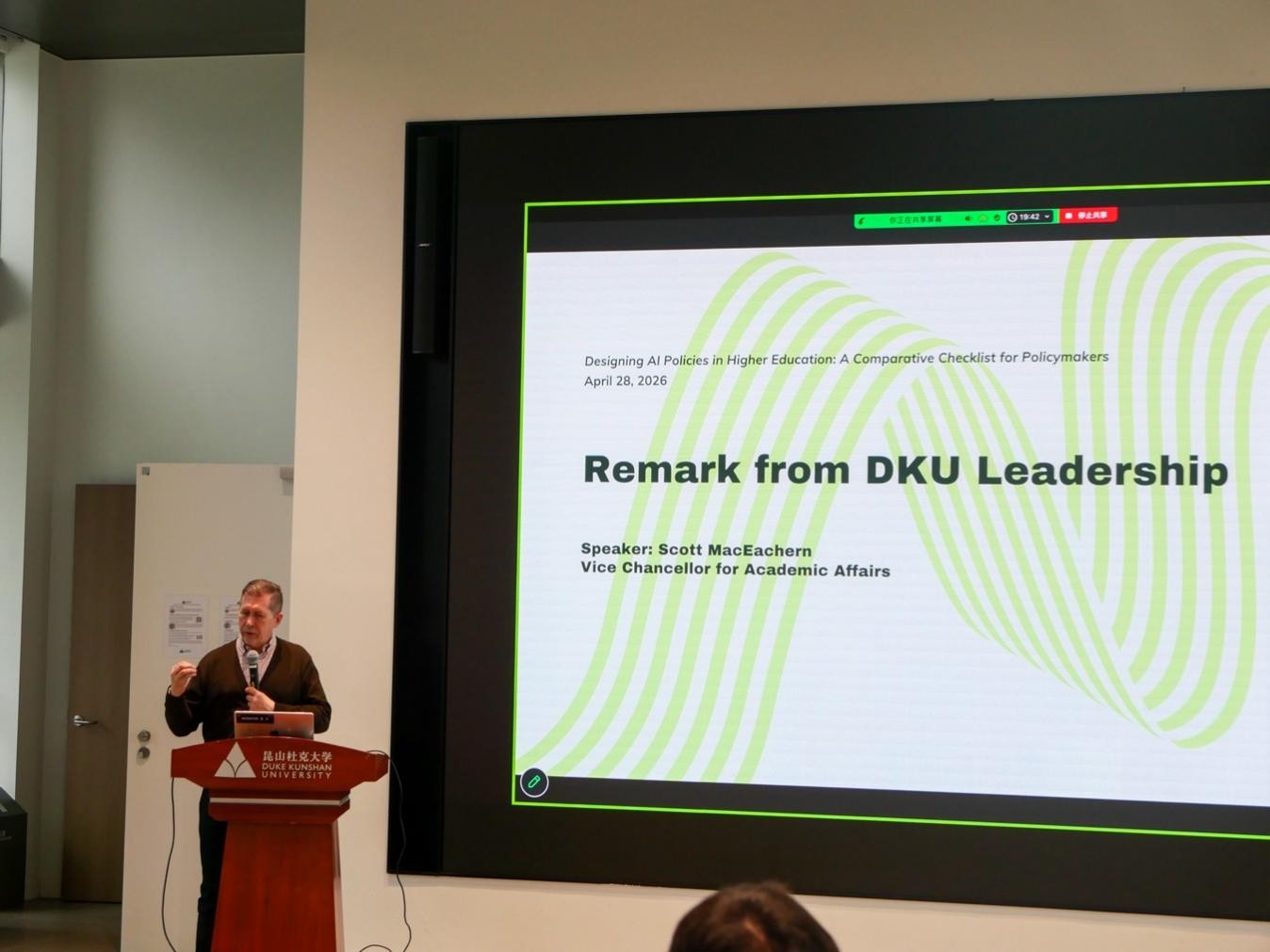
Vice Chancellor of Academic Affairs (VCAA) MacEachern highlighted DKU’s centralized yet flexible curriculum as a strategic advantage, enabling the university to adapt faster than larger institutions. He stressed that AI must serve human development — helping students grow as critical thinkers, not reducing them to passive consumers of technology. The goal is not to work for AI, but to work with AI in ways that cultivate communication, collaboration, and intellectual maturity.
Keynote: Talent Development in the AI Era
The keynote session featured Dr. Yimin Zhang, Chief Scientist of Intelligent Systems at the Shanghai Minhang Advanced Packaging and Integrated Systems Research Institute, technical advisor of Moushen Intelligence, partner at Shanghai Zuquan Research Institute, and former Chief Scientist and Principal Engineer at Intel Labs China. His talk, “Talent Development in the AI Era,” connected the event’s policy discussion with a broader question: what kinds of people should universities prepare students to become in an AI-driven world?
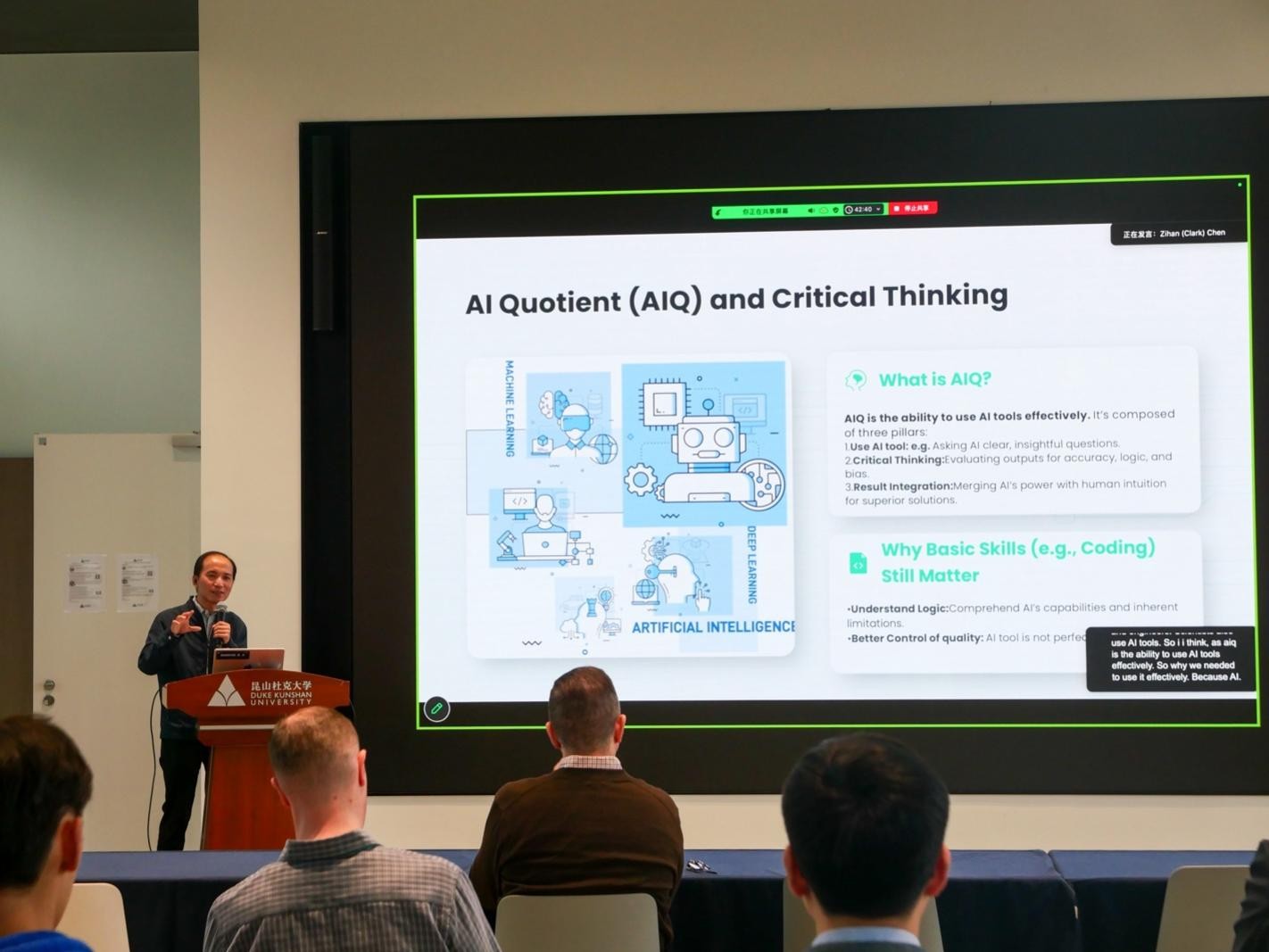
Drawing on over three decades in AI research, Dr. Zhang traced the evolution of talent models from I-shaped deep expertise, to T-shaped interdisciplinary capacity, to Pi-shaped and “slash” talents spanning multiple domains. In a world defined by volatility, uncertainty, complexity, and ambiguity, he argued, students need technical adaptability alongside human-centered capabilities. He identified lifelong learning, collaboration, leadership, complex problem-solving, and AIQ — AI Quotient — as the defining qualities of AI-era professionals.
Dr. Zhang also encouraged students to develop “lofty goals” that go beyond short-term success. Referencing both Chinese cultural wisdom and global technology leadership examples, he suggested that AI-era talent development requires not only new skills, but also a sense of purpose, responsibility, and contribution to society.
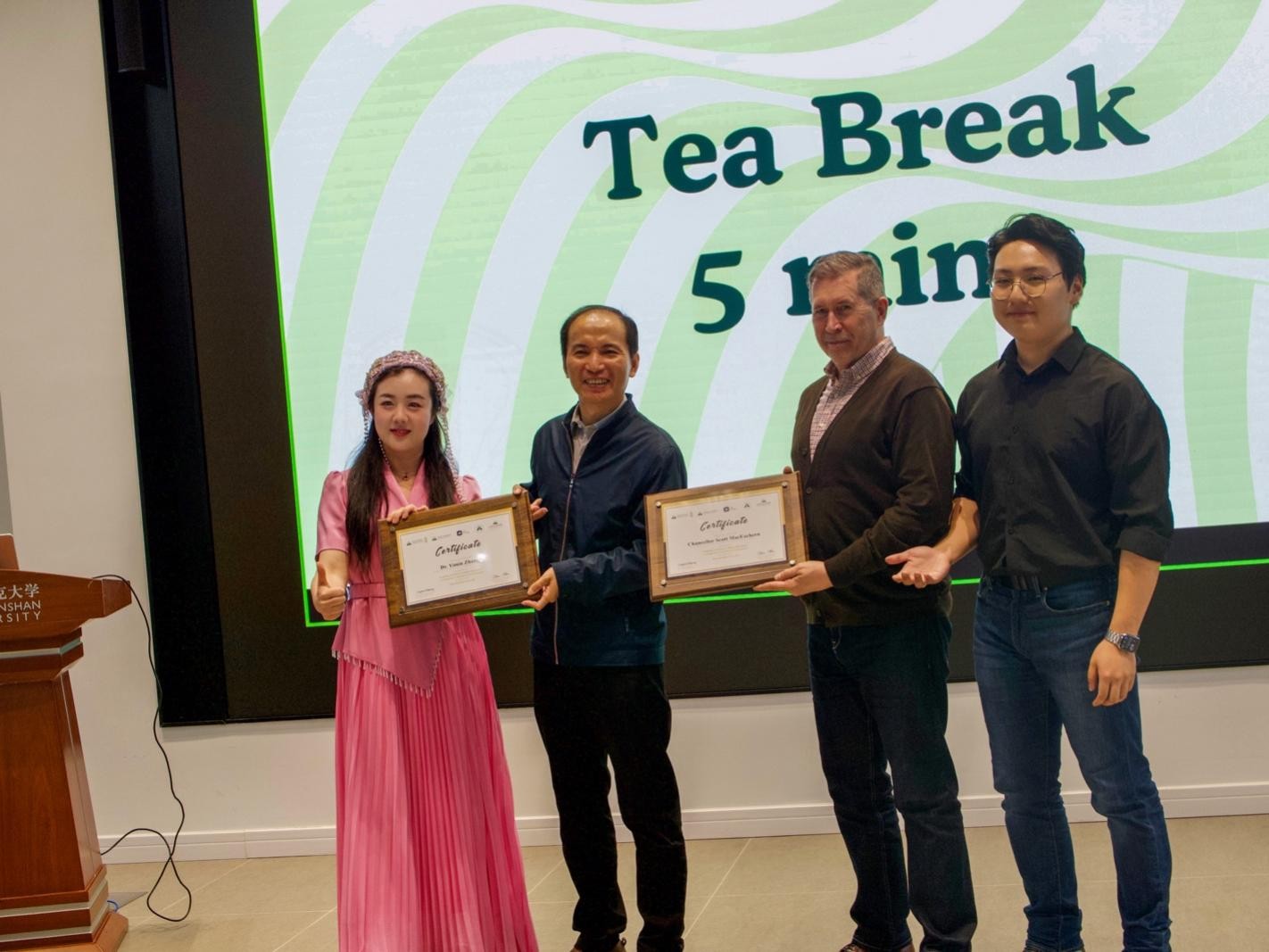
(From left to right: Prof. Luyao Zhang, Dr. Yiming Zhang, VCAA Scot MacEachern, Zihan Chen)
Roundtable: Shared Principles, Disciplinary Differences, and Classroom Realities
The second half of the event shifted from broader institutional and industry perspectives to DKU’s own teaching and governance context. Moderated by Zihan Chen as student host and Prof. Luyao Zhang as faculty host, the roundtable invited faculty across divisions to discuss where university-level AI policy should draw common baselines, and where individual instructors or programs need flexibility.
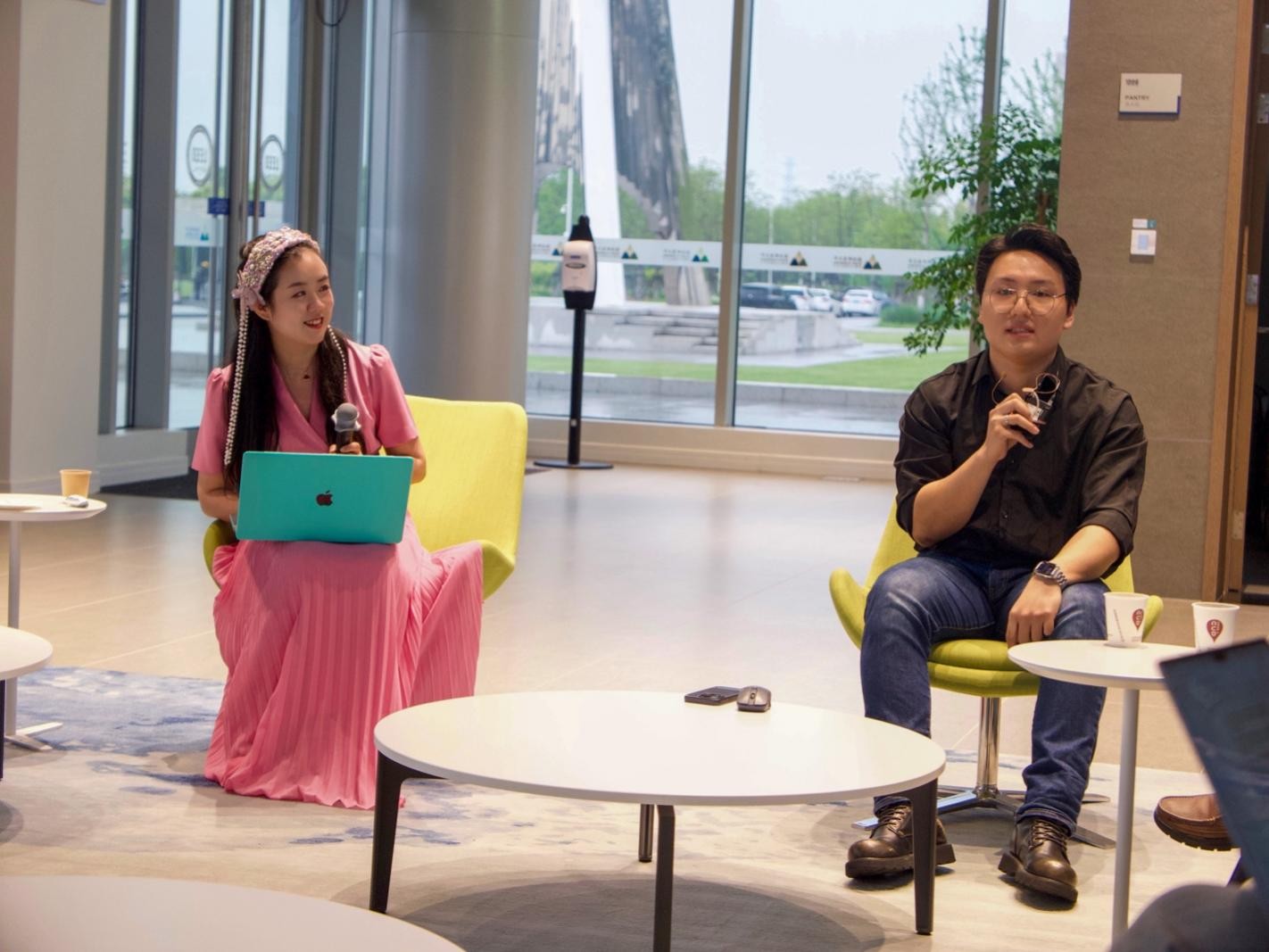
A recurring theme was the need for multi-level governance. Faculty participants generally agreed that the university should provide common guidance on academic integrity, data privacy, copyright, transparency, and access to infrastructure. However, many also argued that implementation should remain discipline-specific and course-specific, since the role of AI in a computer science assignment, a language course, an international relations paper, or a Common Core ethics discussion may be fundamentally different.
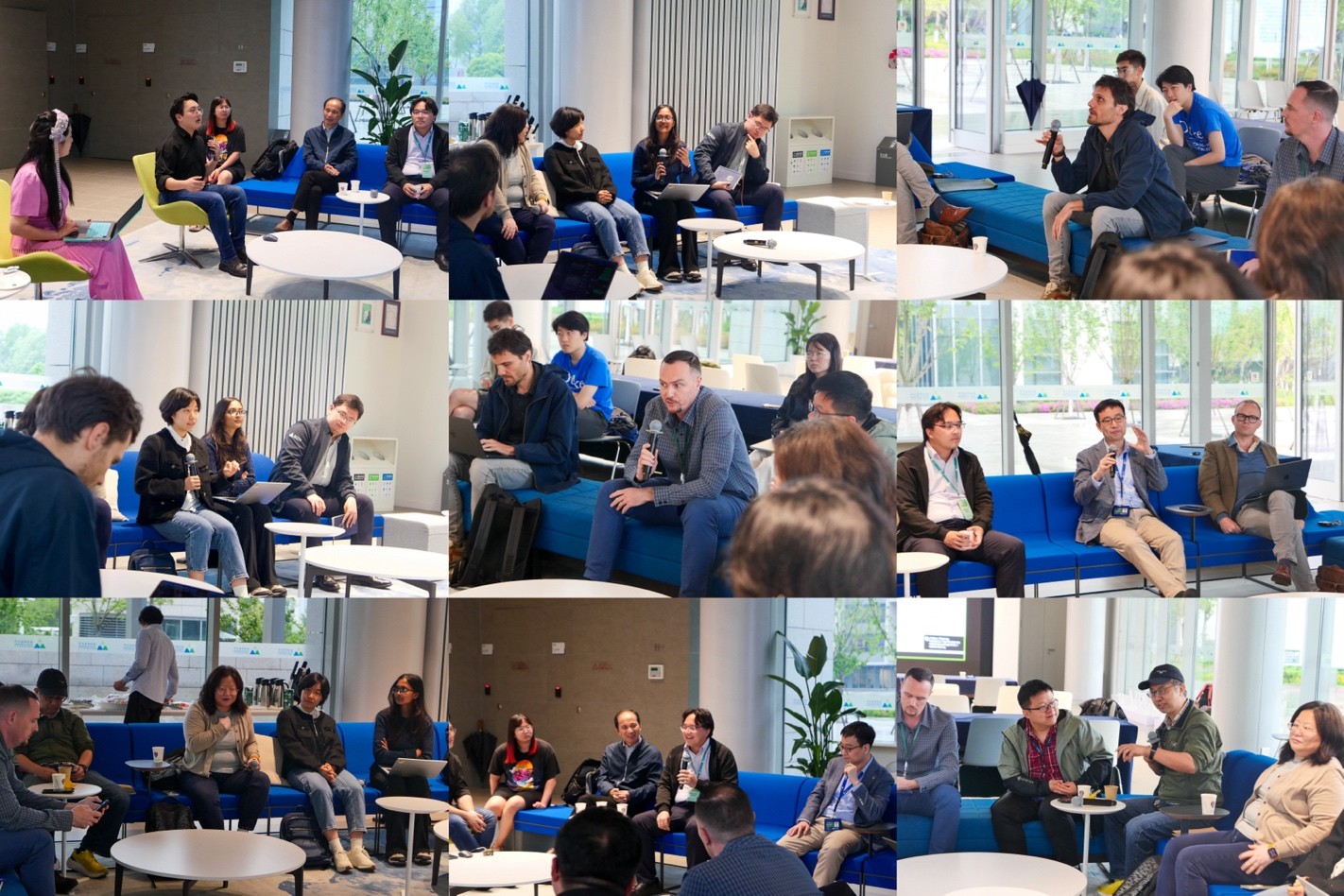
Prof. Ben Van Overmeire, Assistant Professor of Religious Studies, argued that transparency should anchor every AI teaching policy. Instructors should explain not merely whether AI is permitted, but how their rules connect to course learning objectives. Drawing on his Common Core courses, he described its AI-free environment as a deliberate pedagogical choice — not a rejection of technology, but a commitment to deeper inquiry into ethics, meaning, and human experience. Reflection, dialogue, and sustained attention, he noted, sometimes require stepping away from screens. Responsible AI governance, he concluded, must preserve space for both AI-enhanced and intentionally human-centered learning.
Prof. Joseph Davies, Senior Lecturer of English Language, addressed AI’s threat to assessment validity and communication skills. As AI tools produce ever more polished writing, educators must redesign evaluation to capture the learning process, not just the final product. He also warned of declining presentation and spoken communication skills, noting that disciplinary knowledge alone is insufficient — students must explain ideas clearly, respond to questions, and engage real audiences. Assessment design, he argued, should protect essential human skills while preparing students to use AI responsibly.
Prof. Ming-Chun Huang, Associate Professor of Data and Computational Science, offered a classroom-grounded perspective. AI policy should provide guidance and equitable infrastructure, not just restrictions. Sharing his own teaching experience, he showed how AI-integrated activities — such as interactive note-taking and peer review — can deepen learning when embedded meaningfully. He cautioned, however, that AI tasks become counterproductive if they feel like add-ons. For assessment, educators should prioritize reasoning, iteration, and reflection over judging polished final outputs.
Prof. Andrew Cheon, Associate Professor of International Relations, underscored the need for discipline-specific AI governance. In social sciences, AI accelerates access to background information but risks producing homogeneous, unoriginal student work. To counter this, he advocated redesigning assignments around unconventional questions, deeper case studies, and topics that resist generic AI answers. Effective AI policy, he concluded, must not only set rules but also equip faculty to foster genuine critical thinking and intellectual engagement.
Other panelists including Prof. Kim Gordon, Prof. Jiang Long, and Prof. Yucheng Jin explored how AI is transforming assignment design. Meaningful integration — through interactive note-taking, research assistance, or peer review — can deepen learning. But when students rely on generic outputs or bypass the struggle that builds genuine understanding, AI makes education shallow. The discussion returned repeatedly to a central challenge: if AI can produce polished final products, how should universities assess the learning behind them?
Student Audience Discussion: Learning, Survival, and Human Skills
The audience discussion brought student voices directly into the center of the debate. Students including Yutian Wang (Class of 2028), Avidikhuu Altangerel (Class of 2028), and Tanannum Azad (Class of 2029) raised questions that reflected both excitement and anxiety about learning in the AI era.
Students pressed Dr. Zhang on the tension between becoming adaptable, interdisciplinary “Pi-shaped” talent and a job market that still rewards deep specialization. He responded that while early careers may demand a clear technical focus, long-term growth hinges on the ability to adapt, read industry trends, and build new capabilities continuously. Students also voiced concern about a “skills cut” — the fear that companies might extract human knowledge through AI, then discard the very people who produced it. Dr. Zhang countered that while some firms may chase full automation, most will ultimately recognize the irreplaceable value of skilled professionals who can judge quality, take responsibility, and collaborate with AI as partners rather than be replaced by it.
Students pushed the panel past generalities about access and soft skills. One noted how entrenched AI use has become — even for basic group project questions — and asked how to preserve human judgment when AI models improve weekly. Faculty responded by emphasizing that the goal is not artificial resistance, but designing assignments that require the very things AI cannot replicate: genuine inquiry, dialogue, empathy, and practical engagement. Another student provocatively asked: when students submit similar AI-generated answers, is that a student problem or a course design problem? If AI renders assignments too easy, perhaps educators must redesign tasks so that friction, originality, and real-world complexity cannot be bypassed. Faculty agreed — meaningful challenge, not artificial difficulty, is the answer: learning experiences that demand reading, discussion, performance, empathy, teamwork, and hands-on engagement with the world.
These exchanges underscored a critical insight: AI policy written from the enforcement perspective alone will fail. For students, AI is already woven into daily academic life. The real question is how universities can guide responsible use while safeguarding the intellectual and interpersonal capacities that define the value of higher education.
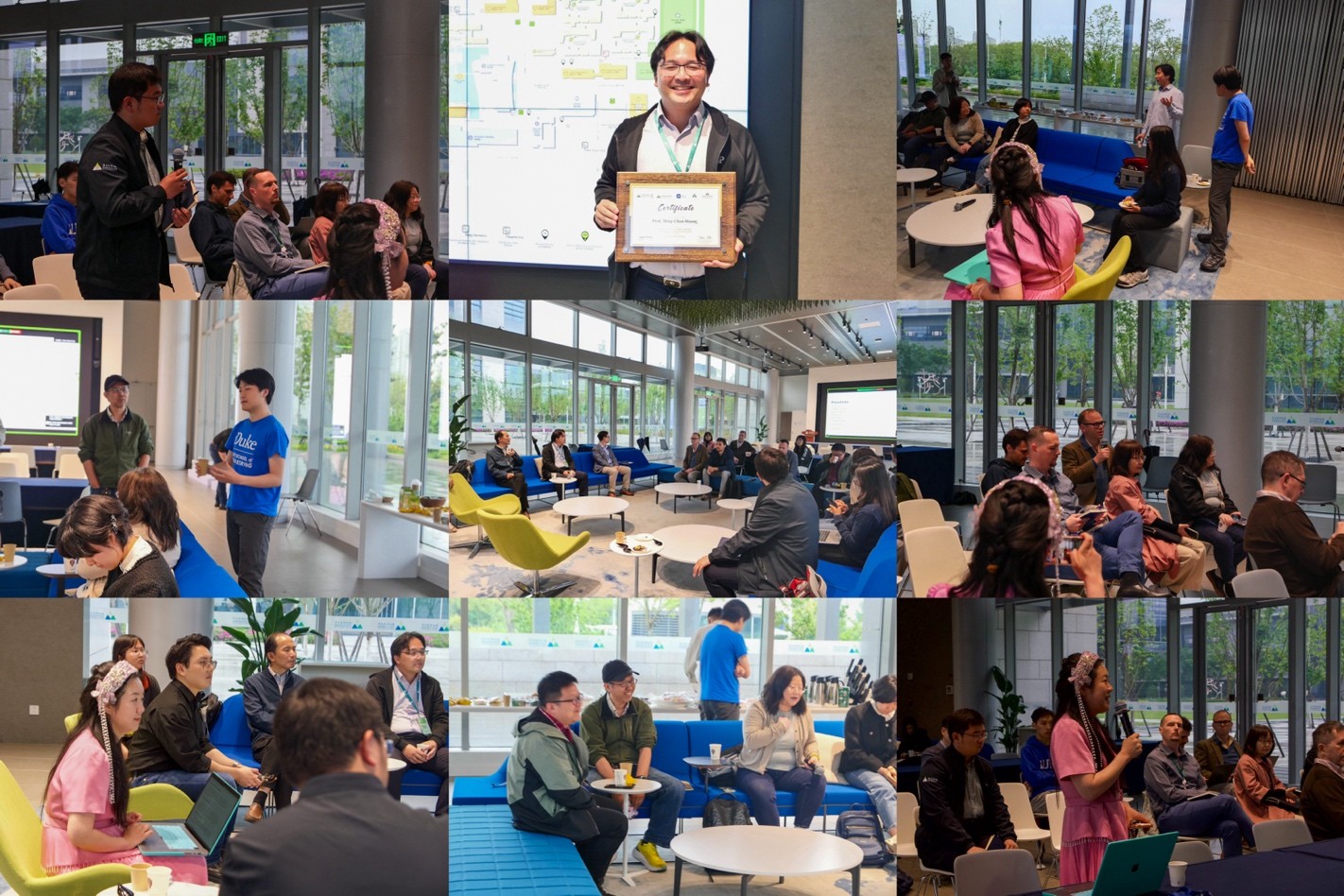
Toward a Practical Checklist for Higher Education Policymakers
By the event’s close, four areas of consensus had crystallized. One: AI governance requires university-wide principles — integrity, transparency, privacy, copyright, and equitable access. Two: instructors need flexibility to define appropriate AI use around discipline-specific learning objectives. Three: assessment must shift toward process, iteration, and judgment rather than polished final outputs alone. Four: students must be active co-creators of AI academic culture, not passive rule-followers.
“Designing AI Policies in Higher Education” was never just a seminar — it was the capstone of a year-long arc: from the April 2025 student-faculty dialogue, through the CTL report, symposium interviews, poster presentations, hosting AI4All event, SocioTech Futures engagement, and the SIGGRAPH Asia feature. Each stage layered new depth: gathering concerns, testing ideas in public, and situating DKU’s experience within global conversations on AI and education. The April 28, 2026 closing event wove those threads into a final, comparative framework — sharper, deeper, and ready for policymakers worldwide.
The project will continue beyond the event through a final conclusion report intended to offer both practical value for future policy reflection and academic value for possible conference development, as well as through a public website documenting the timeline, events, and evolving research outcomes. Taken together, these outputs reflect DKU’s potential role as a site of serious, student-driven, and interdisciplinary conversation on AI governance in higher education. More importantly, they show how sustained dialogue across faculty, students, and external communities can turn a fast-moving technological challenge into an opportunity for institutional reflection, educational innovation, and shared intellectual responsibility.
Acknowledgement
This event serves as part of the conclusion for the CSCC-supported student-initiated research effort on AI academic governance in higher education, which kicked off in February 2025. The aim of the project was to conduct a comparative policy analysis and launch interdisciplinary dialogues, which would be developed into a common conceptual framework that would potentially boost academic policy innovation in AI governance while strengthening DKU’s position and value as a global interdisciplinary liberal arts university.
Since then, a series of activities have been carried out under the guidance of the proposal and the support of the CSCC and the project mentor, deliverables including but not limited to:
1.The opening student-faculty dialogue and discussion event on Apr.11, 2025;
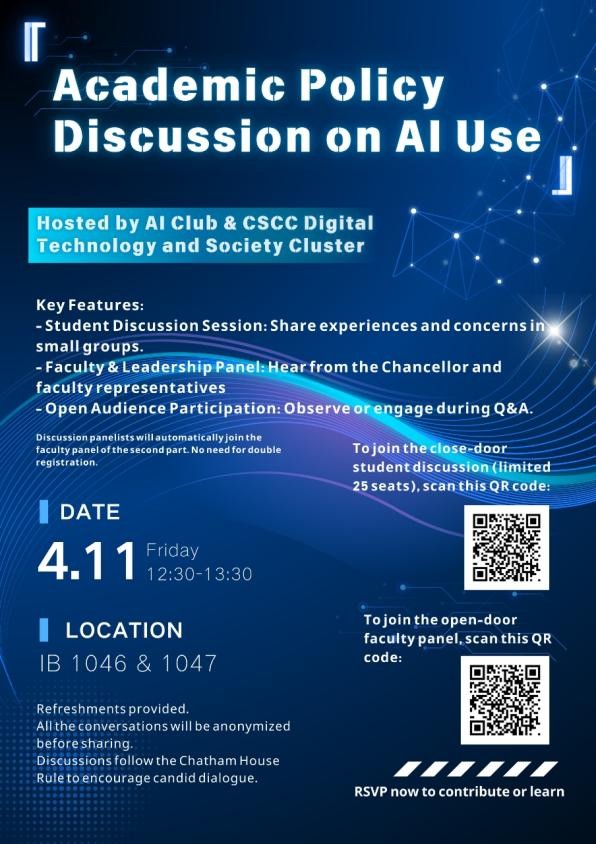
2. The follow-up report reflecting Apr.11’s discussion submitted to the Center for Teaching and Learning;
3. A series of interviews conducted with guest speakers on Apr.18, 2025 as part of the Econ Agentic Project during the Digital Technology for Sustainability Symposium 2025;
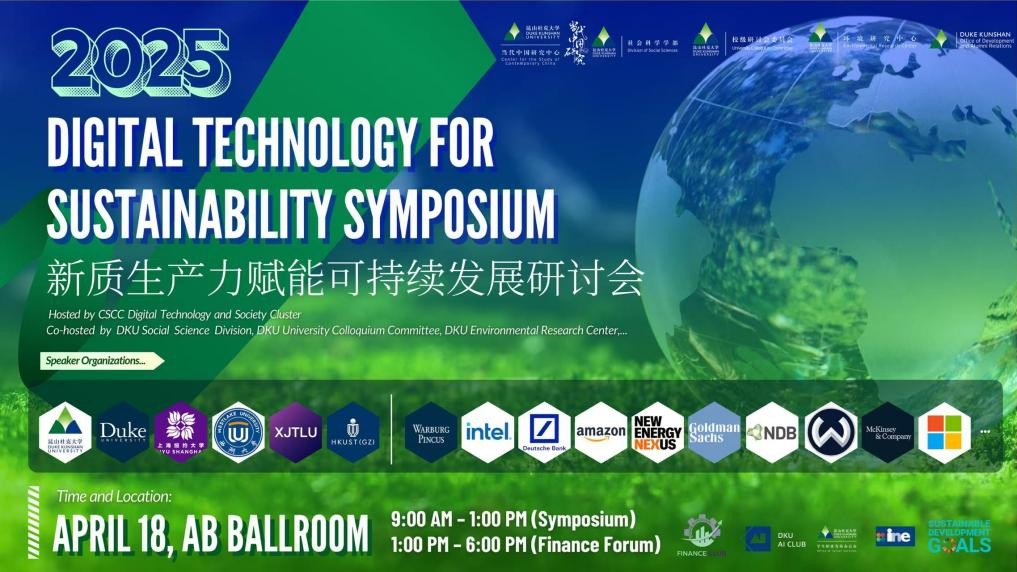
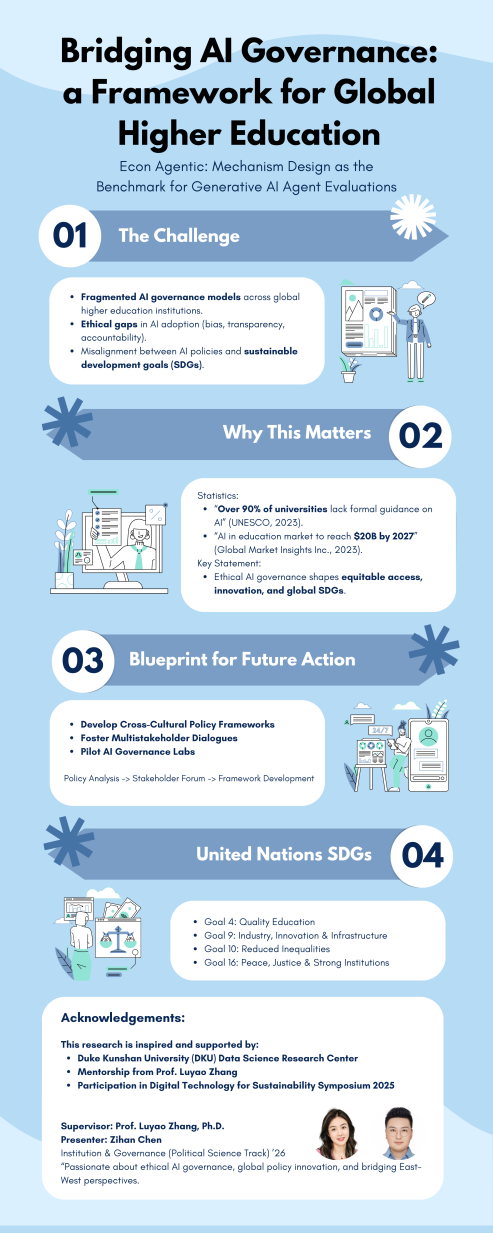
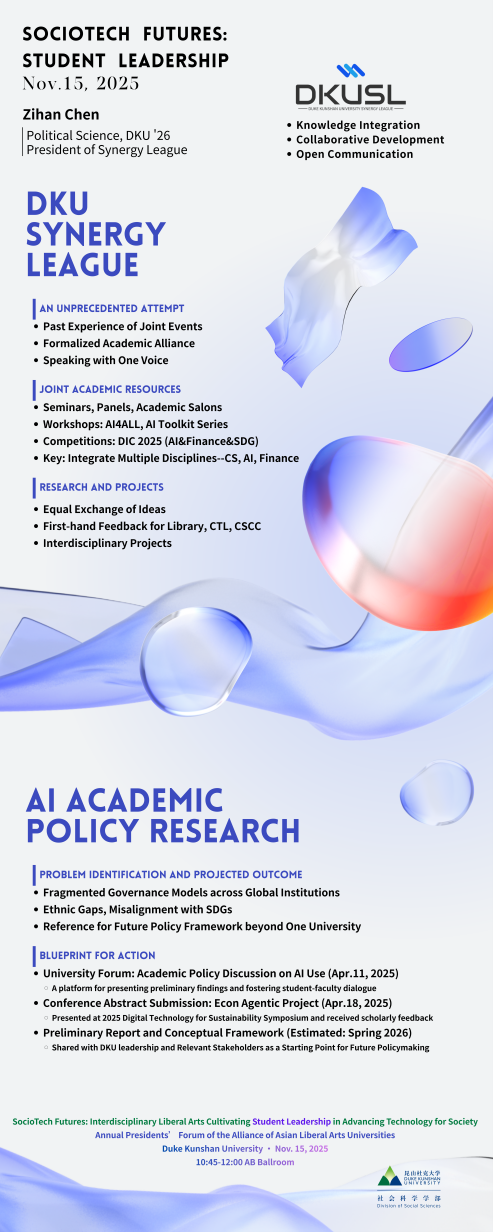
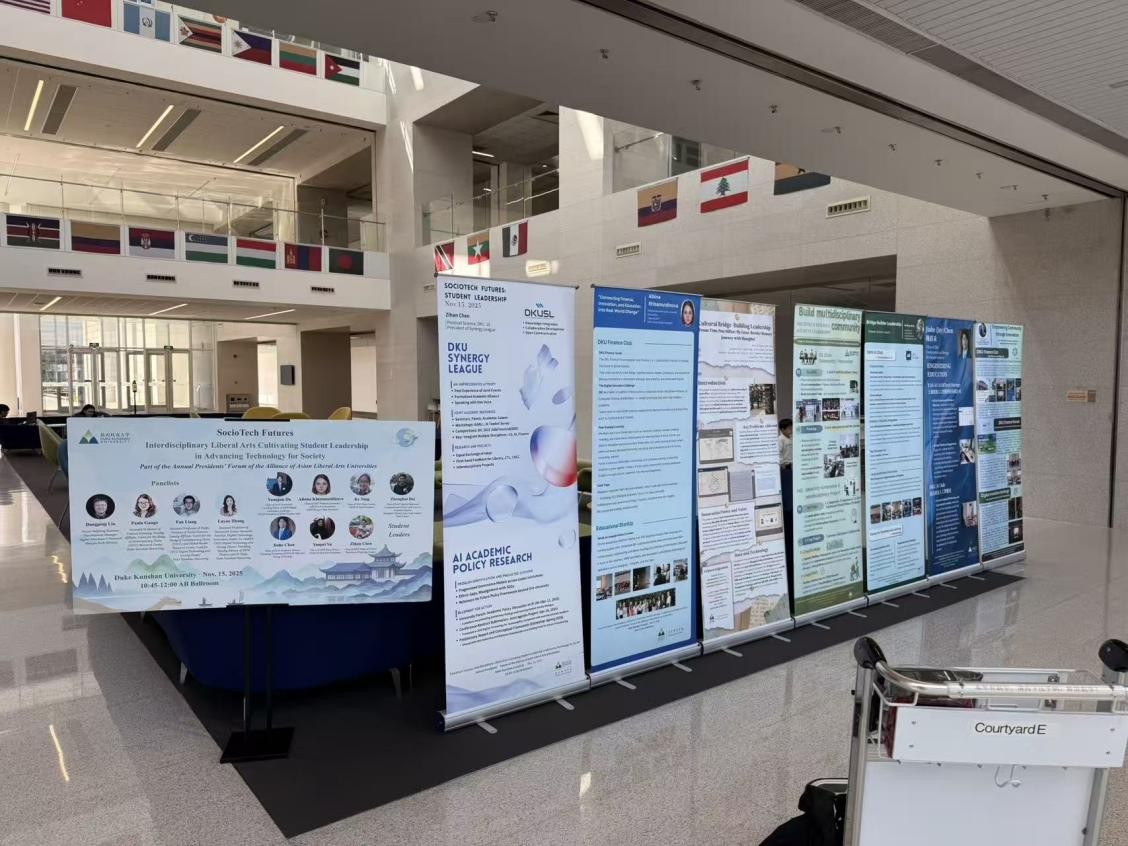
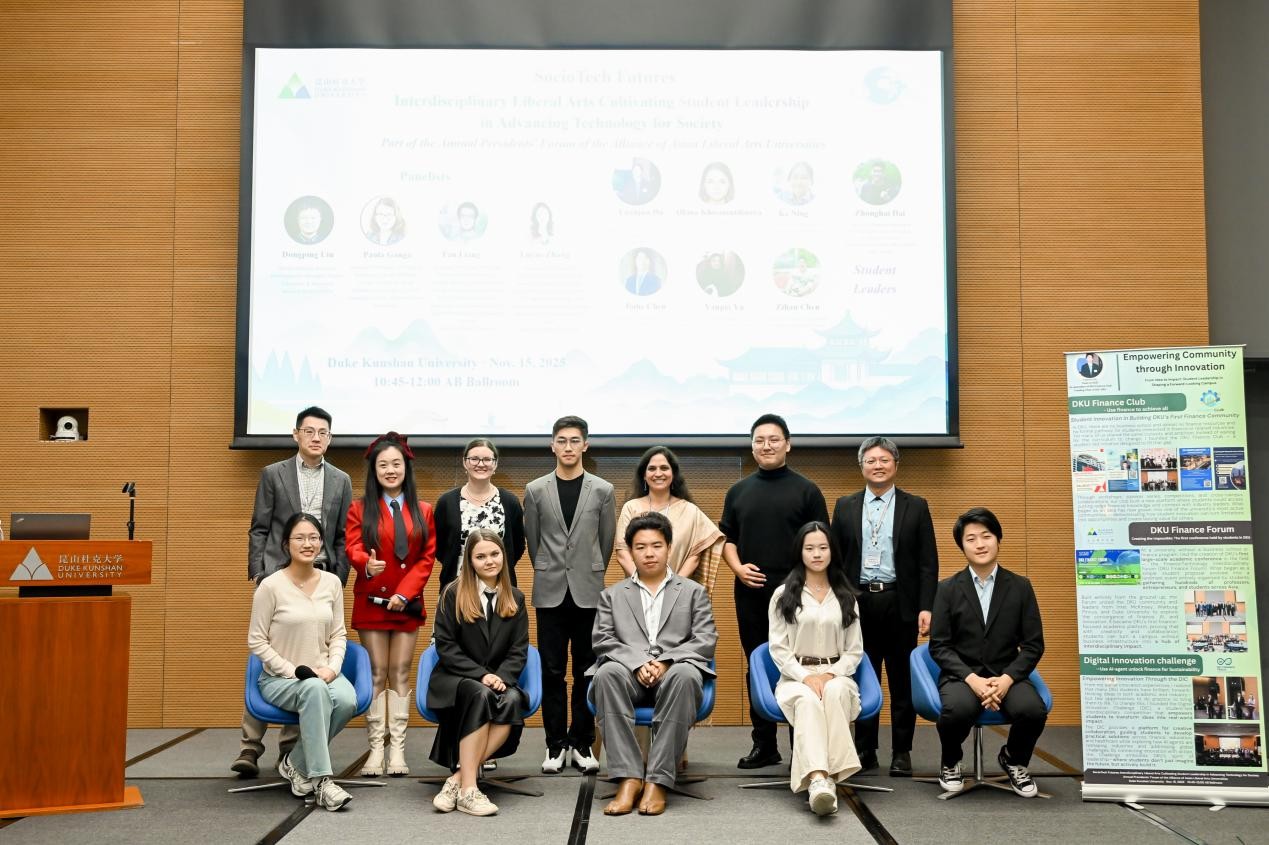
4. Poster presentations on Apr.18, 2025 at the Digital Technology for Sustainability Symposium 2025 and on Nov.15, 2025 at the SocioTech Futures Panel during Annual Presidents’ Forum of the Alliance of Asian Liberal Arts Universities 2025;
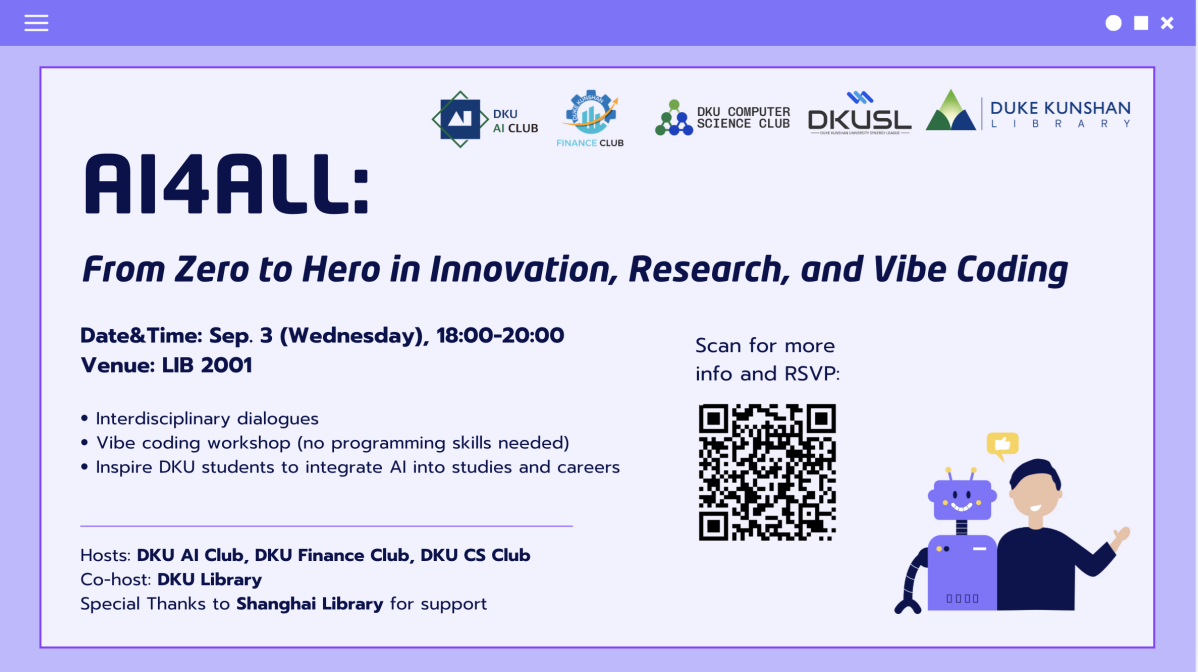
5. Hosting AI4ALL: From Zero to Hero in Innovation, Research, and Vibe Coding in collaboration with DKU Library and Student Clubs.
6. Interview and newsletter for Redefining AI Education at SIGGRAPH Asia 2025
7. The closing event on Apr.28, 2026
8. A website with a timeline and all progress related to events and research outcomes.
Reflecting the outcome so far, I would like to gratefully acknowledge the support of the DKU Center for the Study of Contemporary China for making this event possible. The broader research project was originally developed as a CSCC-supported student-initiated research effort on AI academic governance in higher education, with forum hosting and framework development built into its original design. In addition, the CSCC’s Digital Technology and Society Cluster provided valuable intellectual, institutional, and community resources throughout the project’s development, which enabled the final event to be realized.
A warm thanks is extended to all faculty participants, external guests, and student organizers whose perspectives help transform this seminar from a research presentation into a broader community conversation on AI governance in higher education.
In addition, a special thanks is given to individuals who made outstanding contributions towards the project, including:
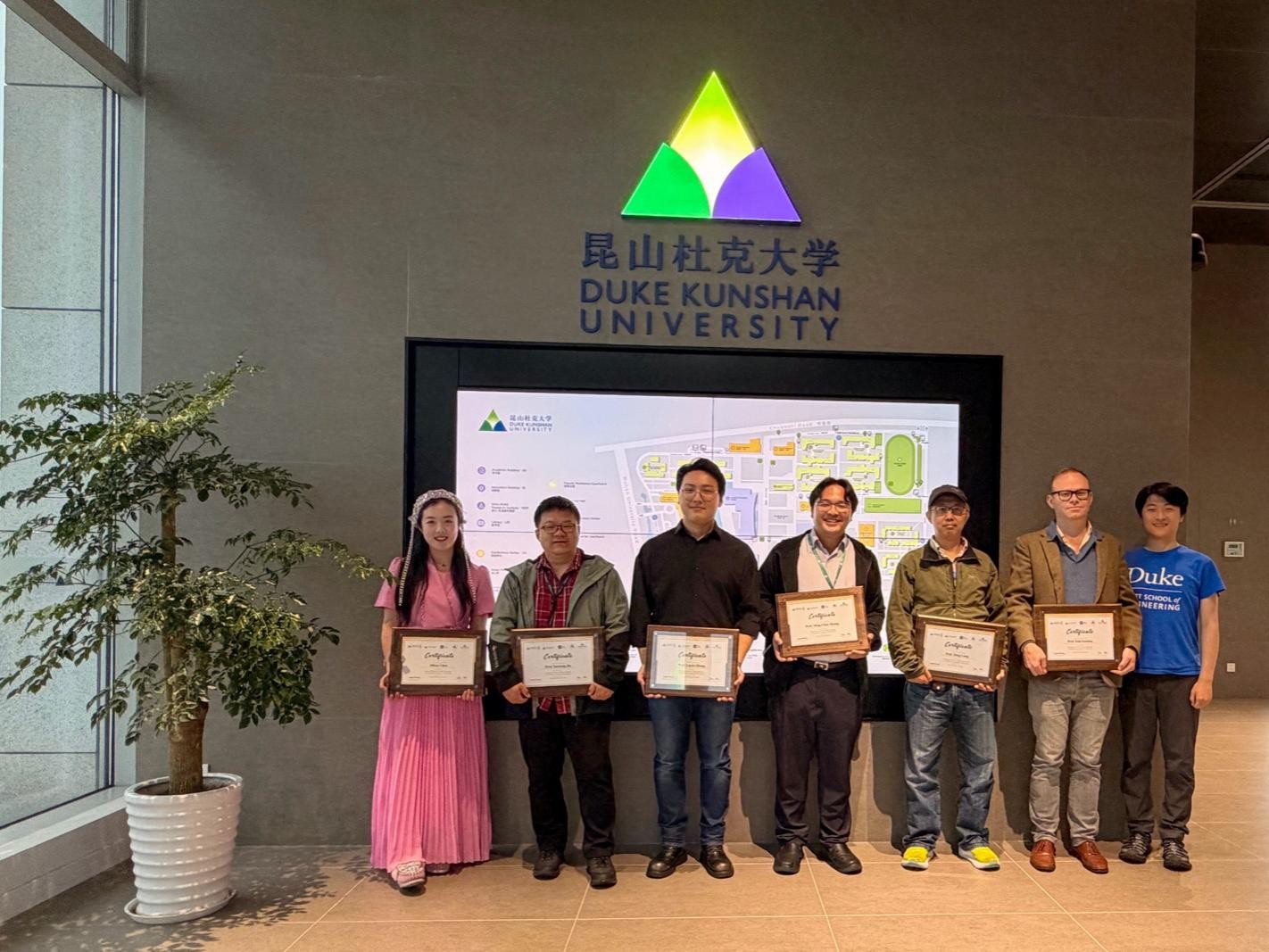
Prof. Luyao Zhang, Assistant Professor of Economics, Senior Research Scientist at the Digital Innovation Research Center, Co-lead of the Digital Technology and Society at CSCC, and faculty mentor for the broader research project, for her mentorship from the incubation of the student-initiated research, supporting and guiding the opening event, the encouragement for me to present the stage finding in multiple seminars and forums, the inspiration for conducting the interview at SIGGRAPH Asia 2025, and providing guidance for this final event.
Prof. Scott MacEachern, Vice Chancellor for Academic Affairs and Professor of Archeology and Anthropology, for his continued support of campus dialogue on AI academic policy and for contributing insights ever since the opening event of the project to this concluding seminar.
A special thanks is also extended to the faculty, industry leaders, and students whose insights shaped this initiative across its full arc. From the April 2026 closing event, I am grateful to Dr. Yimin Zhang for his visionary keynote on talent development in the AI era; and to the roundtable panelists — Prof. Ben Van Overmeire, Prof. Joseph Davies, Prof. Ming-Chun Huang, Prof. Andrew Cheon, Prof. Kim Gordon, Prof. Jiang Long, and Prof. Yucheng Jin — for bringing discipline-grounded perspectives on transparency, assessment, infrastructure, and originality to the AI governance conversation. This project was seeded at the April 11, 2025 student-faculty dialogue, where Prof. Don Snow, Prof. Fangfang Yin, and Prof. Andrew Field joined VCAA MacEachern and Prof. Luyao Zhang in launching the campus conversation on responsible AI integration. The initiative deepened through the SocioTech Futures Panel at the 2025 Annual Presidents’ Forum, where Dr. Dongping Liu, Prof. Paula Ganga, and Prof. Fan Liang helped amplify student leadership at the intersection of technology and society. At SIGGRAPH Asia 2025, Prof. Luyao Zhang’s interview with Prof. Kam-Fai Wong, renowned AI researcher and member of the Hong Kong Legislative Council, offered a human-centric vision for AI governance and a special inspiration on me for bridging philosophical inquiry with practical policy.
The dedicated student peers including Jiahe Chen, Founding President of DKU AI Club, Class of 2026; Yuanjun Du, President of DKU finance club and founding president of DKU Digital Innovation Contest 2025, Albina Khisamutdinova, former President of DKU Finance Club, Ke Ning, President of DKU AI Club, Zhonghai Dai, Team leader of Shanghai library Open Data Contest, Class of 2028 and Jiesen Huang, Tutorial Speaker of AI4AIl workshop, Class of 2026, Yanpei Yu, co-President of DKU CS Club, Class of 2028. Their enthusiasm, initiative, and sustained collaboration helped transform this project from an individual student research initiative into a genuinely collective and peer-driven endeavor.
University staff collaborators including Haiyan Zhou and Luisa Li from the Center for Teaching and Learning, Hongyi Gong and Cai Yan from DKU Library, and especially Chi Zhang from CSCC who contributed their energy, insight, and labor across every stage of this initiative — from the opening dialogue and symposium interviews to poster design, event logistics, and audience engagement. Their commitment transformed an individual research idea into a genuinely collective, community-driven endeavor.
Drafted by: Zihan Chen
Advised by: Prof. Luyao Zhang
Supported by: Chi Zhang