By Zihan Chen, Class of 2026 & Violet Nguyen, Class of 2028
For many first-year students at Duke Kunshan University, research can feel like something distant: a world of faculty offices, grant proposals, academic talks, and polished conference presentations. But for three members of the Class of 2026 — Chia-l Wei, Hanyang Zhou, and Felipe Rebello Silvestri — research did not begin with certainty. It began with a class, a question, a newsletter, a professor’s suggestion, or a topic that kept returning until it became impossible to ignore.
Over their four years at DKU, each of them found a different route into China-related research. What connected their journeys was the Center for the Study of Contemporary China, a DKU research center established in 2018 to advance research and teaching on the social, economic, and political factors shaping modern China. With a mission as supporting China-focused research, connecting undergraduate learning with empirical social science, and bringing scholars together for exchange, CSCC became more than a funding body for these students through grants, lectures, conferences, faculty mentorship, and informal academic communities. It was a place where early questions could become research projects, and where students could begin to see themselves as scholars.
Hanyang Zhou: Finding a Research Path that’s “Simple but Interesting”
For Hanyang Zhou, a Class of 2026 student majoring in Computation and Design with a track in Social Policy, research has centered on sociology, anthropology, labor, technology, and institutions. Her academic interests eventually led her to a CSCC-funded project on female food delivery riders in China’s gig economy — a topic that began almost accidentally, through a course assignment, and later reshaped his broader academic path.
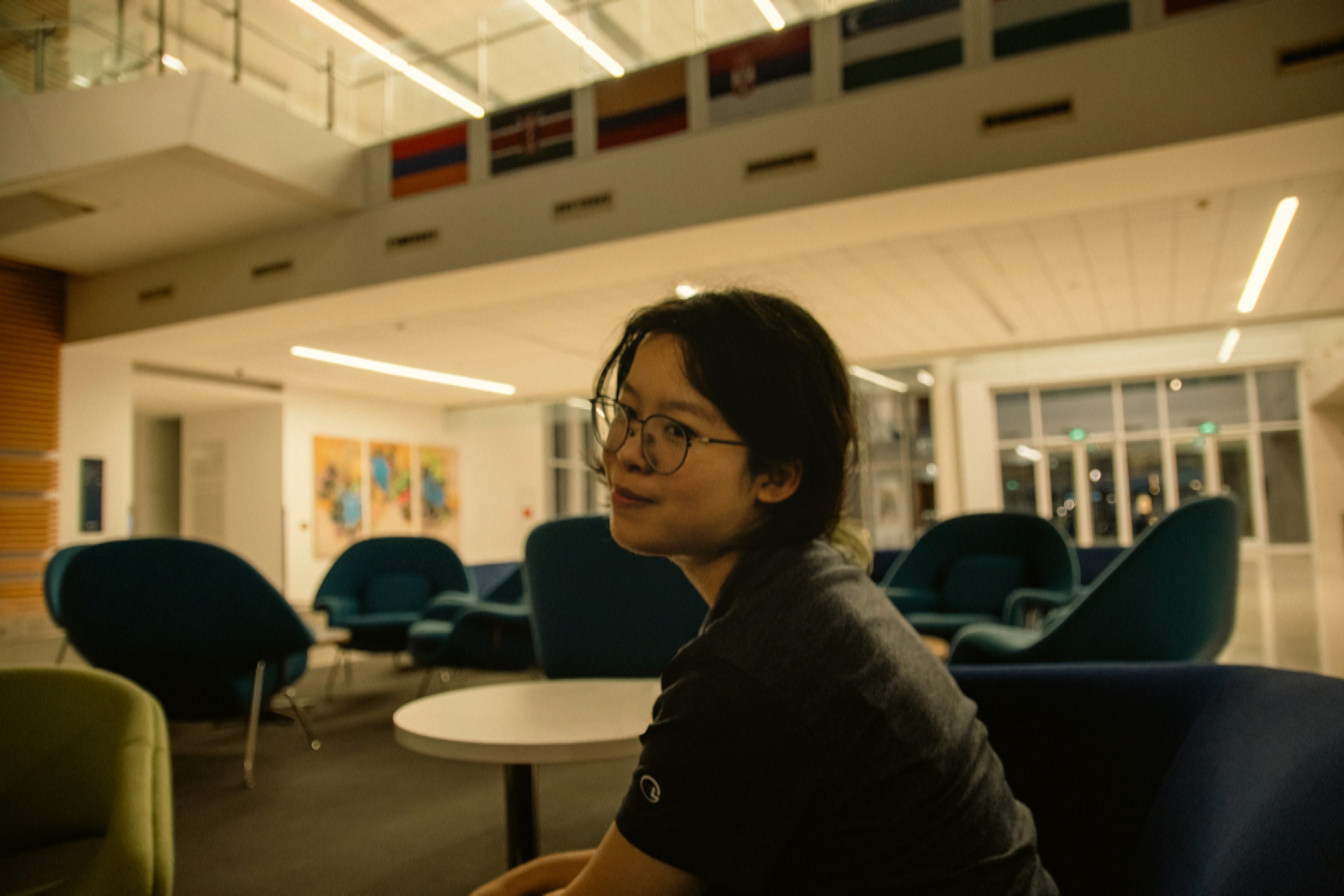
The project started in a course about technology, where Hanyang and her group studied algorithmic systems and imagined how platform design might better serve delivery workers rather than only consumers. During early fieldwork and reading, Hanyang noticed a gap: much of the existing discussion on gig workers, algorithmic control, and worker resistance focused implicitly or explicitly on male riders. Women riders, she found, were often absent from both scholarship and everyday assumptions about the industry.
That absence became the beginning of a research question. Hanyang became interested in how female food delivery riders experienced platform labor, social networks, and algorithmic management differently from their male counterparts. She noted that many forms of worker support or resistance (such as rider WeChat groups) could be male-centered spaces, sometimes filled with jokes or social norms that excluded women.
With CSCC support, Hanyang and her collaborators conducted fieldwork in Kunshan, Shanghai, Suzhou, and Changzhou, using interviews, snowball sampling, and on-the-ground observation. The process was not simple. Offline recruitment was difficult, and some potential participants added the researchers on WeChat but never followed up. Eventually, a key contact — a female rider in Suzhou who was also active online — helped the team connect with a larger network of riders.
The project remains ongoing, but Hanyang said it has already changed the direction of her academic life. She originally leaned toward education research, but the CSCC-supported project helped her open a second path in labor studies — one that eventually became more central to her interests. Without the project, she said, she might have “completely shifted” toward a different research direction.
For Hanyang, CSCC’s value is not only in its formal grants or guest lectures. It also lies in the academic community it creates. She described the CSCC as a place where students can meet faculty, speakers, and peers who care about similar topics, lowering the barrier to joining research conversations.
Her advice to younger students is to treat CSCC not just as an information platform, but as a community. Attend lectures, apply for grants, talk to people, and use these opportunities to find collaborators and mentors. Research, she suggested, is not only about individual brilliance; it is also about learning how an academic community works.
Chia-I Wei: Turning Policy Questions Into Evidence
For Chia-I Wei, who majors in Institution and Governance with a track in Public Policy, research began with a first-year course: PUBPOL 101. The class introduced the full process of public policy research, from defining a policy problem to understanding why government intervention might be necessary. That early exposure helped Chia-I realize that she was drawn to the study of people, institutions, and real-life policy questions rather than abstract theory alone.
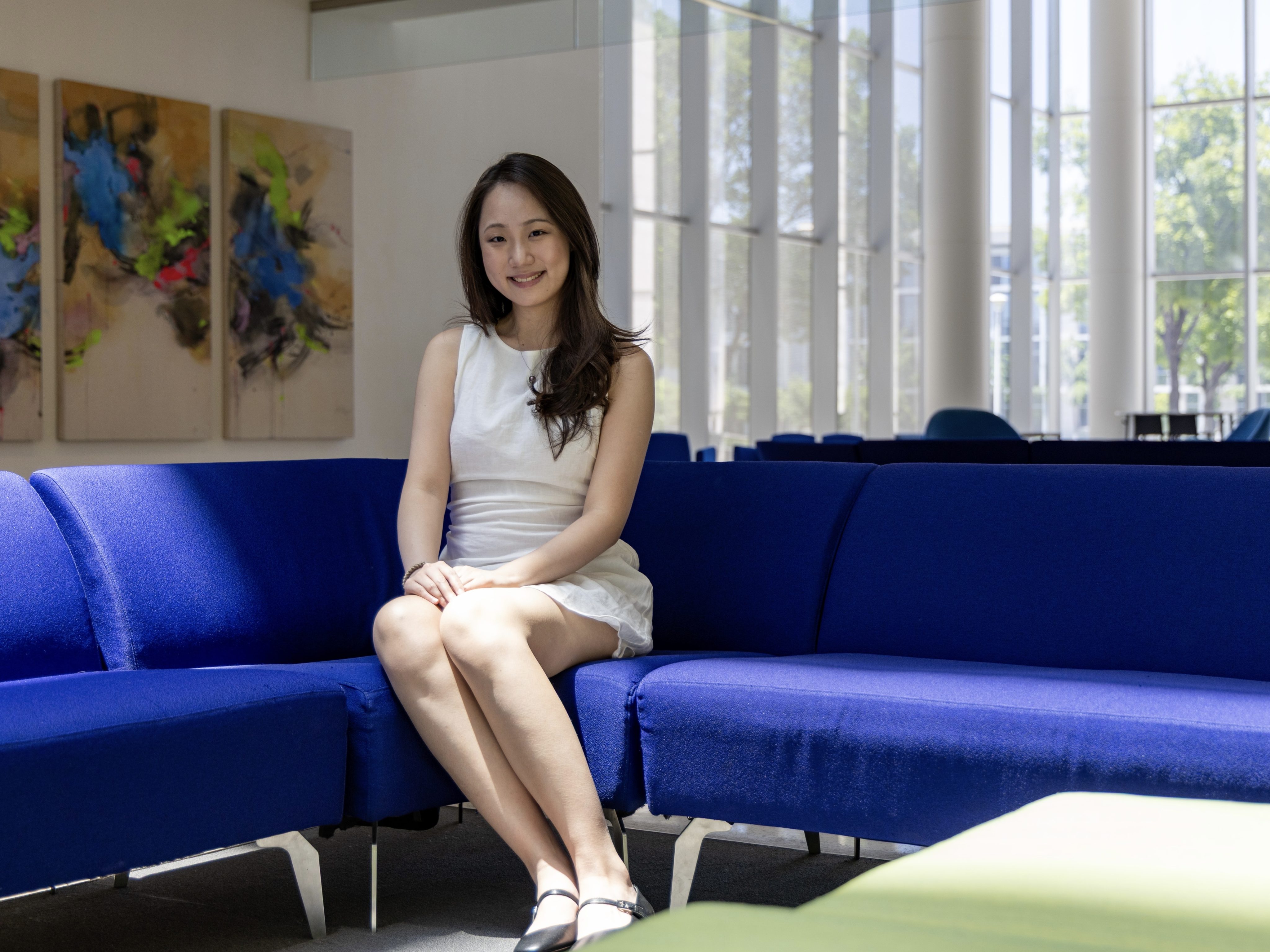
Over time, Chia-I’s interests developed toward political science, institutional governance, and causal inference. Her Signature Work examines whether China’s 1979 Election Law had an effect on women’s legislative representation. For Chia-I, causal inference matters because policy research should not merely show that two things are correlated; it should help decision-makers understand whether one factor actually affects another.
Chia-I described her own role not as someone who wants to be the policymaker, but as someone who provides decision-makers with evidence and options. In her words, she sees herself more as a “僚” (liáo, staff) compared to “官”(guān, officer): the person who helps analyze what affects what, and who can offer policy recommendations grounded in evidence.
Her first direct connection with CSCC came through a faculty-student collaborative project connected to Regulating Global China, where she worked as a research assistant. Later, CSCC funding supported her collaboration with a faculty mentor on a China-related political science project. The funding made it possible for her to travel to local archives and government offices, where she accessed roster data on local people’s congresses and manually identified women representatives when aggregate statistics were unavailable. Without that funding, she said, the data would not have been available; and without the data, the project itself could not have happened. The work eventually developed into a paper accepted by the American Political Science Association conference, a milestone Chia-I emphasized as one of her major achievements.
Chia-I also highlighted CSCC’s role in connecting students to scholars beyond DKU. She recalled a CSCC lecture on Chinese women’s political representation that brought a leading scholar in the field to campus. That event not only gave Chia-Idirect access to a scholar whose work aligned with her research, but also helped create potential future collaborations between faculty members.
Looking back, Chia-I said CSCC influenced her by making research feel possible. DKU, she argued, is a place where doing research can be more accessible than many students might assume, especially for those interested in China-related topics. CSCC provided the resources and “soil” that allowed her to become committed to research, even if she has not fully committed to academia as a lifelong path.
Her advice to incoming freshmen is direct: learn by doing. Students should not wait until they are certain they love research before trying it. Instead, they should start with a professor from a course they enjoyed, ask about research assistant opportunities, look through faculty profiles, and test their interests through real projects. “If you do not know whether you want to do research,” her message suggests, “do one research project first. Then you will know why you like it — or why you do not.”
Felipe Rebello Silvestri: Studying China through Brazil, Mexico, and DKU
For Felipe Rebello Silvestri, China studies began long before he arrived at DKU. Originally from São Paulo, Brazil, Felipe lived in Mexico as a child before returning to Brazil. By age 16, after learning Spanish and English, he wanted to study a language that felt challenging and globally important. He chose Mandarin. At the time, Brazil and China already had significant trade relations, but he knew few people in Brazil who spoke Chinese or understood China deeply. That gap sparked his interest.

At DKU, Felipe became involved in a wide range of campus activities. He served as captain of the football team, participated in research, led student organizations including the Film Society and Latino Club, and helped organize programming around Latin America-China relations. His engagement with the CSCC developed through three major channels: a faculty-student collaborative project, a student-initiated research grant, and a conference on China and Latin America.
Felipe first heard about the CSCC in a freshman-year Global China course, where a professor introduced the center’s work on China and the world. He was especially drawn to the research center’s clusters, including areas related to China’s global connections. One of his CSCC-supported projects, The Parapolitics of Empathy, examines statelessness, refugees, and human rights. Working with faculty mentors, Felipe studied historical cases connected to Jewish refugees during World War II, including networks that linked Europe and Shanghai.
His own Signature Work, funded by a CSCC Student-Initiated Research Grant, is titled “Carne, Capital, and Cross-Continental Ties: An Ethnographic Study of Industrial Meat Production in Brazil-China Relations.” The project uses meat (especially beef) as a lens to understand contemporary Brazil-China relations. Felipe explained that Brazil-China trade is often described through broad terms such as “win-win cooperation” or Global South partnership. But his research asks what that relationship looks like when viewed through production, regulation, land use, and environmental cost. China benefits from access to Brazilian meat, while many ecological and production burdens remain in Brazil. He uses the concept of unequal ecological exchange to analyze how economic and environmental costs are distributed unevenly across borders.
The CSCC, Felipe said, helped him see China studies and China-in-the-world studies as viable and rewarding academic and professional paths. Through lectures, research funding, conference organizing, and faculty interaction, he found a field that connected his background, language skills, and intellectual interests. These experiences helped shape his decision to pursue a master’s degree in China Studies with a focus on economics and management at Yenching Academy of Peking University after graduation.
For younger students, Felipe’s advice is practical. Take China-related courses early. Do the readings. Participate. Go to office hours. Build genuine relationships with professors. At the same time, students should recognize the value they already bring — language skills, regional knowledge, coding ability, or personal background. A first-year student may not yet have advanced research training, but they may have knowledge or skills that are rare and useful to a faculty project.
A Shared Lesson: Research Starts Before You Feel Ready
Although Chia-I, Hanyang, and Felipe followed different paths, their stories share a common pattern. None began with a fully formed research agenda. Their projects grew through classes, conversations, fieldwork, failed attempts, faculty mentorship, and institutional support. For these three students, support from the CSCC mattered not only because it paid for travel, data collection, conferences, or project expenses. It mattered because it turned uncertainty into a first step.
Hanyang found a research path by noticing who was missing from conversations about algorithmic labor. Chia-I learned to turn policy questions into causal evidence. Felipe connected his multilingual, cross-continental background to the study of Brazil-China relations. Each used the CSCC differently, but each found in it a bridge between curiosity and scholarship.
Their advice to freshmen is not to wait for perfect clarity. Read widely. Take classes seriously. Attend talks even when the topic feels unfamiliar. Talk to professors. Apply for grants. Look for peers. Let one small research experience lead to the next.
At DKU, research may begin with a question that feels too small, too personal, or too unfinished. But as the Class of 2026 prepares to leave campus, Chia-I, Hanyang, and Felipe show that those early questions can become fieldwork, conference papers, graduate study, and lasting academic identities, especially when students find the right community to help them begin.