

By Zihan Chen, Class of 2026
On April 16, 2026, the CSCC, in co-hosting with the Division of Social Sciences and Anthropology@DKU, held a two-part academic event featuring Dr. Xiao He, Lecturer at East China University of Political Science and Law. The event opened with a 45-minute student workshop titled Between Speech and Silence: Research Journeys into Ethics and Labor Justice, followed by a formal one-hour research presentation under the core theme Suffering Without Complaint: Autonomy and Dependence Among Rural Migrants in Shanghai. The session was introduced and moderated by Cultural Anthropologist Prof. Sajida Tuxun, member of the Meanings, Identities, and Communities Cluster. Dr. He, a scholar in economic and legal anthropology who received his Ph.D. in Anthropology from Utrecht University and the Max Planck Institute for the Study of Religious and Ethnic Diversity in Germany, drew on over a decade of ethnographic research with rural-to-urban migrant workers in Shanghai. He shared both grounded methodological insights for qualitative research and a rigorous theoretical analysis of suffering as an affective and ethical force situated between autonomy and dependence.
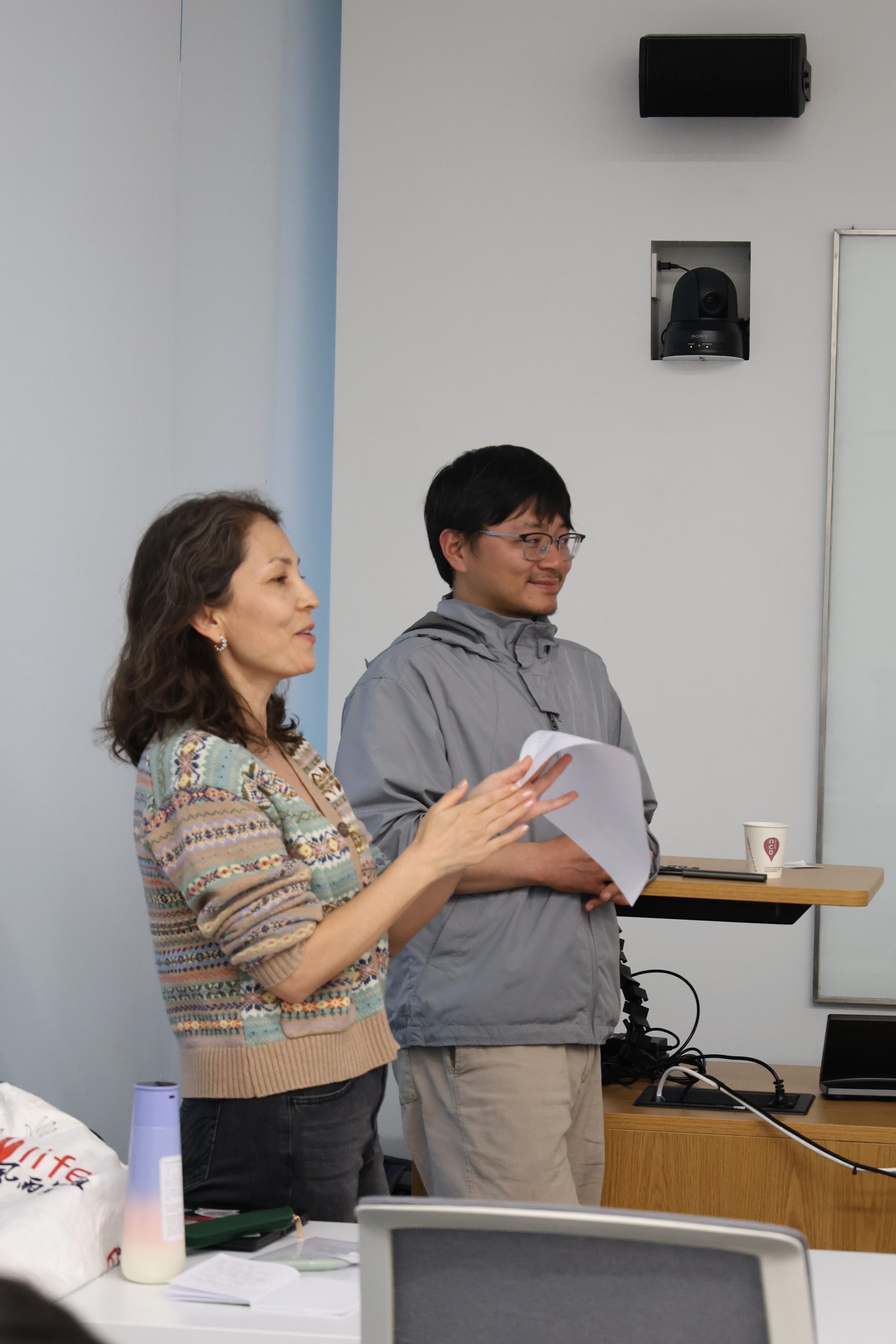
The student workshop, tailored for DKU students across social science disciplines including public policy, global health, and sociology, centered on Dr. He’s personal research trajectory and critical methodological reflections in conducting qualitative research on law and justice. He began by tracing the origins of his project, which started as a master’s thesis initially guided by his supervisor to test modernization and individualization theories through a study of rural migrants in Shanghai. After immersive fieldwork, Dr. He shifted his theoretical framework to engage with post-2008 financial crisis critiques of neoliberalism and longstanding scholarly debates on human agency, confronting a defining puzzle of his research: while critical academics widely condemn neoliberalism, the working-class migrants he studied largely embraced entrepreneurial aspirations and individual upward mobility, rather than aligning with resistant social movements or structural critiques of the market.
A pivotal methodological breakthrough, Dr. He shared, emerged from his observation of the stark tension between speech and silence in migrants’ narratives of suffering. He noted that while migrant workers openly voiced complaints about food and housing prices, harsh working conditions, and urban hardship to him as a researcher and stranger, they maintained profound silence about their suffering within their families. This adherence to the traditional Chinese ethos of “chiku” (eating bitterness), which means to endure hardship without complaint to sacrifice for one’s family, led him to challenge a core orthodoxy of qualitative social science: the fixation on “giving voice to the marginalized”. Dr. He argued that responsible ethnography requires moving beyond merely recording and amplifying interviewees’ words. Instead, researchers must treat participants as fully reflective, equal subjects, interrogate the social context and indirect modes of communication that shape narratives, and examine why people articulate their experiences differently across interactions with strangers, friends, family, and state authorities. He further expanded this reflection to the ethical dimensions of fieldwork, emphasizing that the quality of qualitative research lies not in the volume of data collected, but in the depth of critical engagement with the logic and ethics behind research participants’ speech and silence. The workshop concluded with a discussion of Dr. He’s ongoing research on labor dispute resolution, where he analyzed how grassroots labor officials combine fragmented legal provisions and moral narratives to mediate conflicts, offering students a grounded look at the real-world operation of law in contemporary China.
In the subsequent formal research presentation, Dr. He deepened his theoretical and ethnographic analysis of suffering, autonomy, and dependence, opening with a critical engagement with two contrasting intellectual traditions. On one hand, he revisited post-WWII scholarship on authoritarian character, most notably Erich Fromm’s work, which frames “suffering without complaint” as a core virtue of authoritarian personality, tied to the abandonment of individual agency and the escape from freedom. On the other hand, he examined contemporary anthropological critiques of liberal sensibilities, which re-evaluate dependence, submission, and suffering as meaningful modes of ethical self-cultivation, rather than simply a lack of agency. Against this backdrop, Dr. He positioned his ethnographic findings to challenge both reductionist narratives: refusing to reduce migrants’ endurance of hardship to authoritarian compliance, while also avoiding uncritical celebration of suffering as a form of resistance.
Dr. He first unpacked the dual nature of the “chiku” narrative in Chinese society. He noted that while the Chinese state has long promoted the endurance of bitterness as a moral virtue tied to national development and hard work, migrant workers themselves strategically deploy their capacity to “eat bitterness” as a positive moral identity and a source of bargaining power. He illustrated how workers highlight their suffering and hardship in workplace interactions to make moral claims on employers, seeking recognition, material benefits, and protection in the absence of robust formal labor protections. In this way, Dr. He argued, suffering opens up a limited but meaningful social space for autonomy within relations of mutual dependence between workers and employers.
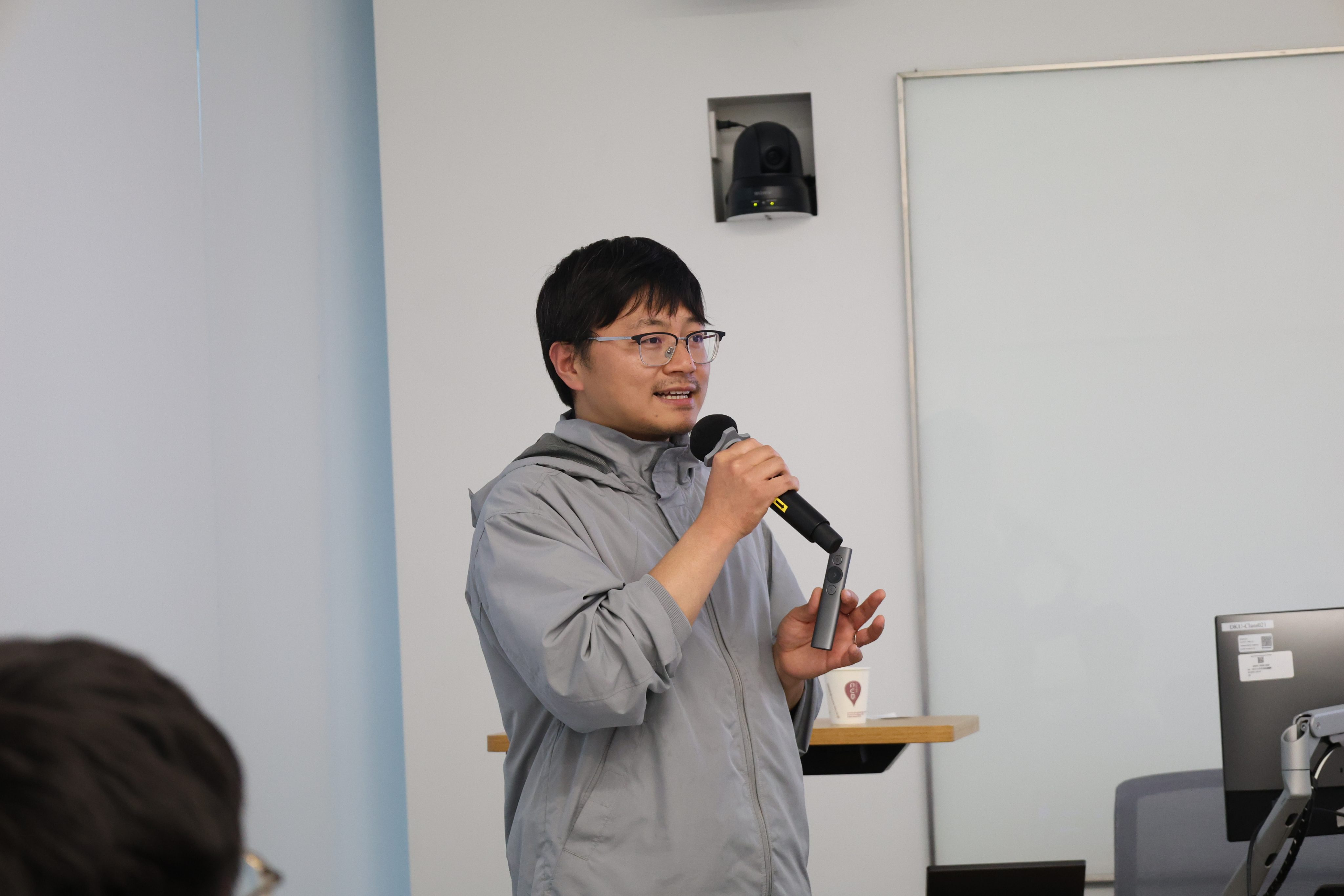
He further emphasized that this mutual dependence is inherently precarious. The social recognition of suffering is asymmetrical and hierarchical, often mediated by material resources and power dynamics, and mismatched expectations of mutuality between workers and employers frequently lead to disillusionment, misrecognition, and amplified structural injustice. In response to this precarity, Dr. He found that many migrant workers turn to aspirations of entrepreneurial freedom and total autonomy—a radical desire to escape all interpersonal dependence, in stark contrast to the liberal conception of autonomy within institutional constraints. He shared ethnographic examples of workers who dreamed of starting their own businesses, seeking to become redistributors of resources rather than dependent laborers, even as many of these entrepreneurial aspirations (including participation in fraudulent virtual economy investment schemes) ended in failure. Dr. He’s core argument challenged the romanticization of both dependence and absolute autonomy: the escape to entrepreneurial freedom does not inherently foster an empowered, autonomous self, but often leads to the glorification of asymmetric, hierarchical dependence, as workers seek to move from the subordinate to the dominant end of power relations.
In the Q&A session that followed, Dr. He addressed questions from both in-person and online audiences, further elaborating on his core arguments. When asked about the perceived gap between his presentation title “Suffering Without Complaint” and his analysis of workers’ strategic use of suffering in workplace negotiations, he clarified that while workers do deploy narratives of hardship for bargaining power in specific contexts, this form of complaint operates within relations of dependence, and is distinct from a wholesale rejection of the “chiku” ethos. He also elaborated on his definition of autonomy, distinguishing between relational autonomy within mutual dependence and the fetishized ideal of total, unconstrained autonomy that many migrant workers aspire to. In response to a question about gender dynamics, he noted that women migrant workers often hold a strategic advantage in labor negotiations, as they face less cultural pressure to project strength and can more readily occupy a position of vulnerability to advance their claims. He also addressed methodological questions about ethnographic research, the line between sociological analysis and stereotyping, and the practical challenges of conducting long-term fieldwork on sensitive topics related to labor and migration in China.
This event is part of the Guest Lecture Series of the Meanings, Identities, and Communities Cluster under the Center for the Study of Contemporary China.