
By Felipe Silvestri, Class of 2026
On April 10, 2026, the Center for the Study of Contemporary China (CSCC) and the DKU Latino Organization co-hosted the inaugural “China & Latin America in a Changing World” Interdisciplinary Conference at Duke Kunshan University. Held in AB2103 from 9:30 to 15:00, the event brought together scholars, researchers, and students from DKU, Xi’an Jiaotong-Liverpool University (XJTLU), Fudan University, united by a shared interest in the evolving relationship between China and Latin America.
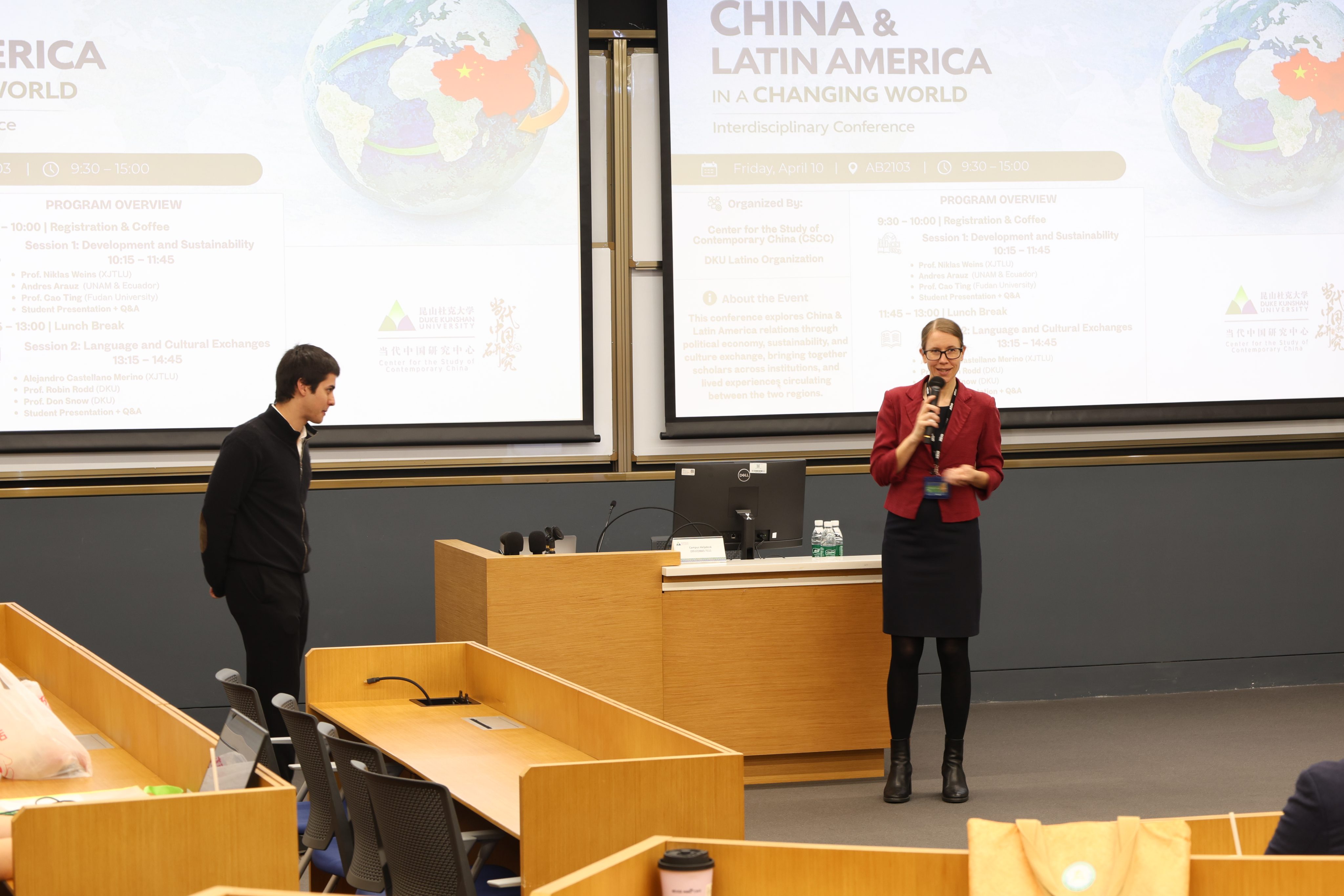
The conference was organized around two thematic sessions: the first focused on development and sustainability, and the second on language and cultural exchange. Together, the panels explored the political, economic, environmental, and cultural dimensions of China–Latin America relations from a range of interdisciplinary perspectives. The event aspires to become an annual gathering, making use of DKU’s international student body to foster ongoing dialogue and lasting connections between the two regions.
Session 1: Development and Sustainability
The first session examined how China and Latin America are navigating questions of green development, political economy, and sustainable cooperation in an era of shifting global alignments. Three scholars offered complementary perspectives, ranging from agricultural worldviews to bilateral diplomacy and infrastructure financing.
Prof. Cao Ting | Fudan University
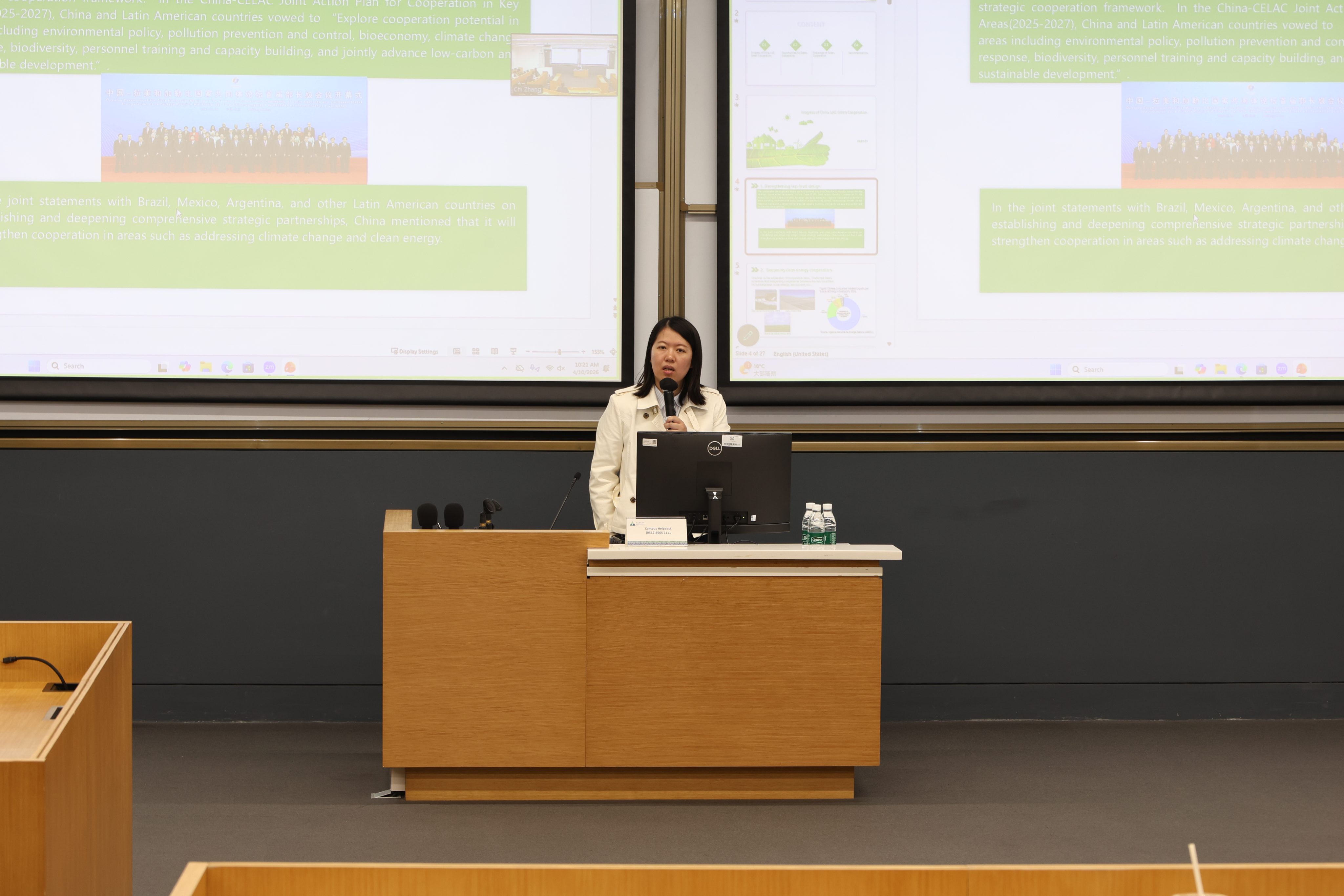
Prof. Cao Ting opened the session with a broad overview of China–Latin America environmental cooperation, tracing its institutional foundations through the CELAC forum and a series of ministry-level engagements. She identified three major areas of cooperation: agriculture, renewable energy, and development financing, and situated them within a framework of mutual trust and a shared commitment to green development. At the same time, she was candid about the obstacles that persist, including geopolitical pressure from the United States, cultural differences, and divergent legal and tax systems. Her presentation concluded with a call for stronger policy support to consolidate the progress made.
Prof. Niklas Weins | Xi’an Jiaotong-Liverpool University (XJTLU)
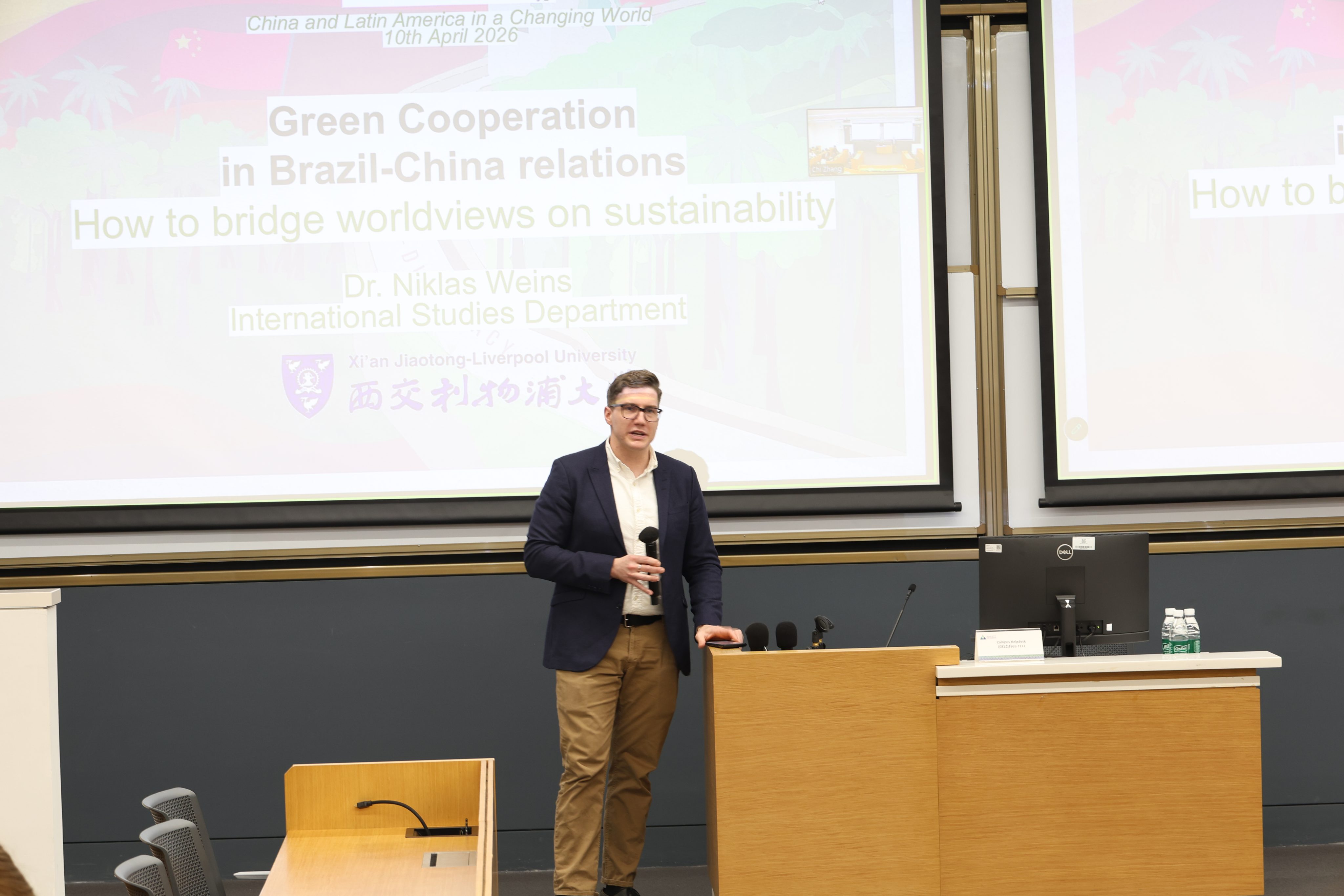
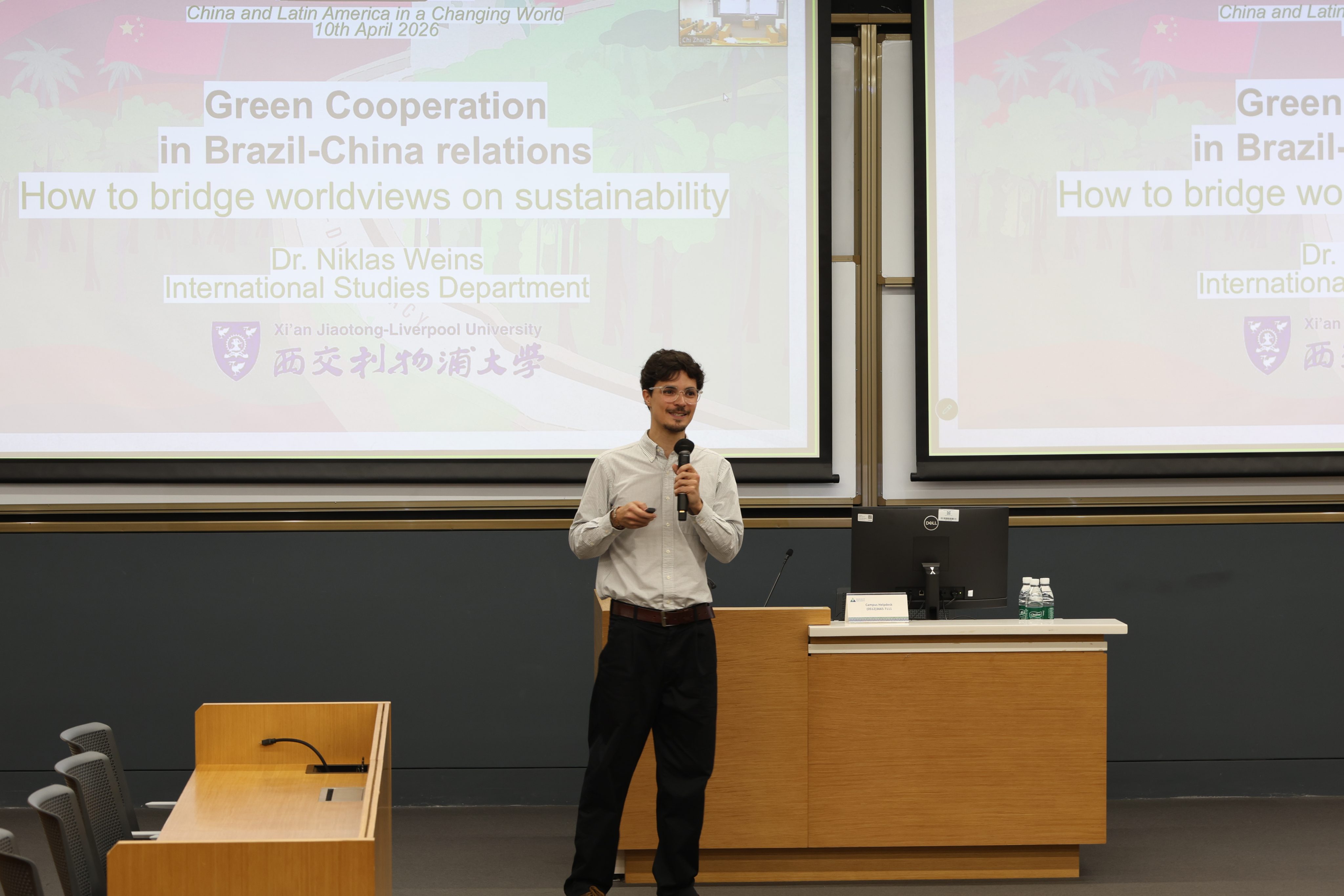
Prof. Niklas Weins, drawing on research conducted at XJTLU, focused on contrasting Chinese and Brazilian worldviews around sustainability in agriculture — a pairing that reveals one of the central tensions in China–Latin America green cooperation. He noted that while China has emerged as a global leader in reforestation, including through its ambitious Three-North Shelter Belt Program to combat desertification, Brazil’s agricultural expansion has proceeded in the opposite direction, making it a leading site of deforestation. Prof. Weins argued that this dynamic reflects a form of “keeping the house clean at home”: China reduces its domestic environmental footprint while continuing to import agriculture-heavy commodities whose production externalizes environmental costs onto regions like Brazil.
To analyze this, Prof. Weins drew on the four worldviews framework from Clapp and Dauvergne’s Paths to a Green World (2011) — Market Liberal, Institutionalist, Bioenvironmentalist, and Social Green — and asked a central question: who gets to define what “green” means, and how green is green enough? He traced how China’s engagement operates primarily through a dominant market liberal discourse (e.g., deforestation-free soybean imports from COFCO, commodity labeling), supplemented by institutionalist engagement through UN climate and biodiversity agreements and carbon credit schemes. He noted that China has so far preferred a testing-and-pilots approach over hard regulation, including on deforestation-free imports. Bioenvironmentalist and social green perspectives, by contrast, tend to emerge through environmental science and civil society checks, and remain more marginal in current bilateral frameworks. The presentation raised important questions about how China’s concept of Ecological Civilization gets translated and exported in practice.
Andrés Arauz | UNAM & Ecuador
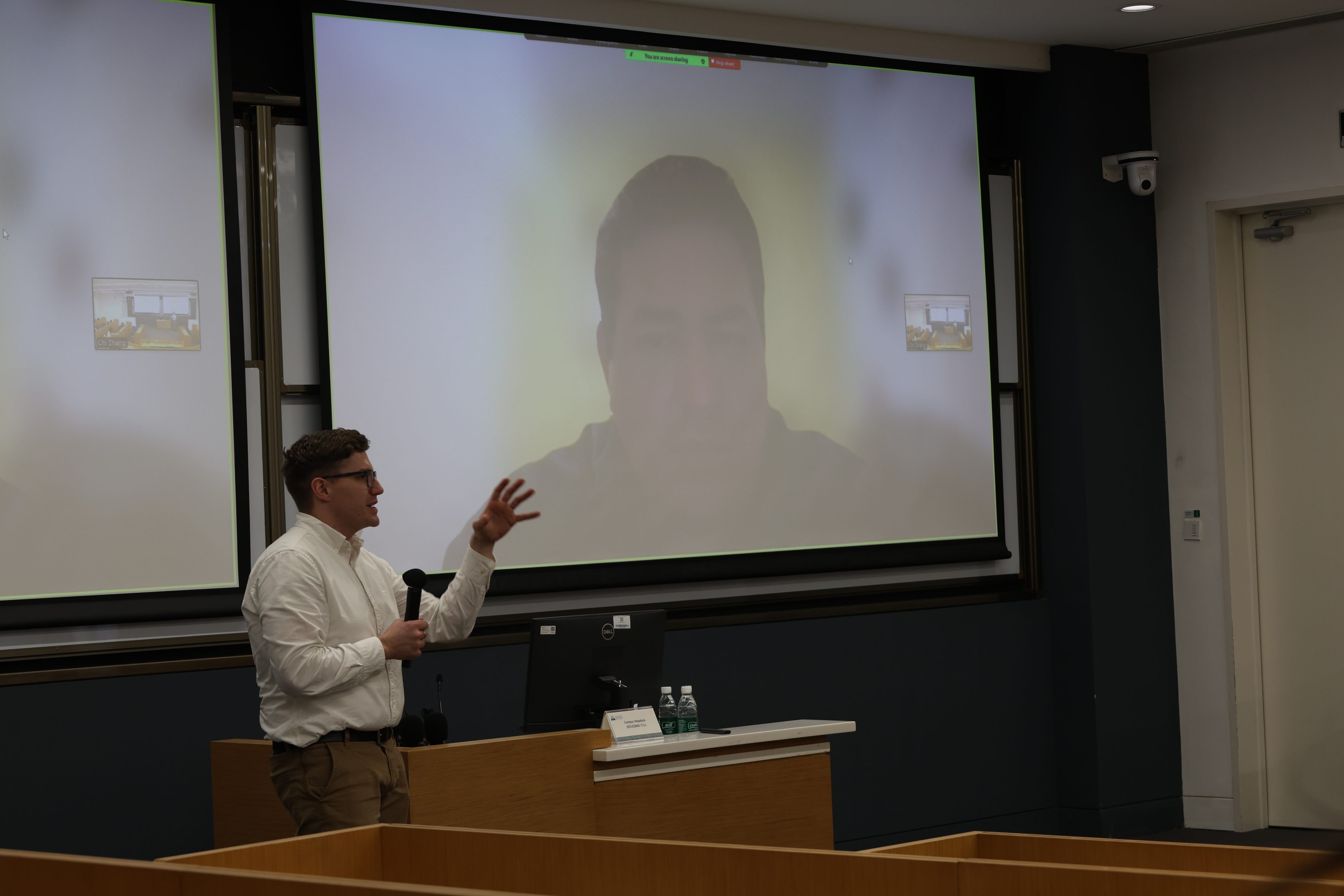
Andrés Arauz — Ecuadorian economist, former 2021 presidential candidate, and doctoral researcher in financial economics at the National Autonomous University of Mexico (UNAM) — offered a practitioner’s perspective on China–Ecuador relations, grounding his presentation in his own experience navigating development policy and international partnerships.
Arauz traced the evolution of Ecuador’s relationship with China, beginning with early Chinese investment in the oil sector before the Correa government and culminating in the 2009 Strategic Partnership. He described how the Correa administration’s National Plan for Wellbeing required large-scale social investment to recover from three decades of underinvestment, which drove a deliberate turn away from IMF dependency and toward new financing partnerships. This involved a five-part strategy: near-nationalization of oil and mineral revenues, a tripling of tax collection through closing loopholes, renegotiation of foreign debt, and the pursuit of alternative international partnerships, with China emerging as a key partner.
He noted that the strategic partnership has proven durable across ideologically diverse governments: even right-wing administrations that followed Correa continued engaging with China, visiting Beijing and giving their own political spin to the relationship. This durability reflects Ecuador’s growing structural dependence on Chinese markets for key agricultural and food exports. Arauz also acknowledged tensions during the Correa years, including the termination of bilateral investment treaties with all countries following a World Bank arbitration dispute, and the troubled petrochemical complex — a project he described as a symbol of both the possibilities and the pitfalls of development dependency. His account underscored the asymmetries and navigation challenges inherent in South–South cooperation.
Session 2: Language and Cultural Exchange
The afternoon session shifted focus to the human and communicative dimensions of China–Latin America relations, exploring how language learning, cultural translation, and the use of artificial intelligence shape the possibilities and limits of cross-regional exchange.
Alejandro Castellano Merino | Xi’an Jiaotong-Liverpool University (XJTLU)
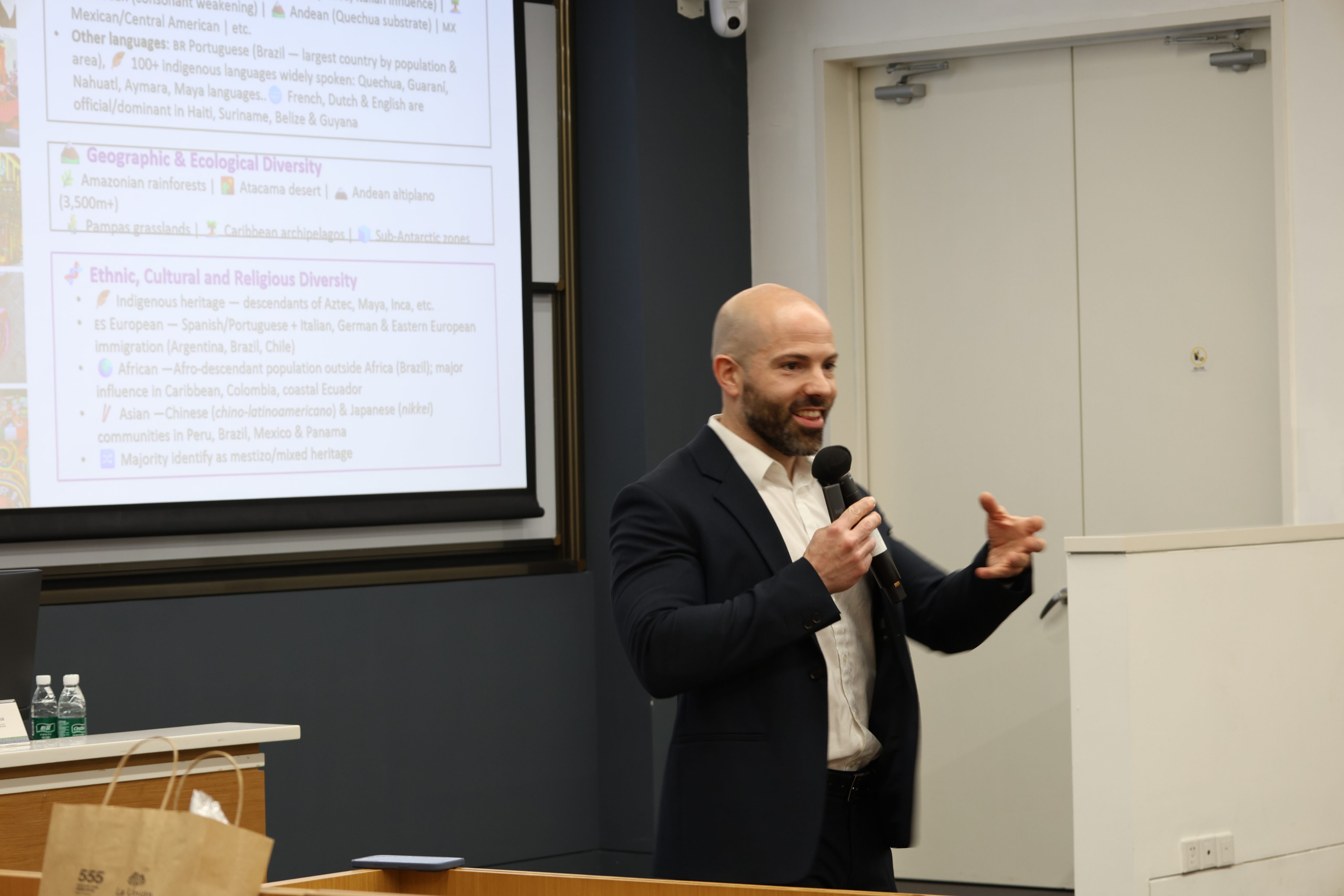
Alejandro Castellano Merino, Head of the Spanish Language Division at XJTLU’s Modern Languages Centre, presented on the challenges and opportunities of China–Hispanic world exchange in the age of AI. He opened by foregrounding the scale of the relationship: Spanish is among the most widely studied foreign languages in China, with growth closely tied to landmark events such as the 2010 and 2022 FIFA World Cups, while the number of Chinese-language learners in Latin America has also expanded significantly.
Drawing on data from language tutors at XJTLU’s Spanish division — which boasts approximately 800 students, reportedly the second-largest cohort in China according to the Spanish embassy — Castellano identified several recurring challenges: limited exposure to Spanish-speaking environments outside the classroom, shyness and cultural expectations that inhibit class participation, the pronounciation and grammatical complexity of Spanish, and cultural stereotypes that can lead to misunderstandings. To illustrate cultural distance, he referenced the artistic work of Professor Yang Liu, whose visual representations of East–West differences in areas such as self-image, problem-solving styles, and social behavior offer a vivid lens on the gap students must bridge.
Castellano also presented “Don Popito,” an AI language agent his team developed and implemented for Spanish learners at XJTLU. Built on a Spanish pop culture model and filtered through the Spanish division’s own content, the tool allows students to practice through role play, engage with historical figures, generate cultural quizzes, and ask questions without fear of judgment. He situated this work within a broader institutional agenda: strengthening partnerships with Latin American universities, facilitating mobility programs for Argentinan students to study in China, and, most recently, organizing the “Towards a Shared Future: Latin America–China” event in April 2025, which brought together academics and embassy staff from both regions.
Prof. Don Snow | Duke Kunshan University
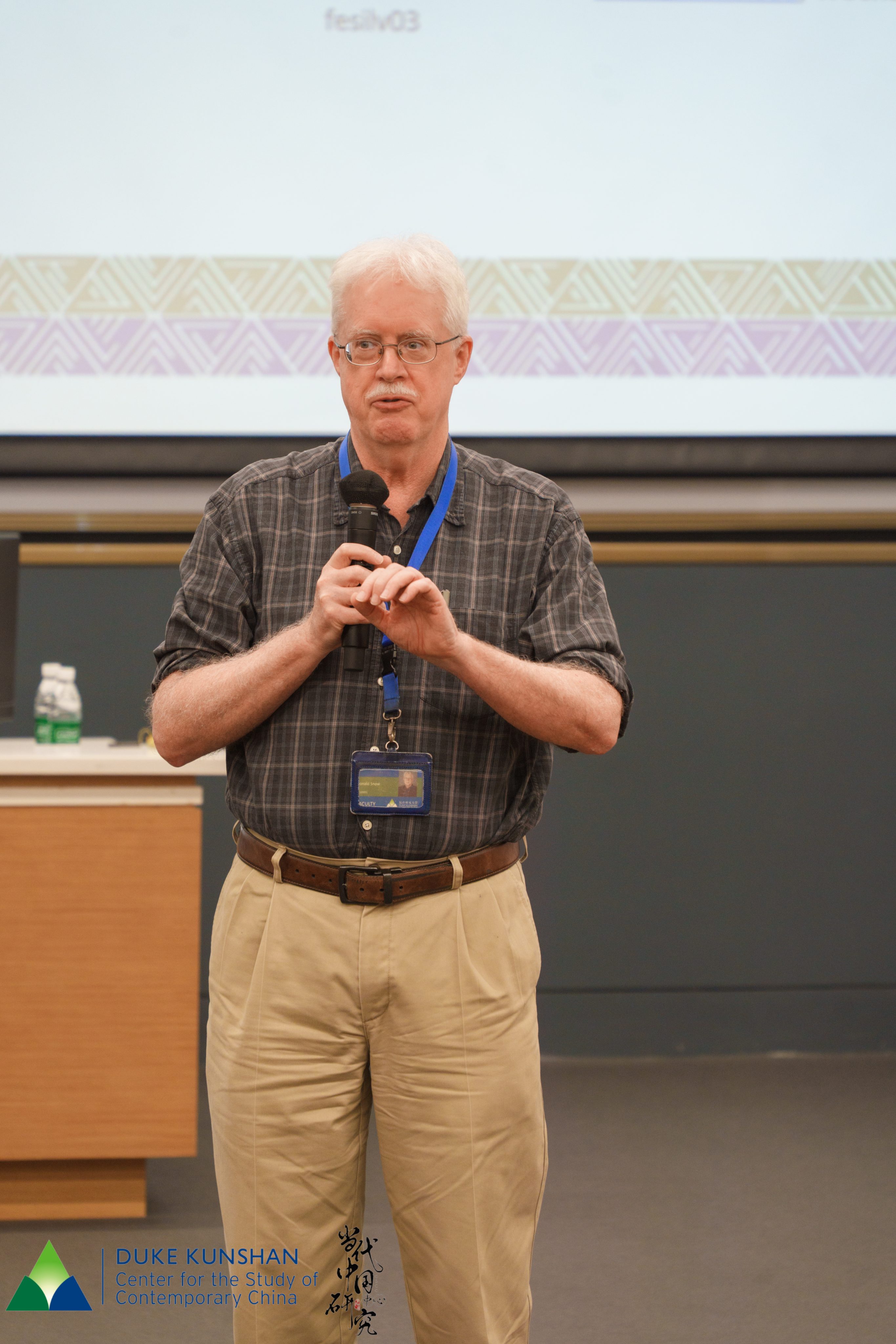
Prof. Don Snow of DKU offered a reflective presentation on what it actually takes to learn a language — a question with direct relevance to the conference’s broader themes of cross-regional connection. He began by pushing back against the assumption that AI can substitute for human language acquisition, arguing that while AI can assist in many areas, language learning at the level of genuine communication still requires active human effort and deliberate practice.
Drawing on a research project he conducted with students living abroad, Prof. Snow found that English speakers immersed in a foreign country almost never had to use the local language — unless they actively chose to. The key insight was that language use must be created intentionally: students who made progress did so by designing their own opportunities, whether through regular visits to different new hairdressers to practice introductory conversation, doing Chinese homework on public buses, or committing to ordering at McDonald’s entirely in Chinese until they could do so fluently. His message was clear: immersion helps, but it is not sufficient. Learners must seek out contexts that force them to use the language, and supplement structured study with self-directed practice.
Prof. Snow also spoke briefly about his efforts to encourage language study at DKU, including advocacy for Spanish classes, reflecting his conviction that language is not merely a technical skill but a gateway to the kinds of deep intercultural engagement that a conference like this one aspires to cultivate.
Student Presentations
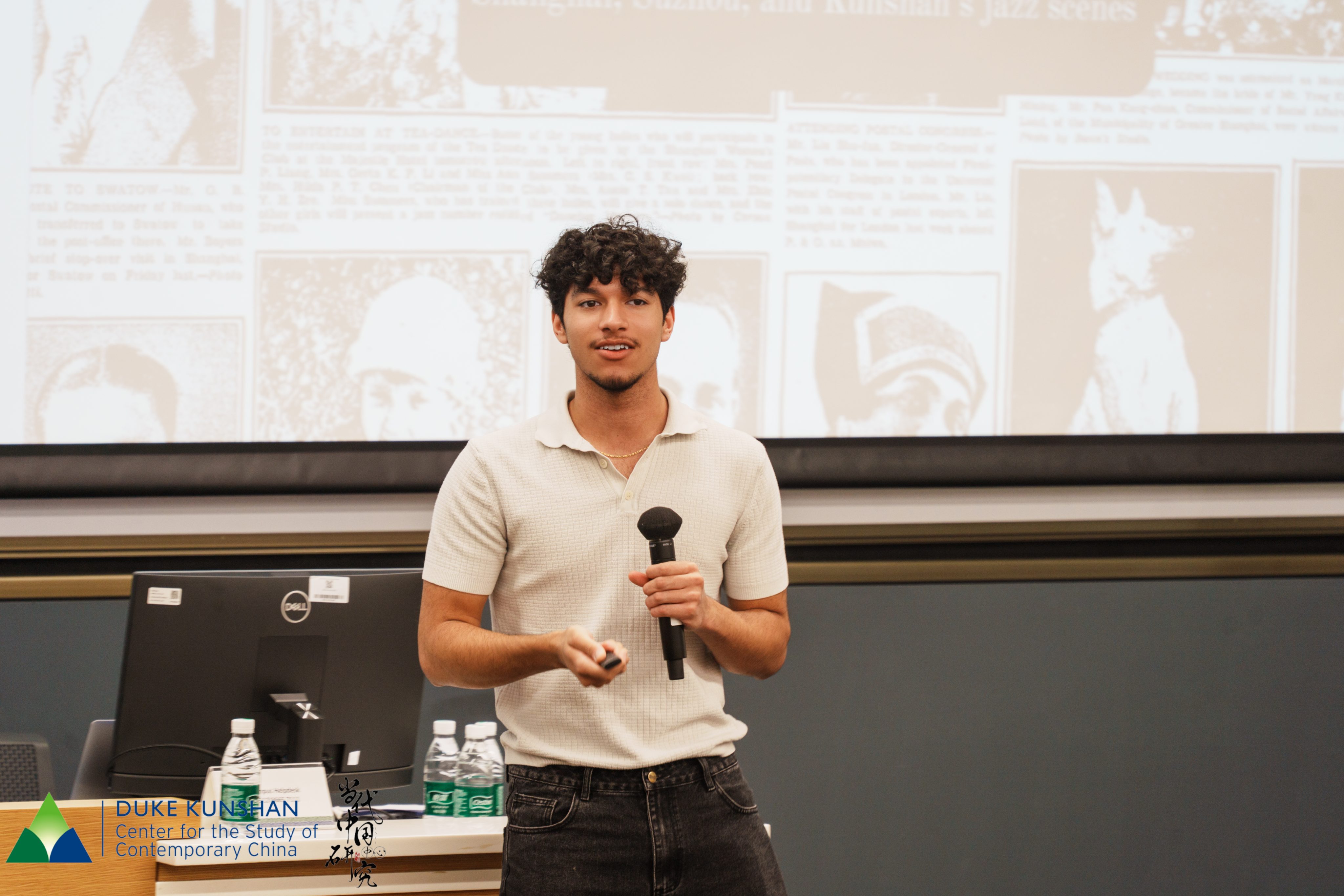
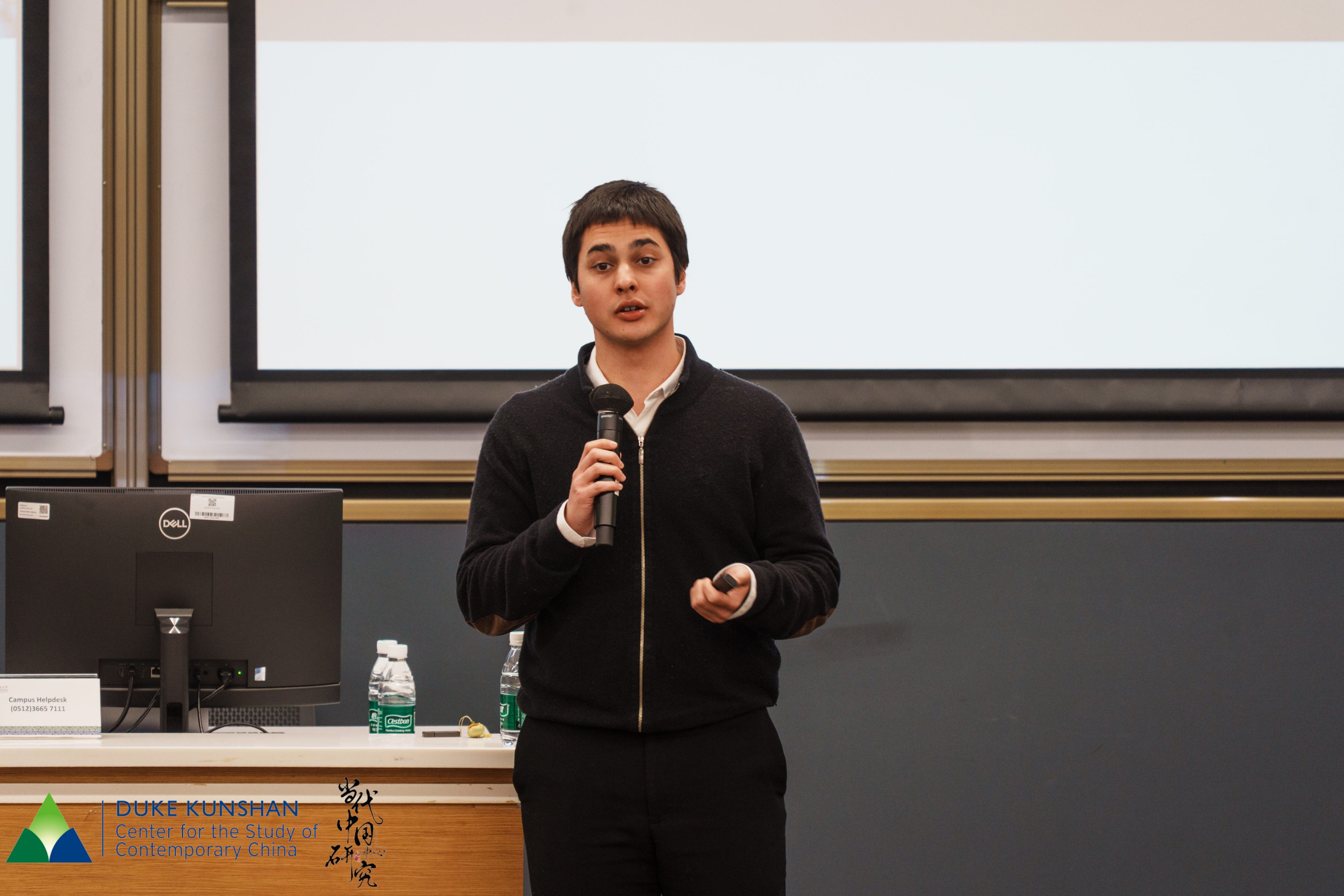
Roberto Adames, Class of 2029 | DKU, Research Assistant
Student researcher Roberto Adames, who works as a Research Assistant for Professor Andrew Field studying jazz in Kunshan, Suzhou, and Shanghai, presented on the Latin American influence in jazz — both historically and in China today. His research drew on newspaper archives and in-person visits to jazz bars and clubs across the Yangtze Delta region. His presentation was a reminder of the often-overlooked cultural circuits connecting Latin America and China, and of the value of student-driven inquiry in uncovering them.
Felipe Silvestri, Class of 2026 | DKU Signature Work Project
Felipe Silvestri, a graduating student whose Signature Work was mentored by Prof. Robin Rodd and funded by a CSCC Student-Initiated Research Grant, presented his ethnographic study of the Brazil–China industrial meat trade. Beginning with his own experience of food as a site of culture shock and daily life at DKU, Silvestri built a theoretically ambitious project that draws on world-ecology, extractivism, and the politics of operations to analyze how Brazilian beef reaches Chinese markets and at what cost. Through five semi-structured interviews with office workers at a Brazilian meat exporter and restaurant staff at a Brazilian steakhouse chain in Shanghai, he traced the operational logics and regulatory structures that quietly govern the trade. His central argument is that the Brazil–China meat relationship is sustained by a series of “ellipses,” a concept borrowed from food theorist Noëlle Vialles: Chinese consumers remain distanced from the land-use change, environmental degradation, and extractivist dynamics that make affordable Brazilian beef possible, while Brazil absorbs the ecological costs. Silvestri concluded that the trade, despite being framed in “win–win” South-South rhetoric, constitutes an unequal ecological exchange — and that meat, mundane as it seems, is a uniquely revealing lens for understanding the asymmetries at the heart of contemporary Brazil–China relations.
Conclusion
The “China & Latin America in a Changing World” conference demonstrated both the depth and the breadth of the connections linking these two regions — from green finance and deforestation politics, to language pedagogy and jazz history. What united the sessions was a shared recognition that understanding China–Latin America relations requires moving beyond bilateral trade statistics to engage with questions of worldview, culture, history, and human exchange.
The organizers — the CSCC and the DKU Latino Organization — expressed their hope that this first edition will become an annual event. DKU’s unique position, situated between the two regions and home to a diverse community of scholars and students, makes it an ideal venue for this kind of sustained, interdisciplinary dialogue. The conversations begun on April 10 are intended as a foundation, not a conclusion.