
Report by: Violet Nguyen | Photography by: Haozhe Lou
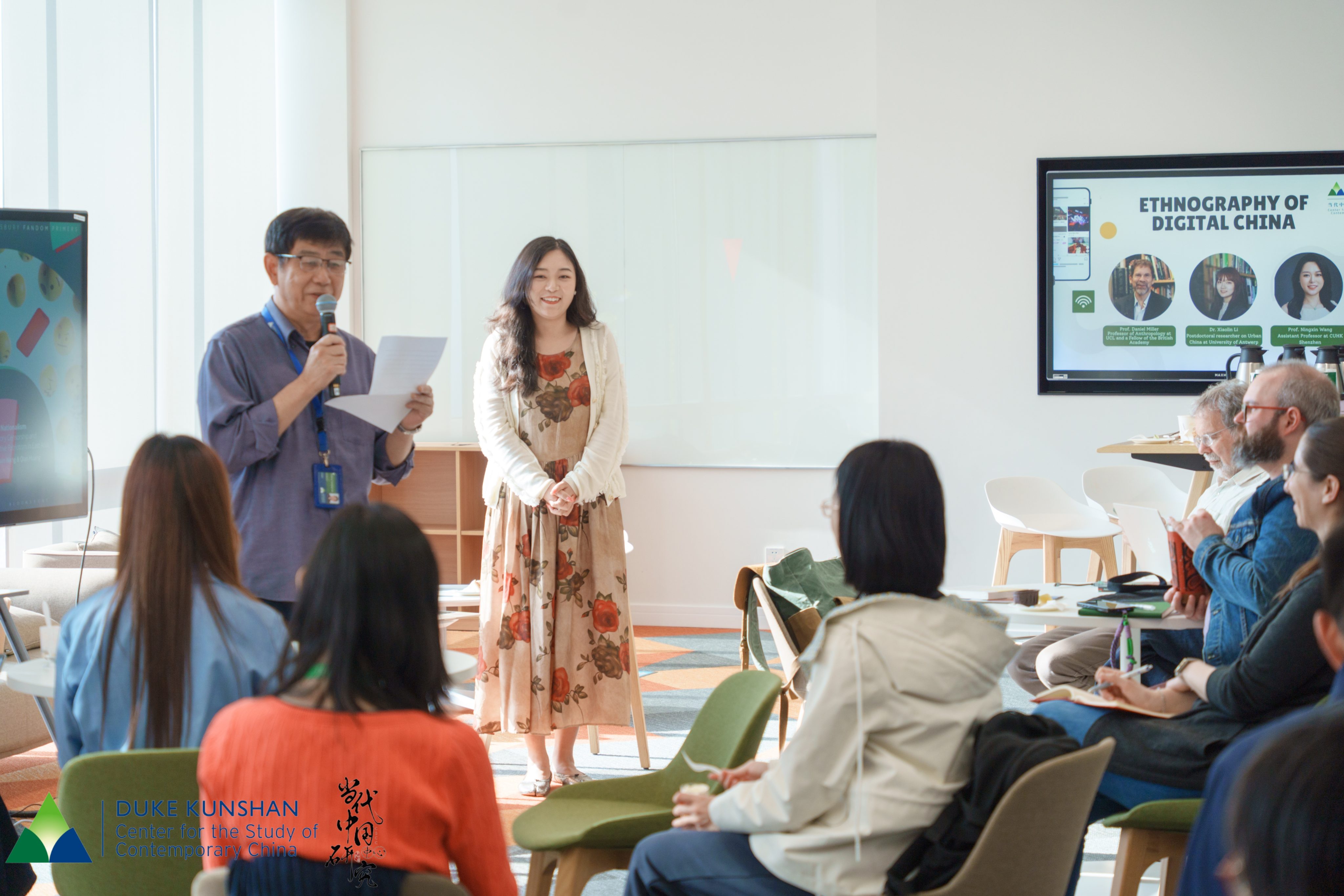
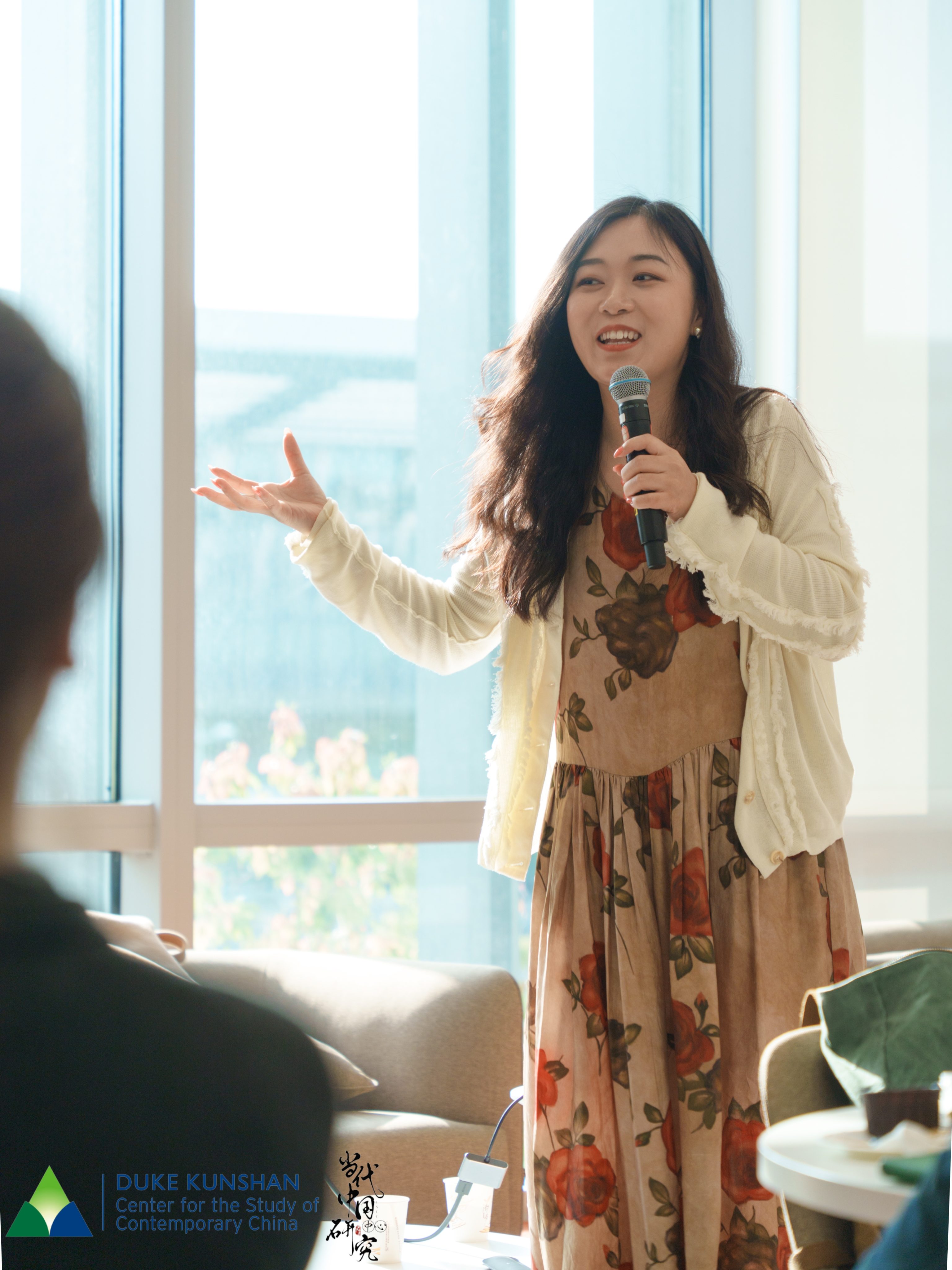
On April 24, 2026, the CSCC Digital Technology and Society Cluster and the Cluster for Gender and Global China co-hosted Dr. Ningxin Wang, Assistant Professor in the Division of Development and Governance at The Chinese University of Hong Kong Shenzhen, for a compelling talk titled Fandom Nationalism: Participatory Censorship and Performative Patriotism in China’s Online World. Drawing on her newly published book Fandom Nationalism, Dr. Wang offered a nuanced analysis of the complex entanglements between fandom culture, digital platforms, and state governance in contemporary China.
Dr. Wang began by situating her research within fan studies, engaging critically with the concept of “participatory culture”. While participatory culture is often understood as a positive force that enables community-building and creativity among fans, Dr. Wang challenged this assumption by examining what happens when such participation operates within a highly regulated and censored digital environment. Her central research question asked how fan communities’ collective actions, particularly those centered around celebrities, become intertwined with nationalism and state surveillance. The findings drew on Dr. Wang’s extensive fieldwork using a hybrid digital ethnographic approach. Conducted over several years, including during the COVID-19 pandemic, her research combined online observation of Chinese social media platforms with offline, multi-sited ethnography across seven cities in China. By embedding herself within fan communities and participating in their everyday practices, Dr. Wang was able to capture the emotional, social, and political dimensions of fandom from an insider perspective.
A central case study in her talk was the 2021 “cancellation” of Chinese actor Zhang Zhehan. Once a rising star propelled to fame through a popular BL drama, Zhang’s career rapidly collapsed following the resurfacing of a travel photo taken near Japan’s Yasukuni Shrine, a site associated with wartime memory in China. What began as a fan-driven controversy quickly escalated into a large-scale digital denunciation, involving not only fans and anti-fans but also state media, social media platforms, and commercial brands. Within days, Zhang was erased from the Chinese internet: his social media accounts were banned, his works removed, and his endorsements with brand terminated. Using this case, Dr. Wang introduced the concept of participatory censorship, which highlights how ordinary users actively contribute to censorship processes. Rather than viewing censorship as solely imposed from above by the state, she demonstrated how fan communities mobilize platform reporting mechanisms to target individuals. These users develop detailed “reporting guidebooks” that instruct others on how to frame accusations in ways most likely to trigger severe penalties, thereby weaponizing platform governance tools for collective action.
Additionally, Dr. Wang proposed the concept of performative patriotism, which refers to the public display of nationalist sentiment by individuals and organizations in ways that align with state ideology while also generating economic benefits. She illustrated how brands, celebrities, and even ordinary users engage in acts of loyalty such as terminating endorsement deals or reposting official media content, not only to signal political correctness but also to maintain their reputation and making money off public sentiment. Importantly, Dr. Wang emphasized that fandom nationalism is not simply a top-down phenomenon orchestrated by the state. Instead, it emerges from the interactions of multiple stakeholders, including fans, anti-fans, platform media, businesses, and state actors. Within this system, cancellation becomes normalized, and participation in nationalist discourse becomes expected.
The talk also shed light on the social consequences of such processes. Through interviews with fan participants, Dr. Wang revealed the psychological distress experienced by fans whose identities and social relationships are deeply tied to their idols. Some described feelings of isolation, self-doubt, and conflict with family members during moments of intense public backlash. These accounts highlight how digital controversies extend beyond online spaces and reshape personal lives and social dynamics. In conclusion, Dr. Wang’s talk provided a framework for understanding how digital fandom operates at the intersection of culture, politics, and economy in China. Her work reveals a complex system in which power is both exercised and reproduced through the everyday practices of users, offering valuable insights for scholars of media and contemporary Chinese society.