
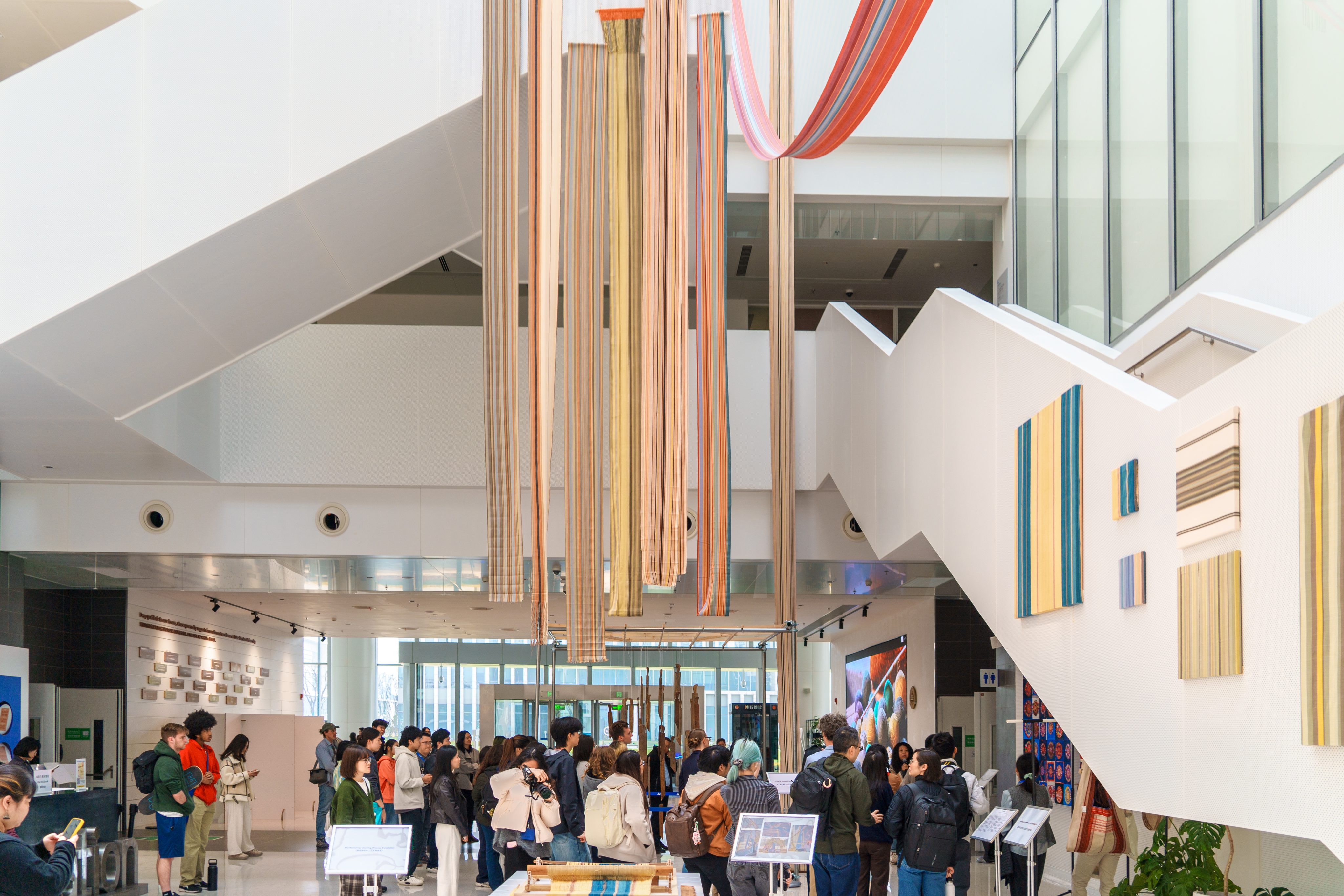
On March 20, 2026, the CSCC China Stories & Images Cluster hosted Rainforest Weft: Weaving Together Sustainability and Creative Practice 雨林织叙, featuring guest artist Hong Yan, an internationally recognized fabric artist from Xishuangbanna. Organized by Professor Kaley Clements, the event brought together an exhibition, panel discussion, and hands-on workshop to explore the intersections of traditional weaving, ecological knowledge, and contemporary creative practice.
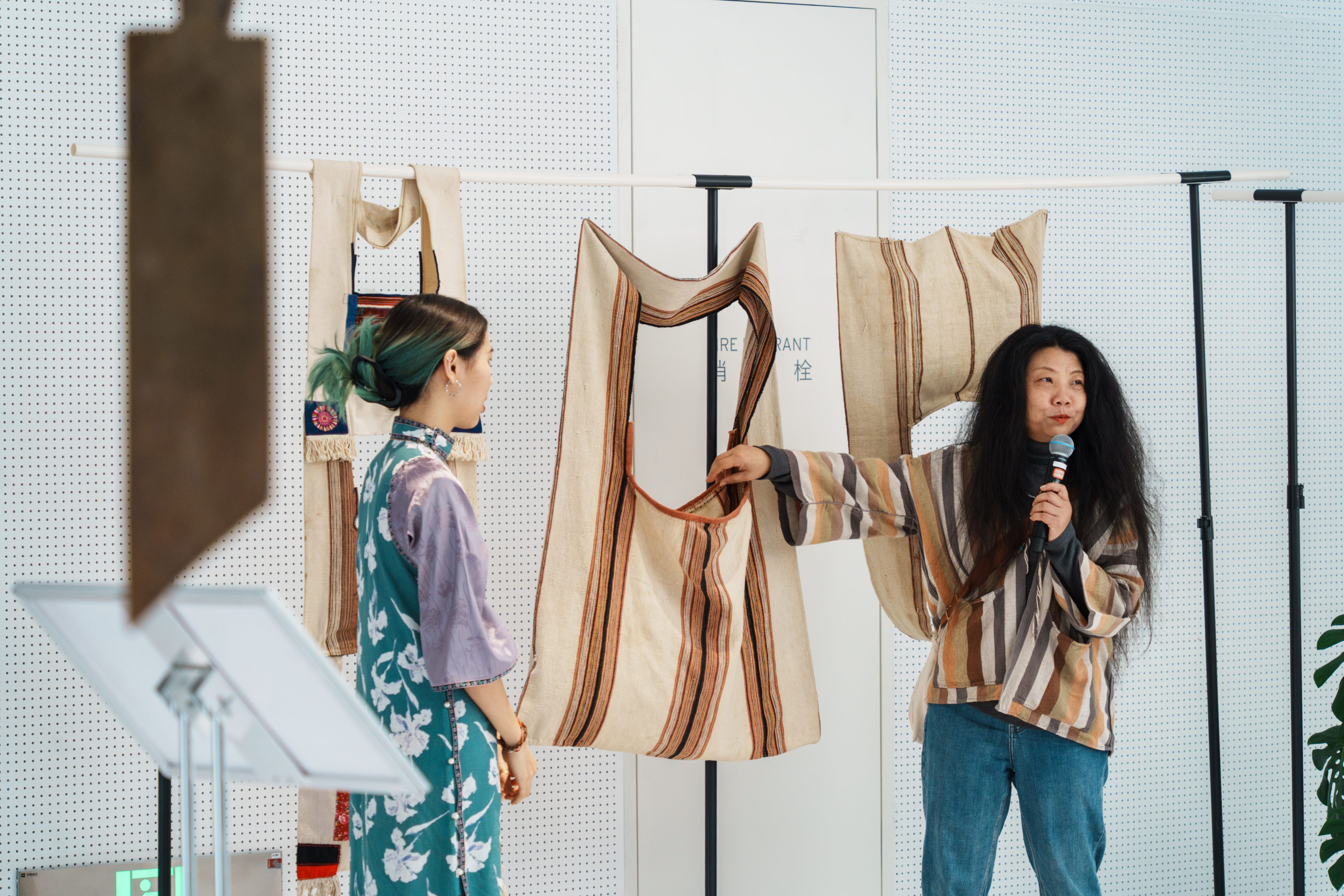
Hong Yan’s work centers on textile traditions across the Mekong Basin, where weaving is deeply embedded in local ecological systems and cultural life. Drawing on over a decade of fieldwork among the Jinuo community, she examines how materials such as plant dyes, silk, and cotton are sourced locally and reflect an intimate understanding of environmental conditions. Her artistic practice emphasizes that weaving is not only a form of aesthetic expression but also a living system of knowledge that encodes relationships between people, nature, and cultural identity.
The exhibition presented a series of textile works alongside documentary materials that foregrounded the processes of production. Rather than relying solely on photography or video, Hong Yan incorporated collaborative fabric-making into her practice, producing works inspired by and created in dialogue with local communities. Installations such as backstrap looms and weaving tools highlighted the labor of women, whose work sustains both household economies and cultural continuity. These objects were not displayed as static artifacts but as representations of ongoing social and ecological relationships.
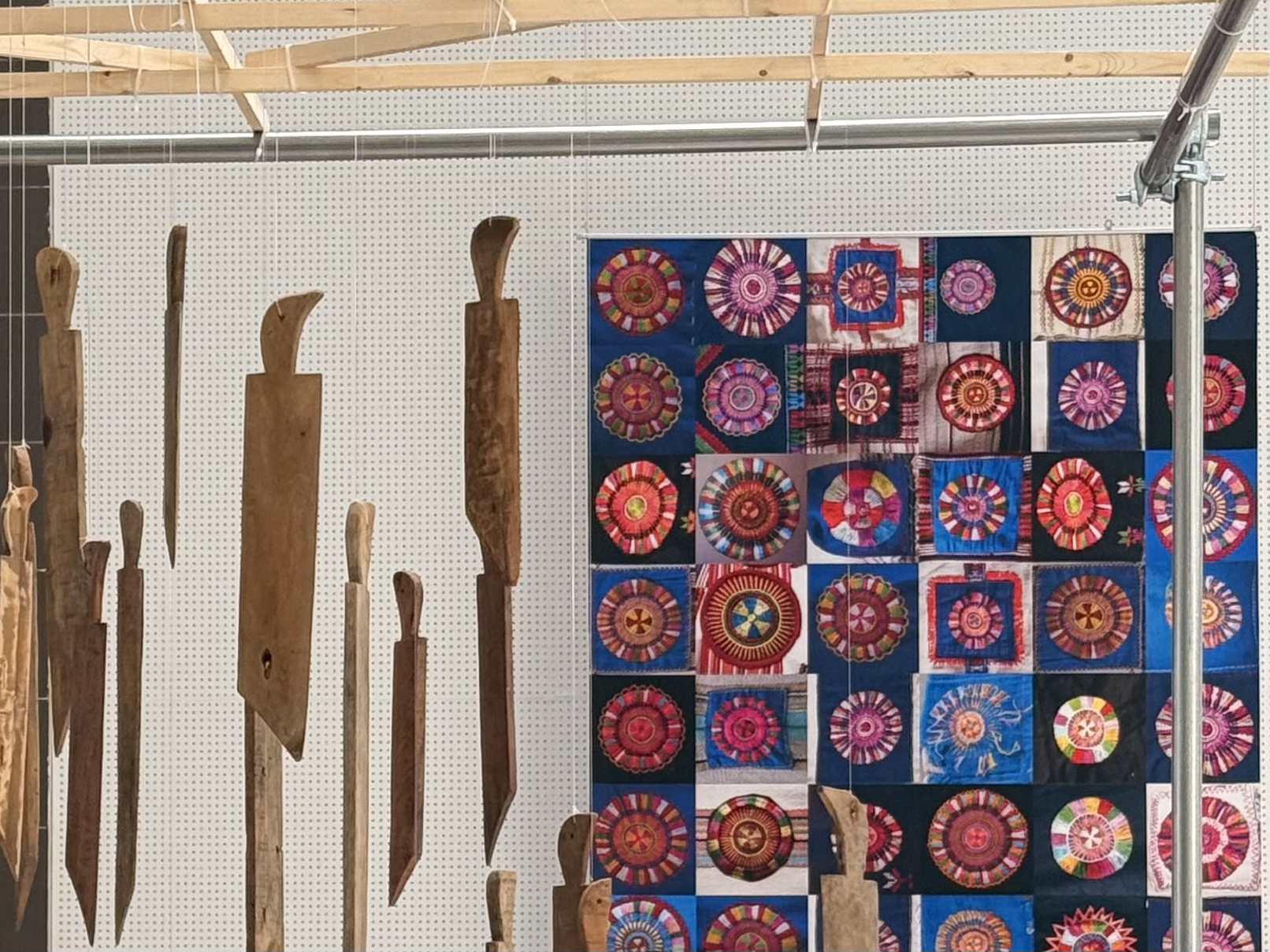
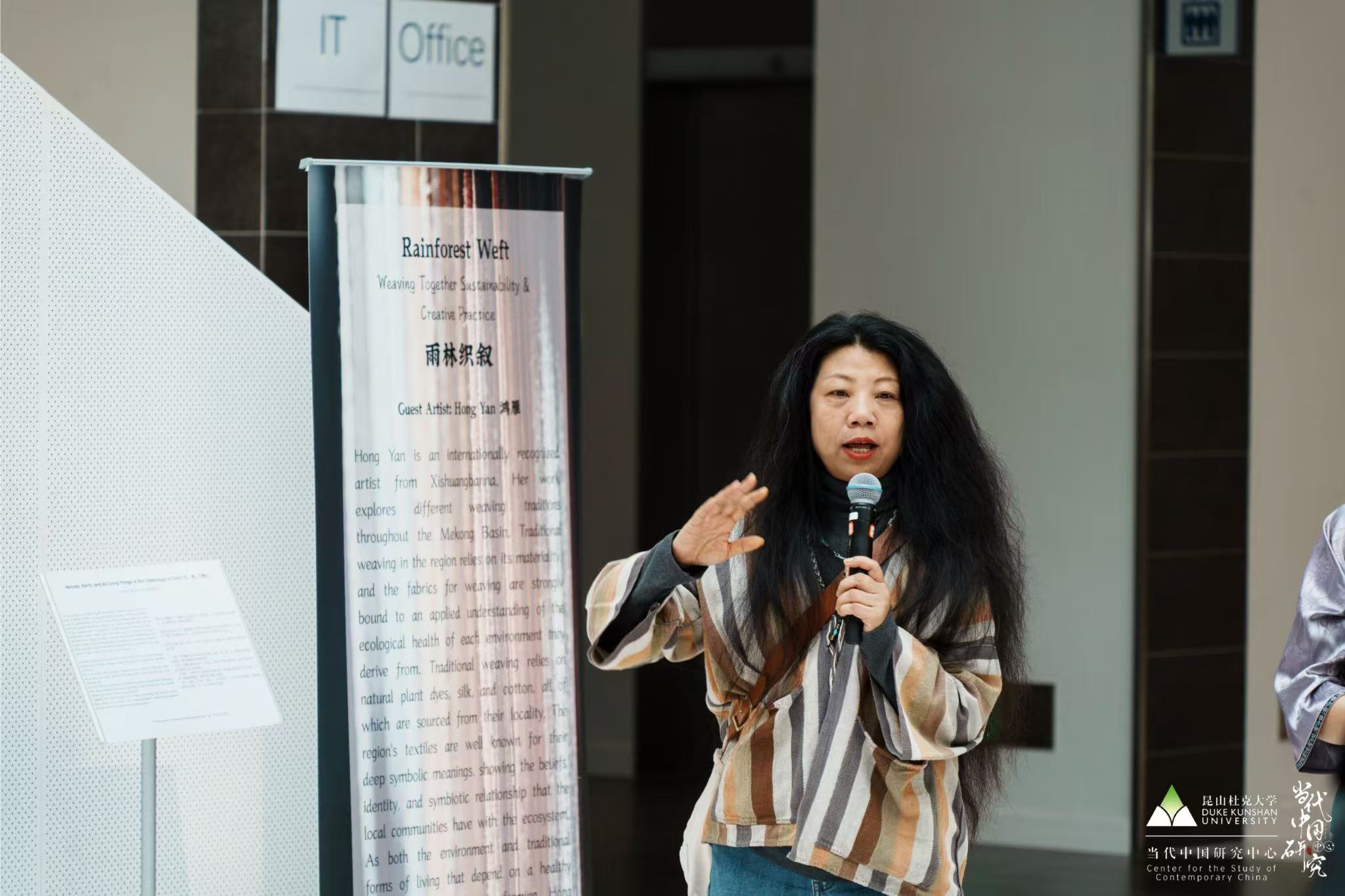
A central theme of the event was the role of narrative and representation. Discussions addressed how traditional practices are often interpreted through external frameworks, particularly within academic and artistic institutions. Participants reflected on how such interpretations can impose fixed meanings on cultural symbols, sometimes overlooking the diversity of perspectives within communities themselves. The exhibition encouraged viewers to consider how knowledge is produced and mediated, and to recognize the limitations of observing cultural practices from an external standpoint.
The panel discussion further explored tensions between preservation and adaptation. As traditional weaving practices face pressures from environmental change and economic transformation, communities must navigate how to sustain cultural heritage while engaging with contemporary conditions. Hong Yan noted that some forms of innovation may be met with resistance due to concerns about authenticity and cultural identity. At the same time, the integration of new techniques and technologies can offer pathways for continuity, particularly when guided by community values and participation.
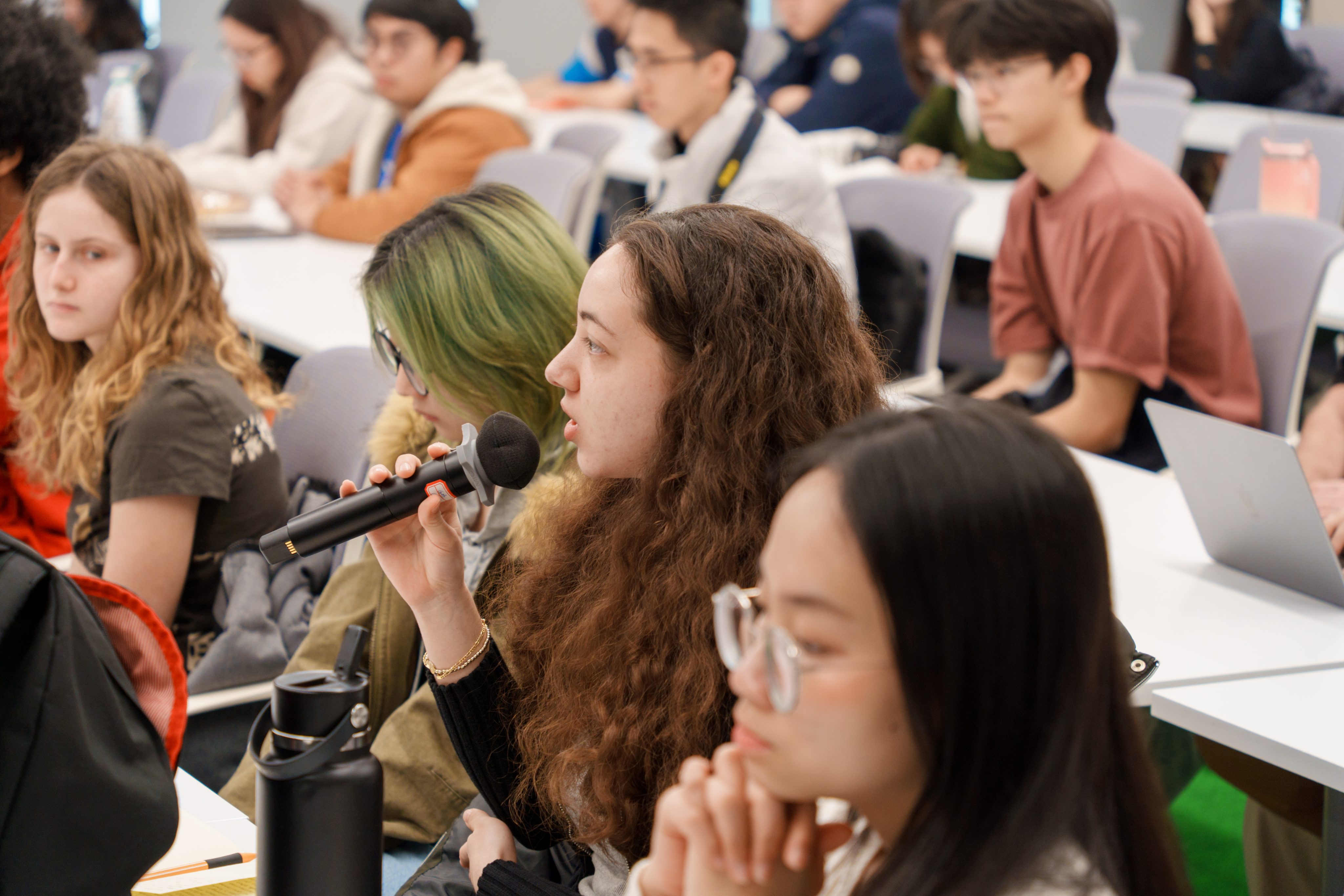
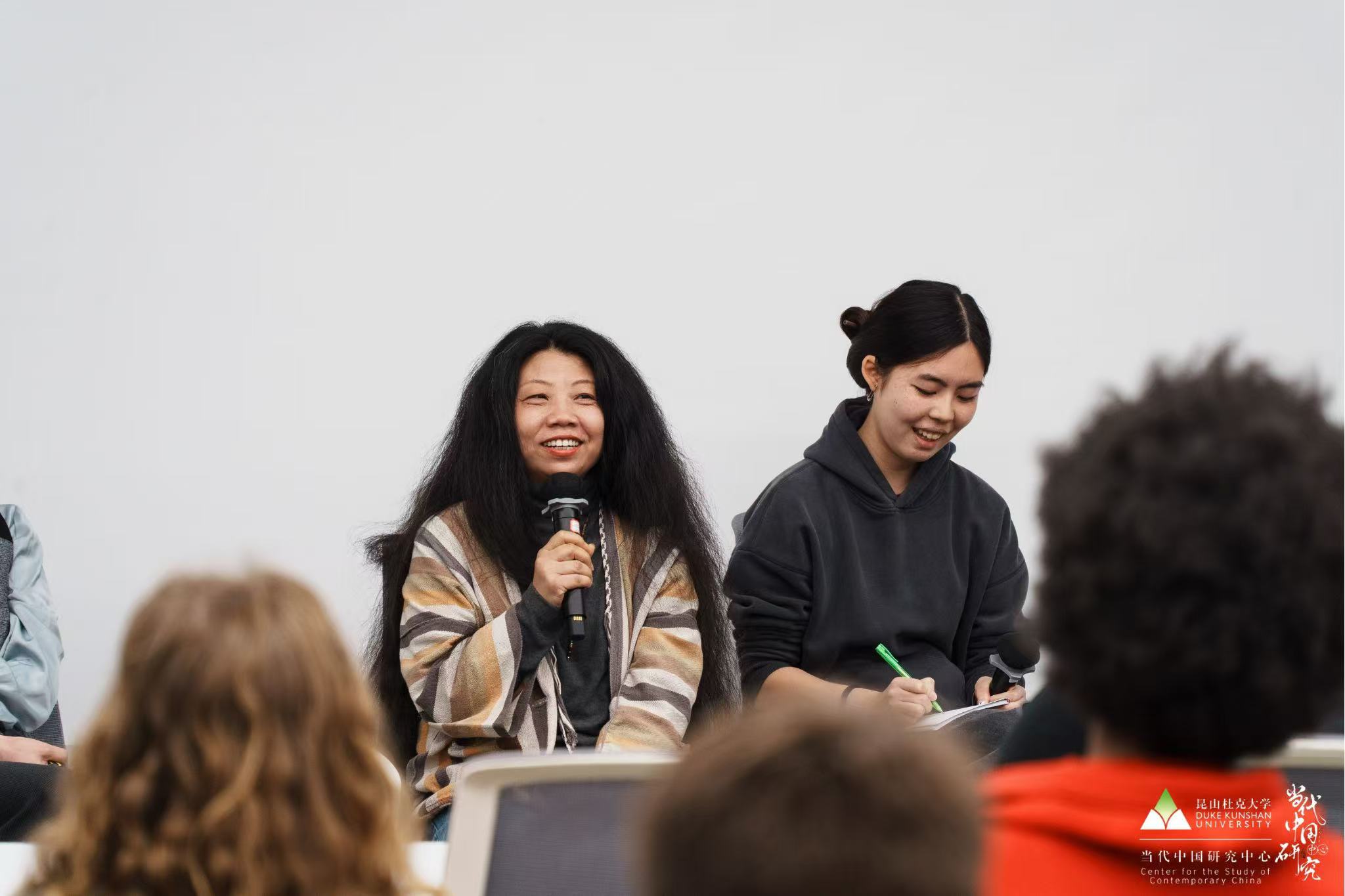
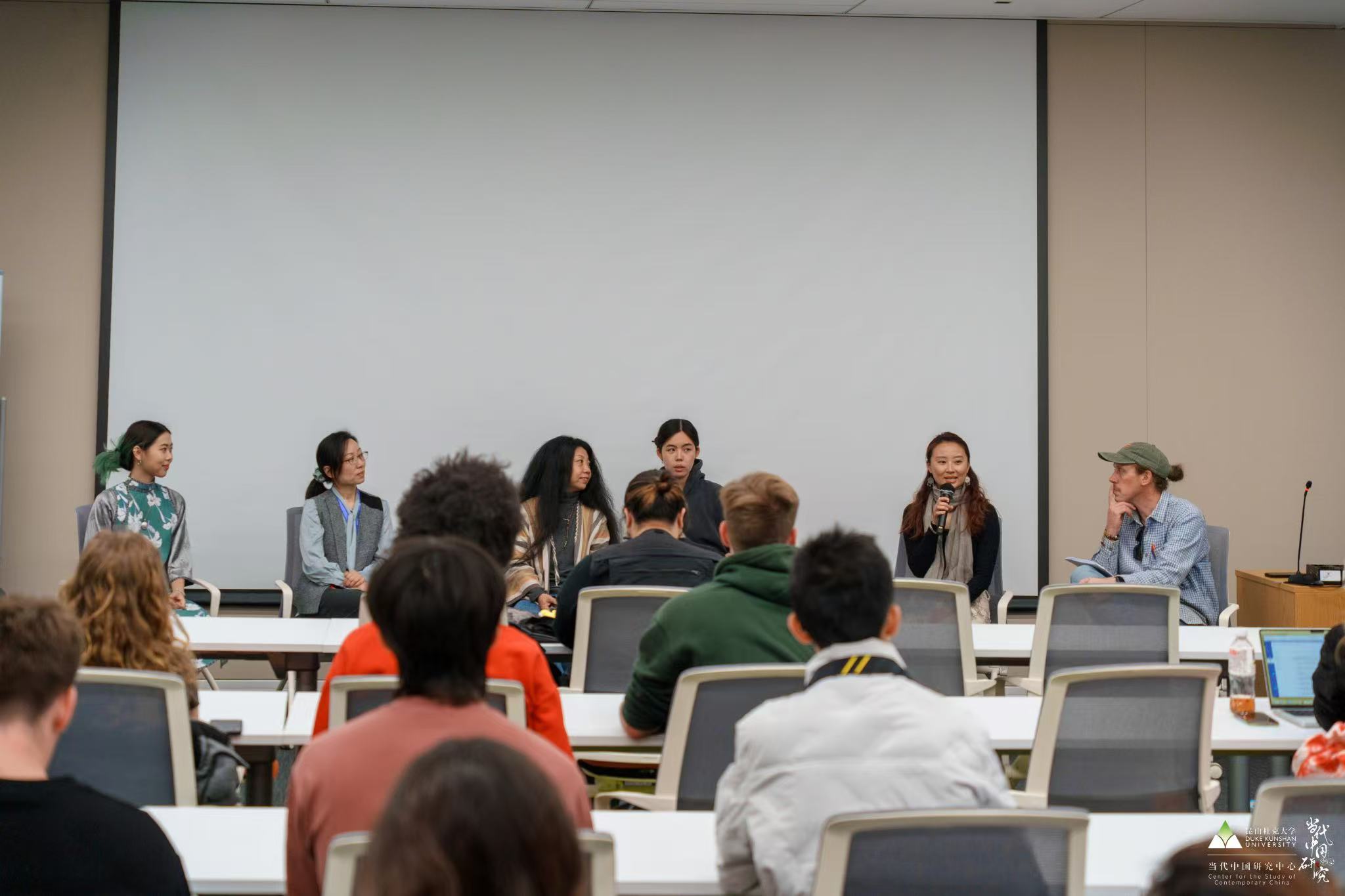
Digital and visual media were also discussed as tools that can both enable and constrain representation. While documentation can increase visibility and awareness, it may also risk framing local practices through external or “global” lenses that simplify or aestheticize them. The event highlighted the importance of situating creative work within its social and material contexts, and of engaging with communities as active participants rather than subjects of observation.
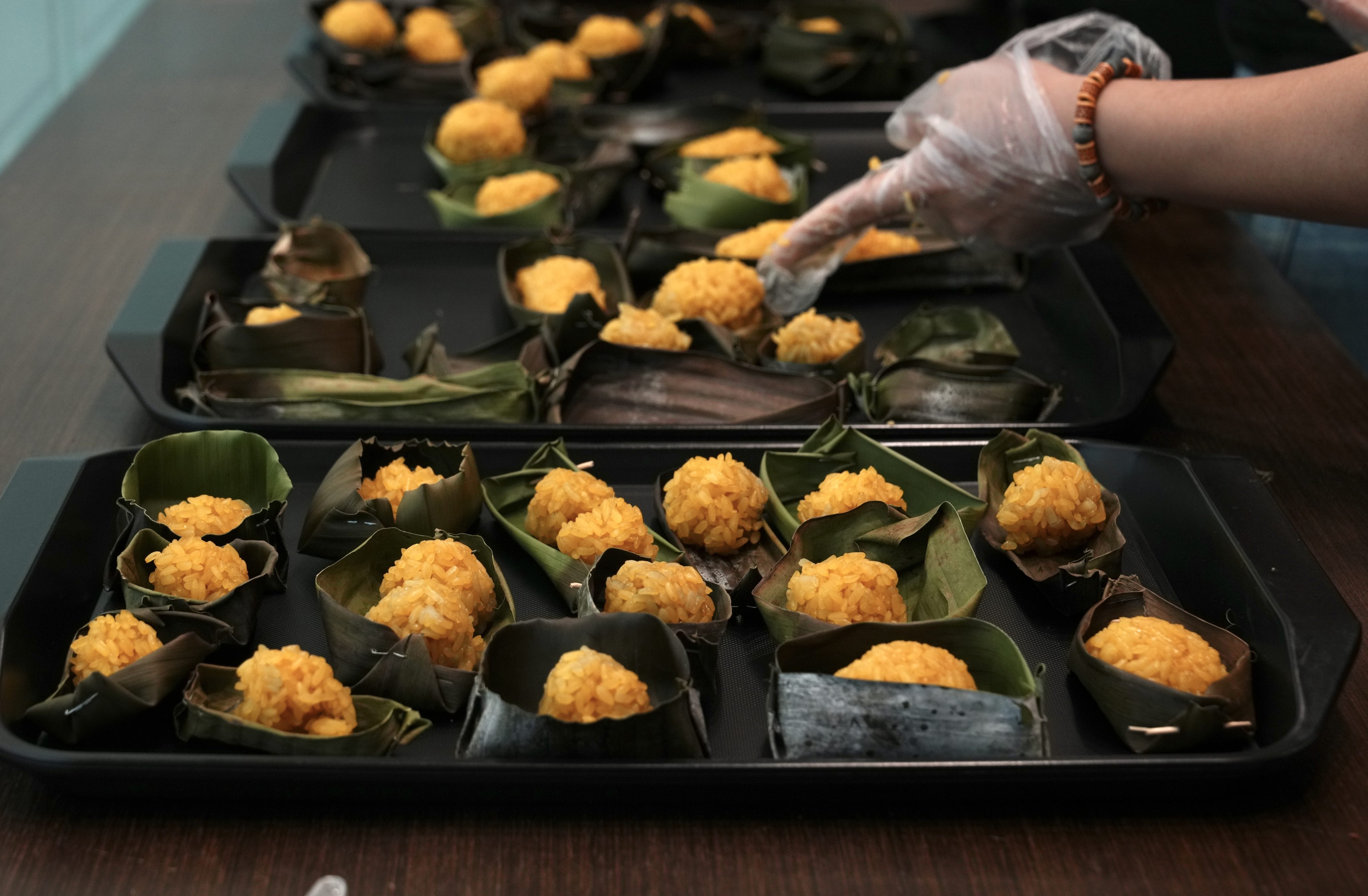
The afternoon workshop on natural dyeing provided participants with direct engagement in material processes. It began with a light welcome featuring sticky rice with honey and tea. Participants then worked in pairs, each provided with a piece of natural fabric and locally sourced flowers and herbs commonly used in textile traditions.
The dyeing process followed three main steps. First, the fabric was boiled in clean water to remove impurities and prepare the fibers for absorption. Next, the herbs and flowers were simmered to extract yellow pigments and create a dye bath. Finally, the fabric was immersed for approximately five minutes, during which it absorbed the color and transformed into a vibrant golden yellow. The process demonstrated how organic materials can produce vivid and lasting dyes without synthetic chemicals.
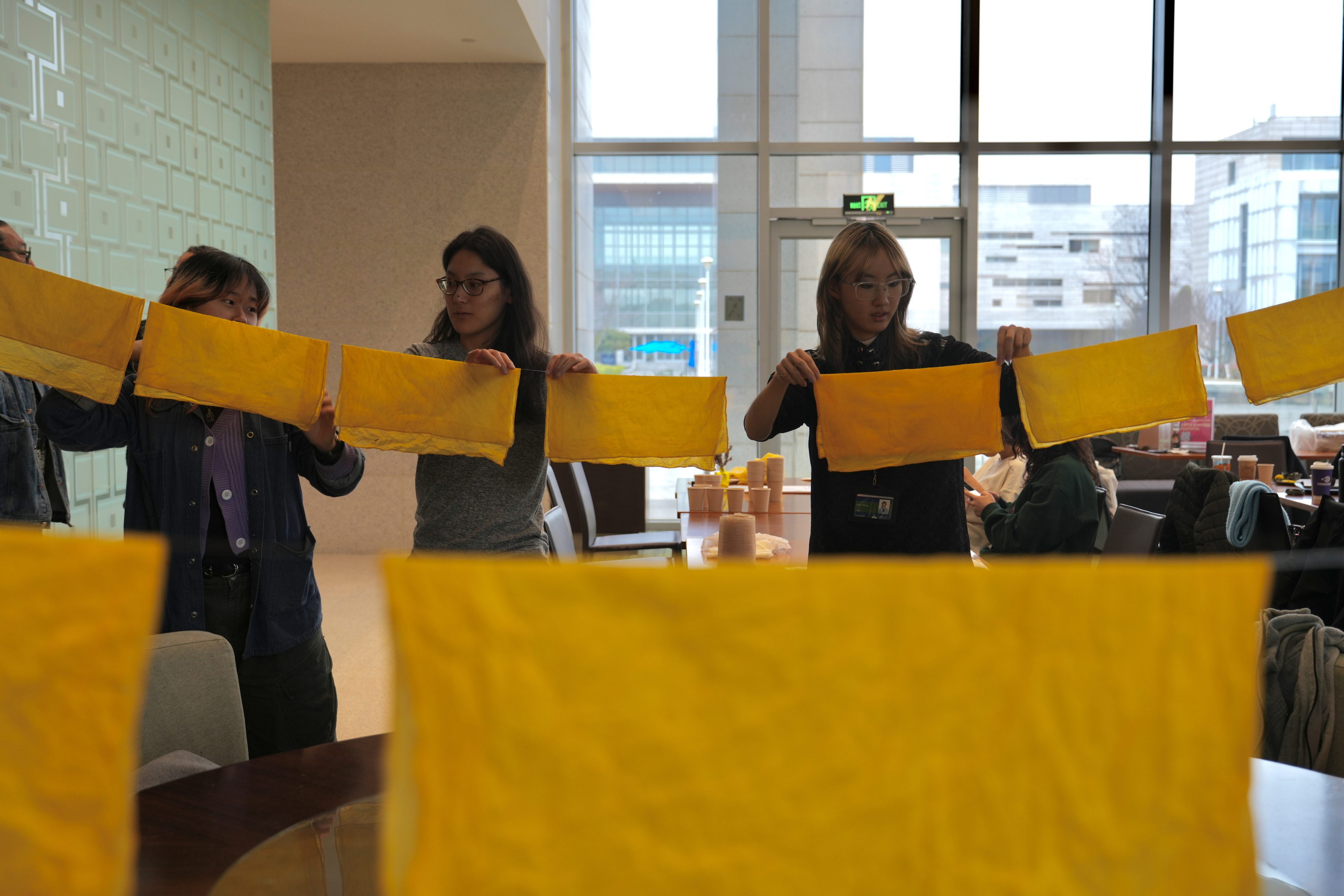
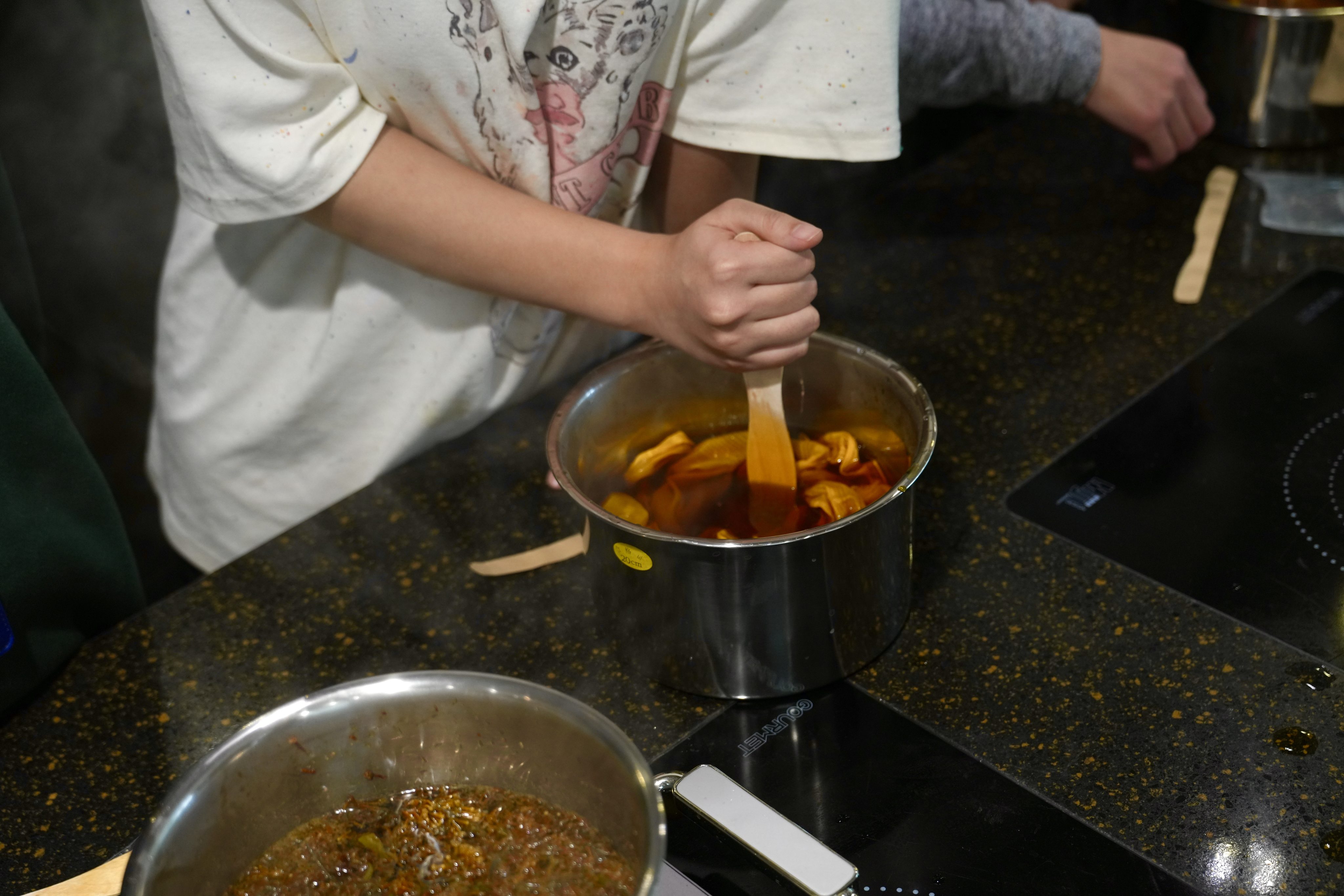
The use of locally sourced plant materials reflects a broader tradition in which textile practices are closely tied to environmental knowledge. In this context, dyeing is not merely a craft but a form of engagement with the natural world. By combining practical instruction with cultural context, the session illustrated how artistic expression can serve as a medium for environmental awareness and preservation.
Overall, Rainforest Weft presented weaving as both a cultural practice and a mode of inquiry. By bringing together artistic production, ethnographic engagement, and critical reflection, the event highlighted how traditional crafts can serve as a lens for examining broader questions of sustainability, knowledge production, and cultural continuity. It emphasized that weaving is not only a means of creating objects, but also a process through which communities negotiate identity, adapt to change, and maintain connections to their environments.