
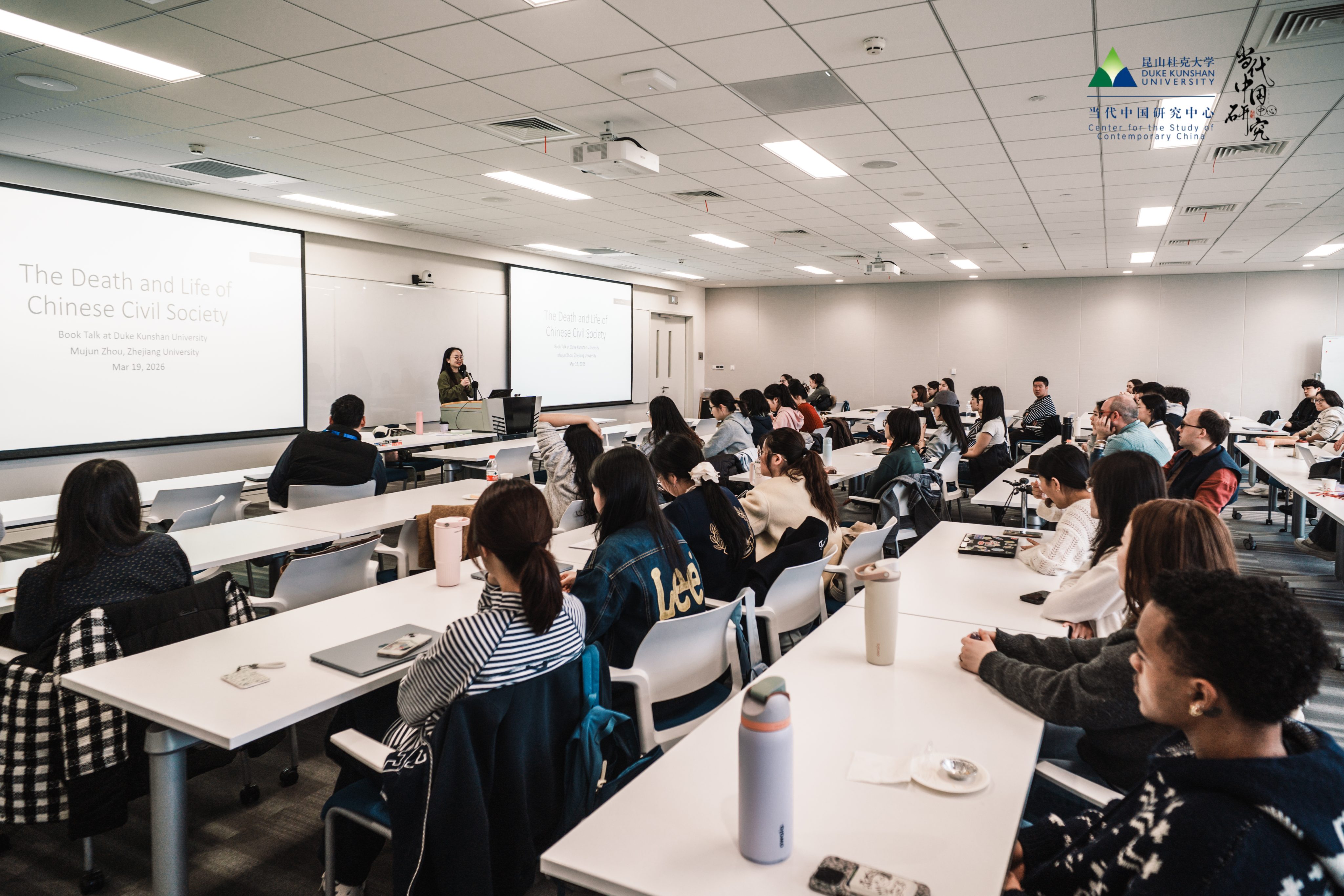
On March 19, 2026, The Center for the Study of Contemporary China hosted Dr. Mujun Zhou from Zhejiang University for the very first public presentation of her newly published monograph The Death and Life of Chinese Civil Society (University of Michigan Press). Prof. Zhou, who completed the project over nearly twelve years after beginning it in her twenties, opened by sharing her recent shift to studying the street-dance community in China and noting how themes of community formation and rights continue to connect her earlier and current work. She explained that the book emerged from dissatisfaction with abstract debates over whether China has a “civil society”, and instead approaches it as an ideational movement that took shape among intellectual circles in the 1990s.
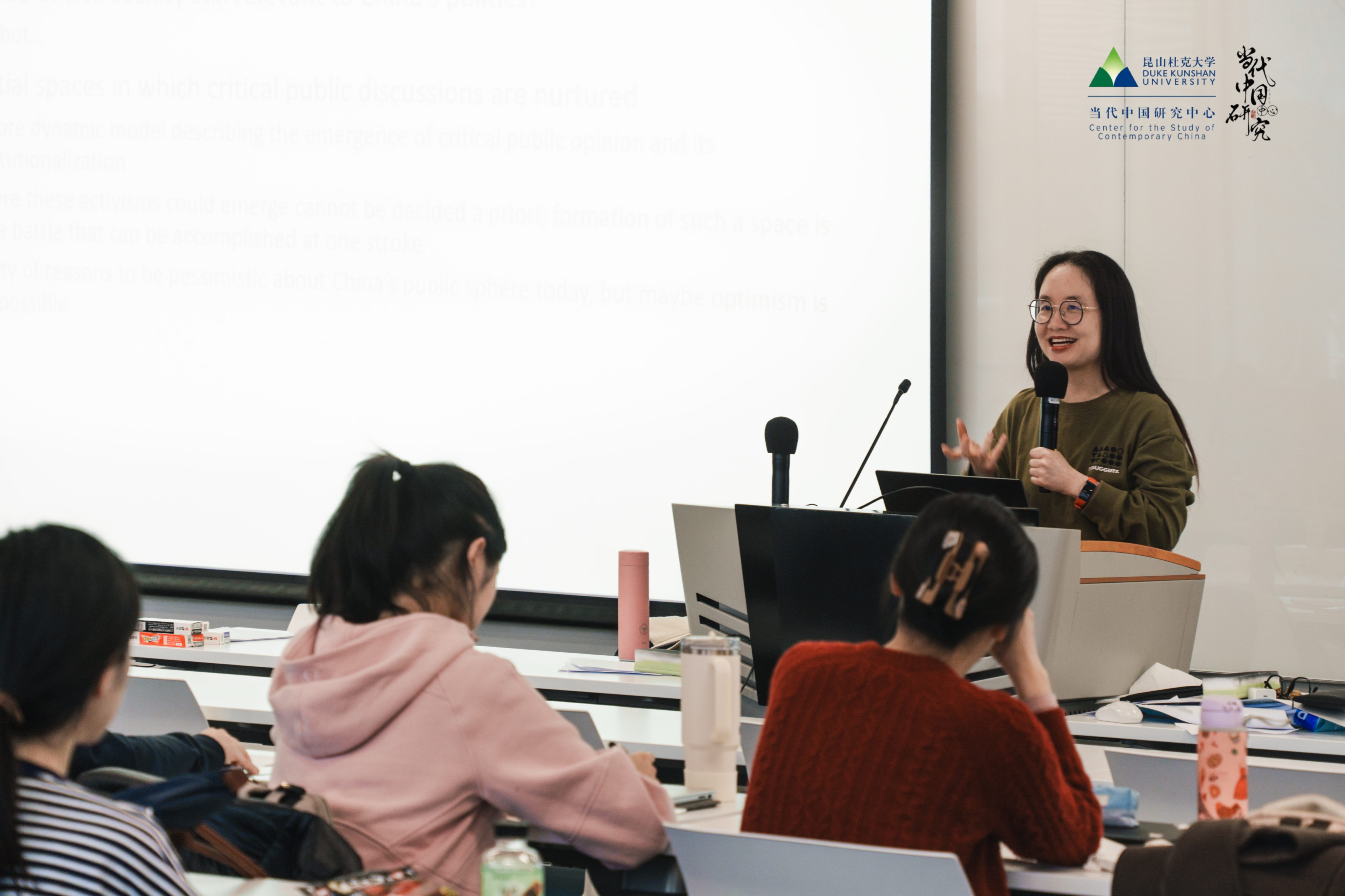
Prof. Zhou conceptualizes civil society in three ways: as a form of political imagination rather than a fully autonomous reality; as a consequential force that mobilizes resources, builds alliances, and brings attention to social issues; and as a dynamic process shaped by changing social, political, and technological environments. Central to her argument is an “institutions-in-context” framework that connects micro-level activism, meso-level public spheres, and broader institutional transformations. She focuses in particular on three key “interstitial spaces” where new forms of interaction and engagement emerged: the thought sphere, the commercial media sphere, and the NGO sphere.
She then outlined four stages in the development of civil society in China. In the 1990s, discussions were largely confined to academic debates within the thought sphere, with limited engagement in grassroots initiatives aside from areas such as early public health advocacy. In the early 2000s, intellectual actors gained influence in emerging media and NGO spaces, incorporating diverse social initiatives and framing them through a shared discourse of rights and public participation. By the late 2000s and early 2010s, these spaces became more diverse, bringing together participants from a wider range of backgrounds and contributing to more complex forms of engagement. Since the mid-2010s, changes in the regulatory and media environment have reshaped these spaces, leading to shifts in discourse and patterns of participation.
To illustrate these dynamics, Prof. Zhou examined several social movements with differing relationships to earlier intellectual frameworks, including environmental, homeowners’, rural reconstruction, labor, and feminist initiatives. Drawing on extensive ethnographic interviews and archival research, she highlighted both the achievements and internal tensions within these movements. While they have played important roles in raising awareness of issues such as environmental protection and social rights, they have also revealed inequalities in representation and differing priorities among participants. She also noted that policy and regulatory changes have has complex and sometimes unintended effects on how these initiatives evolve, at times encouraging new forms of engagement outside established channels.
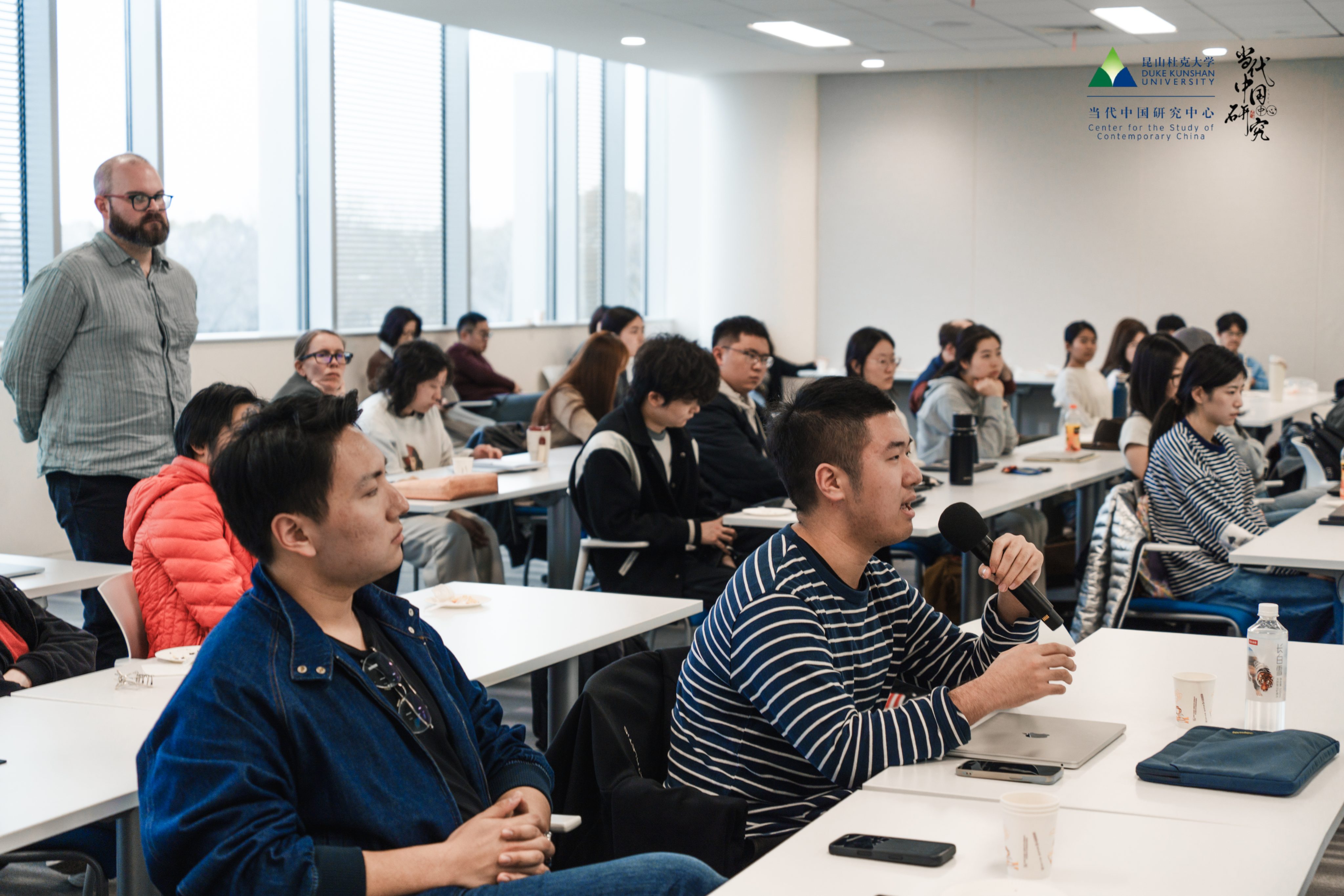
During the lively Q&A session, Prof. Zhou elaborated on the meanings of the book’s title, explaining that “death” refers primarily to the decline of a particular intellectual framework rather than the disappearance of participatory practices. Many such practices, she suggested, have been reshaped, absorbed, or rechanneled in new institutional context, while continuing to generate new and sometimes unpredictable forms of engagement. She also discussed the emergence of online left-leaning discourse, distinguishing it from the earlier scholarly debates, and shared insights into her research methods, which combine ethnography, interviews with both intellectuals and activists, and archival work. In addition, she reflected on the practical challenges of conducting and publishing research on this topic.
She concluded by emphasizing that, although the term “civil society” itself may be contested or evolving, its core concerns of public participation, social engagement, and forms of collective action remain important for understanding contemporary China.
This event was part of the Guest Lecture Series hosted by the Center for the Study of Contemporary China.
Report by: Zihan Chen, Class of 2026
Edited by: Chi Zhang
Photography by: Haozhe Lou, Class of 2028