
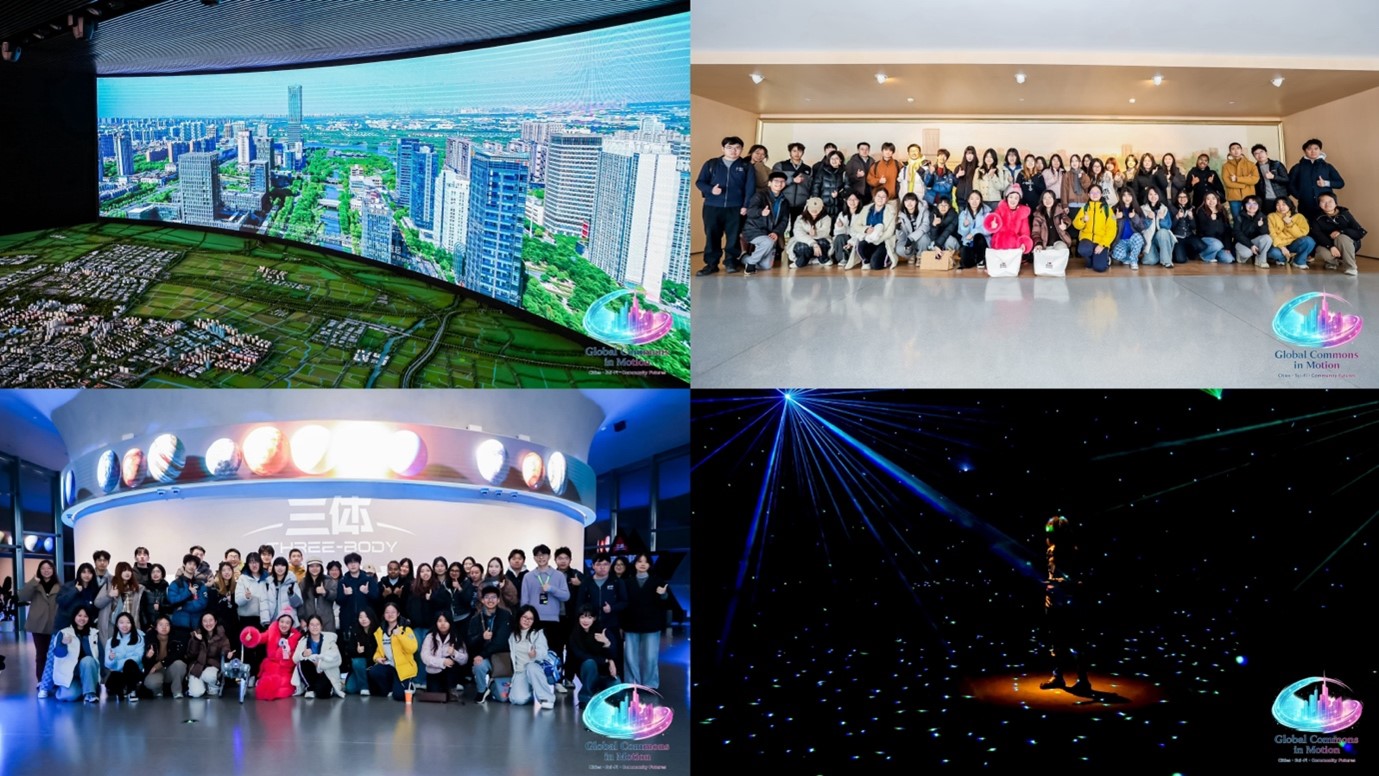
On January 23rd, the Jiading District Urban Planning Exhibition Hall and Fengxian Waving Cube Sci-Fi Immersive Museum opened their doors to Duke Kunshan University students. Students from INFOSCI 103: Computation, Society & Culture and INFOSCI 301: Data Visualization and Information Aesthetics, accompanied by Prof. Fan Liang and Prof. Luyao Zhang, faculty lead and co-lead of the Digital Technology and Society Cluster at the Center for the Study of Contemporary China, embarked on a journey to explore two public spaces with very innovative learning plans.
About the Museums
The Jiading District Planning Exhibition Hall serves as a public gateway into the past, present, and future of Shanghai’s most dynamic developing district. The exhibition’s large-scale models, multimedia displays, and immersive visualizations narrate the story of how Jiading evolved from a traditional cultural region into a hub of high-tech industry and sustainable design. The space is intentionally designed to democratize access to urban knowledge. This core purpose extends from visual storytelling and interpretive city models to civic education. Exhibits illustrate transportation innovation, ecological restoration, and smart-city development, linking environmental planning with everyday quality of life. The Waving Cube Sci-Fi Immersive Museum is one of China’s most ambitious experiments in turning science fiction into a lived experience. This science-fiction cultural ecosystem combines an outdoor sci-fi plaza, an indoor immersive exhibition complex, and a themed commercial and learning district. The museum reframes science fiction not only as entertainment but as public imagination infrastructure, using narrative-driven spaces, game mechanics, interactive installations, and digital projection to simulate futures ranging from deep space habitats to Mars bases.
Exhibits and Learning Outcomes
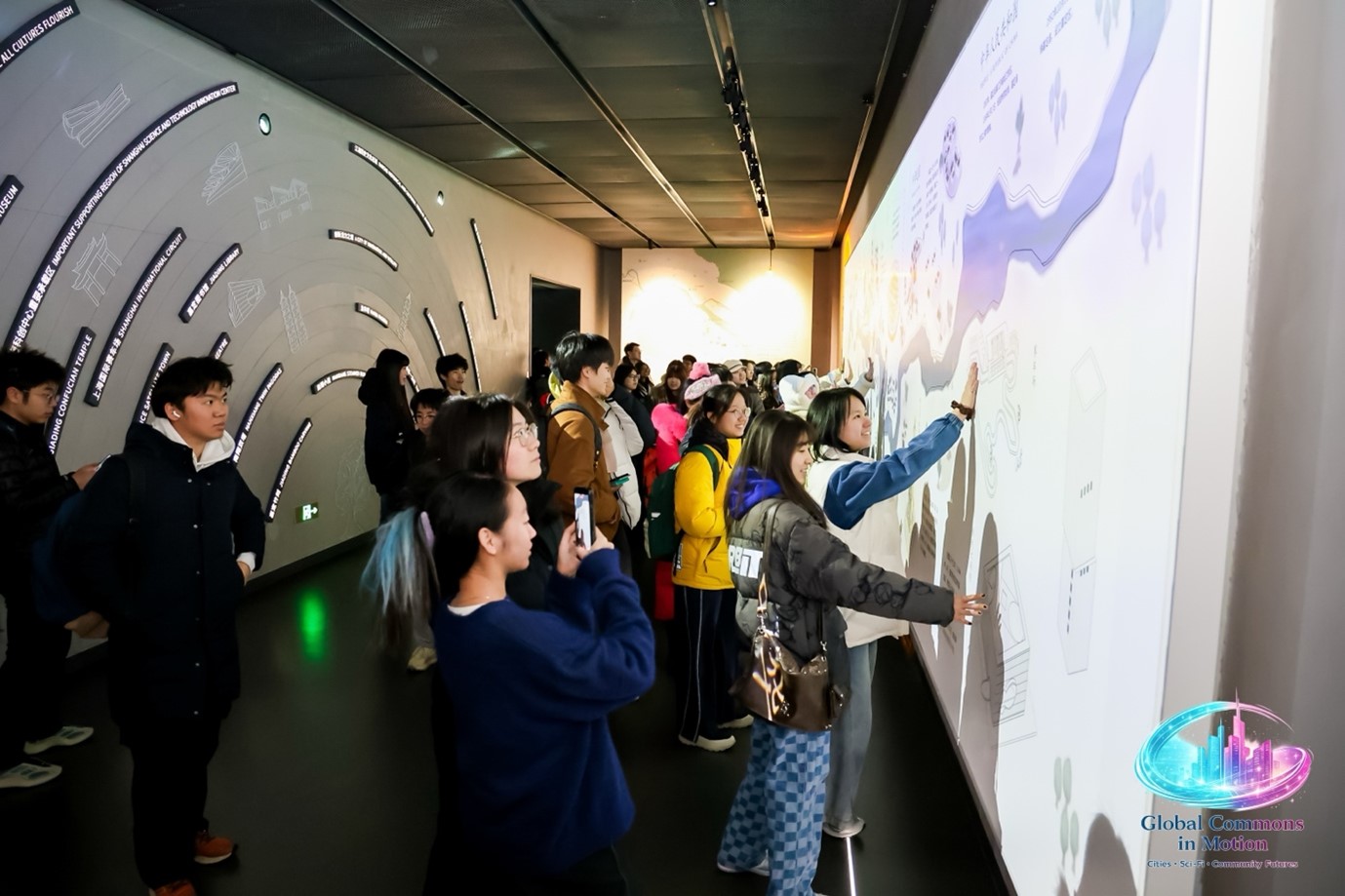
Students first visited the Exhibition Hall, where they traced Jiading’s historical evolution through an opening film. Jiading’s strategic advantages as one of Shanghai’s five new cities were evident: forming a collaborative innovation circle with Kunshan and Taicang with a combined GDP of nearly one trillion yuan, adjacent to the Hongqiao International Business District, and serving as a key hub connecting Shanghai’s central urban area. The interactive experiences in the historical and cultural exhibition area were another highlight. A touch-sensitive wall dynamically presented the past and present of iconic structures such as the Sakyamuni Sutra Stone Bed, Fahua Pagoda, and Confucian Temple.
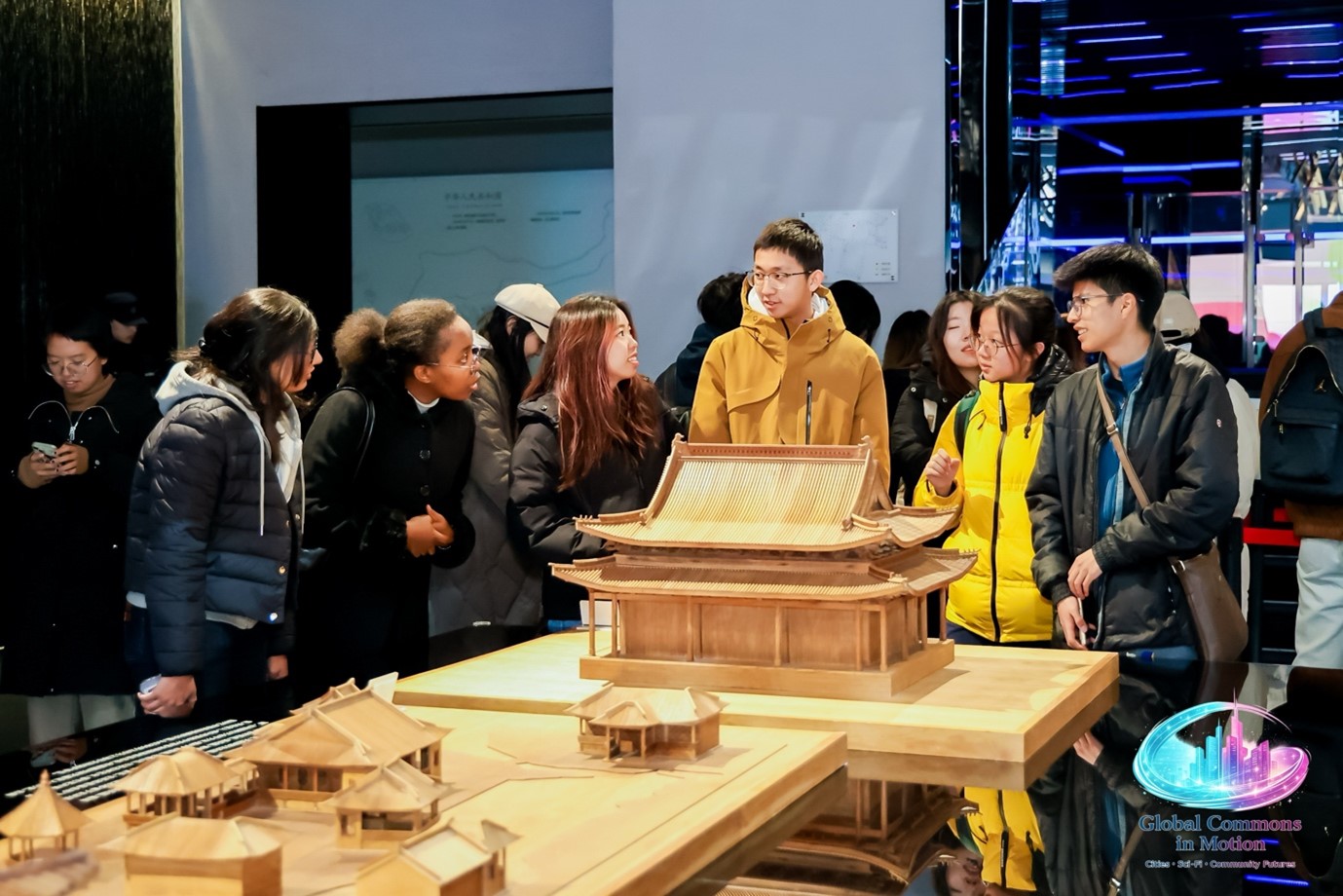
In the modern and future planning exhibition area, students focused on Jiading’s urban spatial structure of “one hub, two axes, and four districts,” gaining in-depth insights into the industrial layout of three major functional zones: International Automobile City, North Hongqiao Business District, and Ecological Conservation Area. The interactive experience projects such as the 4D time-space journey and the visualization displays of the transportation and ecological sectors transformed abstract urban planning into perceptible immersive experiences, helping students establish a connected understanding of “data—space—life.”
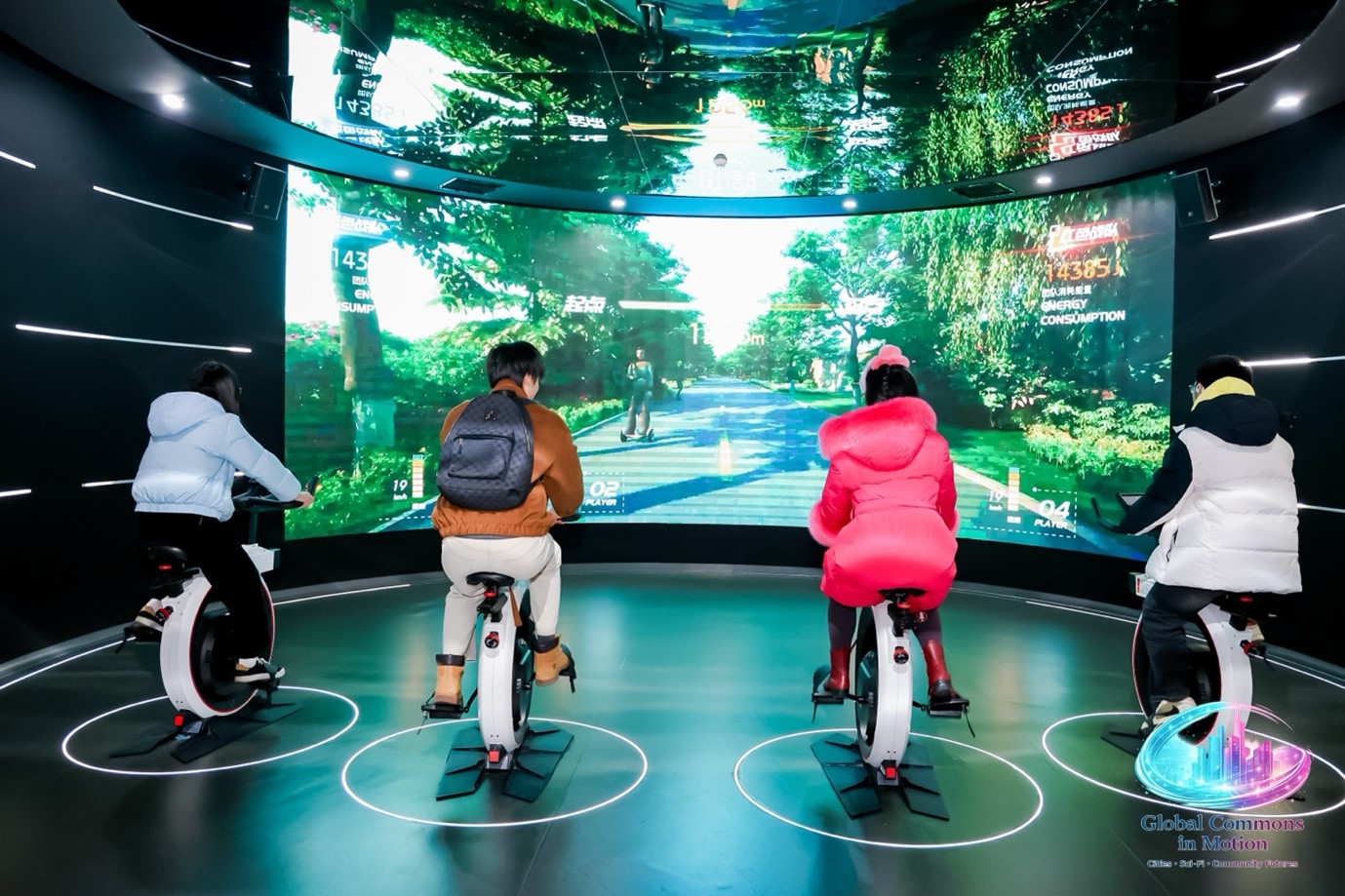
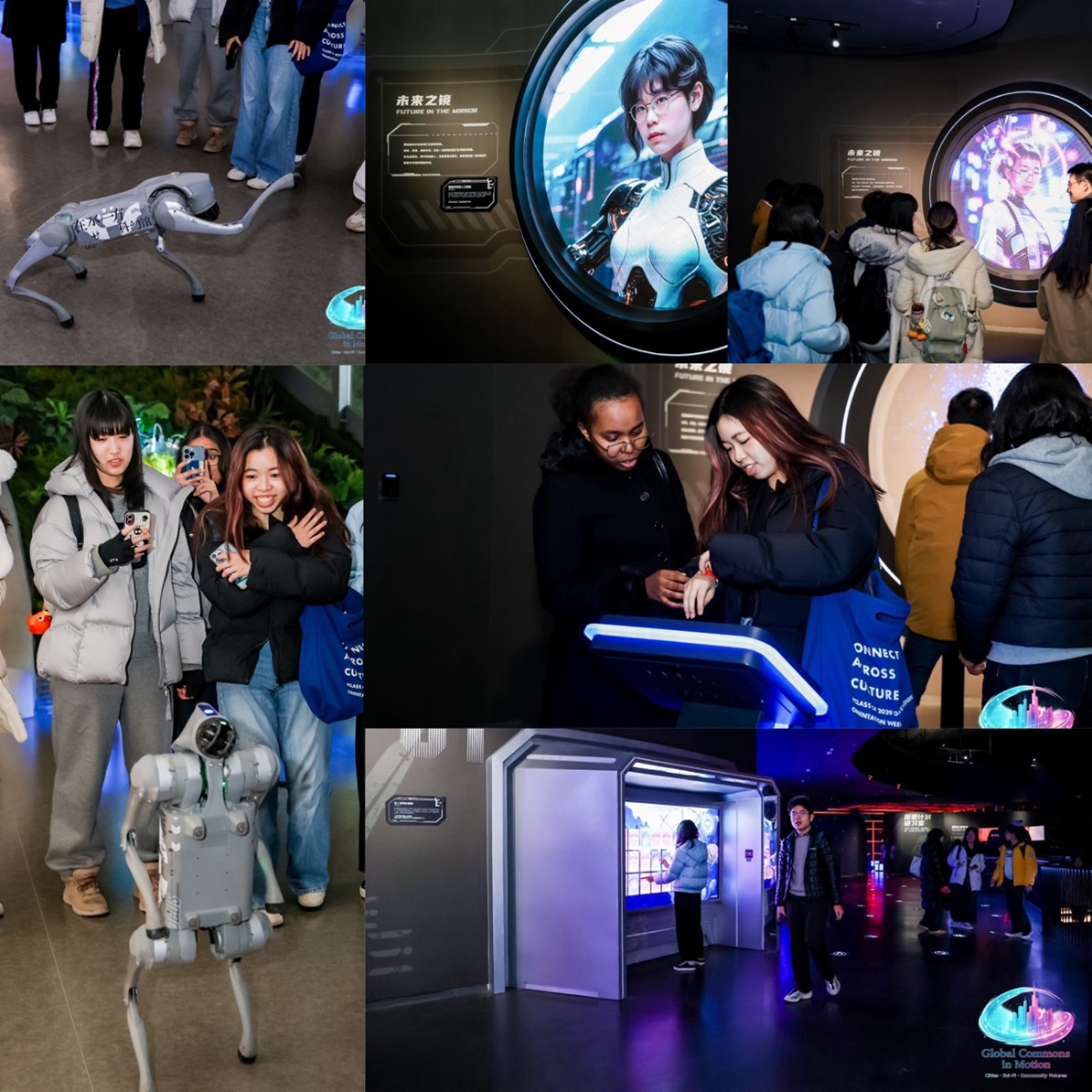
The visit to the Waving Cube Sci-Fi Immersive Museum started with sorting out the three main development stages of Chinese sci-fi literature. From mere translations during the Qing Dynasty to Liu Cixing’s “The Three-Body Problem” winning the Hugo Award in 2015, the genre has evolved tremendously. The adept writings of many Chinese authors have brought a much-needed non-western perspective to the genre. Furthermore, the museum’s design is based on “The Three-Body Problem,” allowing students to intuitively experience the international influence of Chinese sci-fi during the field trip. Faithful to the books, the three rotating suns at the entrance urged students to empathize with the survival anxiety of the Trisolarans. Like in a game, the “loading interface” themed elevator led students to the virtual “Three-Body Future Academy.” At the entrance of the academy, visitors created their exclusive identities, entered nicknames, selected their avatars and customized their professional role. The “enrollment registration” was completed by taking a picture with their avatars.
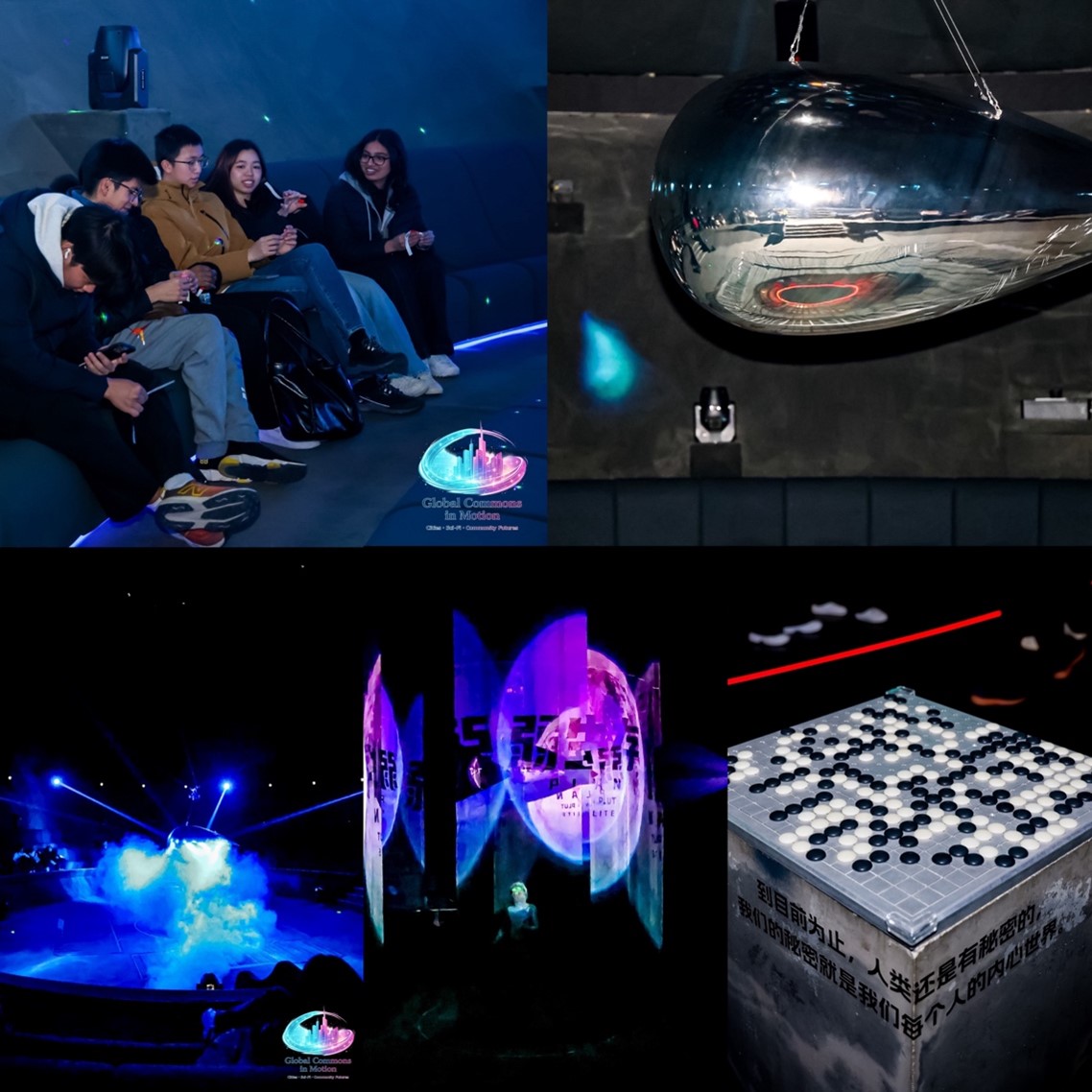
The flying saucer-shaped exhibition space, through audio-visual effects and live performances, brought our students on the journey of the Three-Body Fleet. They sailed to Earth and witnessed the appearance of the “Water Drop” detector. Experiencing the dramatic events of the novel urged visitors to ponder the profound reflections on civilization survival and technological ethics in sci-fi works. In addition, the museum has a variety of interactive experience projects: a simulated flight shooting game, a reenactment of the “Water Drop Battle,” experiencing the black hole activation, and exercising their collaboration and decision-making abilities through gamified experiences. The interactive parts of the tour were especially expedient in letting students practice data visualization and human-computer interaction. Likewise, the exploration of the development stages of Chinese sci-fi literature brought a deep understanding of the value of cultural communication and global dialogue.
Conclusion
To conclude, the field trip achieved great, multidisciplinary learning outcomes. Refining students’ technical and data visualization skills, much needed for people aspiring to work in the field of technology and innovation, is one facet. The social and humanistic side relied on understanding the important value of cultural communication and global dialogue, the crucial data—space—life relationship, and the idea of democratizing education. These learning outcomes align with the United Nations Sustainable Development Goals (SDG 4 Quality Education, SDG 9 Industry, Innovation and Infrastructure, SDG 11 Sustainable Cities and Communities, SDG 17 Partnerships for the Goals), injecting rich inspiration into students’ course project creation, future innovation practice, and community collaboration awareness.
Acknowledgments: This field trip was made possible through the support of Isaac Zhu, Senior Undergraduate Academic Activities Coordinator, from the Office of Student Experience at Duke Kunshan University.
Draft by: Eric Duma
Advised by: Prof. Luyao Zhang and Prof. Fan Liang
Supported by: Shuqian Xu